

Summary: Pain is one of the most common concerns among prosthetic users, especially during the early phases of fitting and adaptation. Proper pain assessment is critical for ensuring comfort, function, and long-term prosthesis use. This blog explores the clinical methods used to evaluate pain during prosthetic fitting—ranging from patient-reported scales to physical examination and advanced diagnostic tools—and highlights why accurate assessment leads to better outcomes and improved user satisfaction.
For individuals using prosthetic limbs, pain can significantly impact mobility, independence, and quality of life. Pain may originate from the residual limb, neuromas, socket pressure, alignment issues, or underlying medical conditions. Effective prosthetic fitting demands a systematic approach to identifying the type, location, and severity of pain.
Clinicians rely on structured assessment techniques to understand the user’s discomfort, make precise adjustments, and ensure a functional, comfortable prosthetic fit. In this blog, we explore the most reliable pain assessment tools and clinical evaluation strategies used in prosthetic rehabilitation.
Understanding Pain in Prosthetic Users
Pain experienced by prosthetic users is typically categorized into the following:
Residual Limb Pain
Caused by improper socket fit, pressure points, muscle imbalance, swelling, or skin issues.
Phantom Limb Pain
A neuropathic pain sensation felt in the missing limb due to changes in nerve pathways.
Mechanical or Fitting-Related Pain
Results from:
- Socket misalignment
- Excessive pressure
- Material irritation
- Limb volume fluctuations
Overuse Pain
Occurs when muscles and joints compensate excessively during gait.
Proper identification of the pain source is essential for effective treatment.
Clinical Pain Assessment Methods
1. Visual Analog Scale (VAS)
One of the simplest and most widely used tools. The user marks their pain on a 10-cm line ranging from “no pain” to “worst imaginable pain.”
Clinicians use the measurement to:
- Monitor changes over time
- Evaluate socket adjustments
- Compare pre- and post-intervention pain levels
2. Numerical Rating Scale (NRS)
Users rate pain intensity on a scale of 0 to 10.
It is quick, reliable, and useful for:
- Daily tracking
- Post-fitting evaluations
- Pain pattern identification
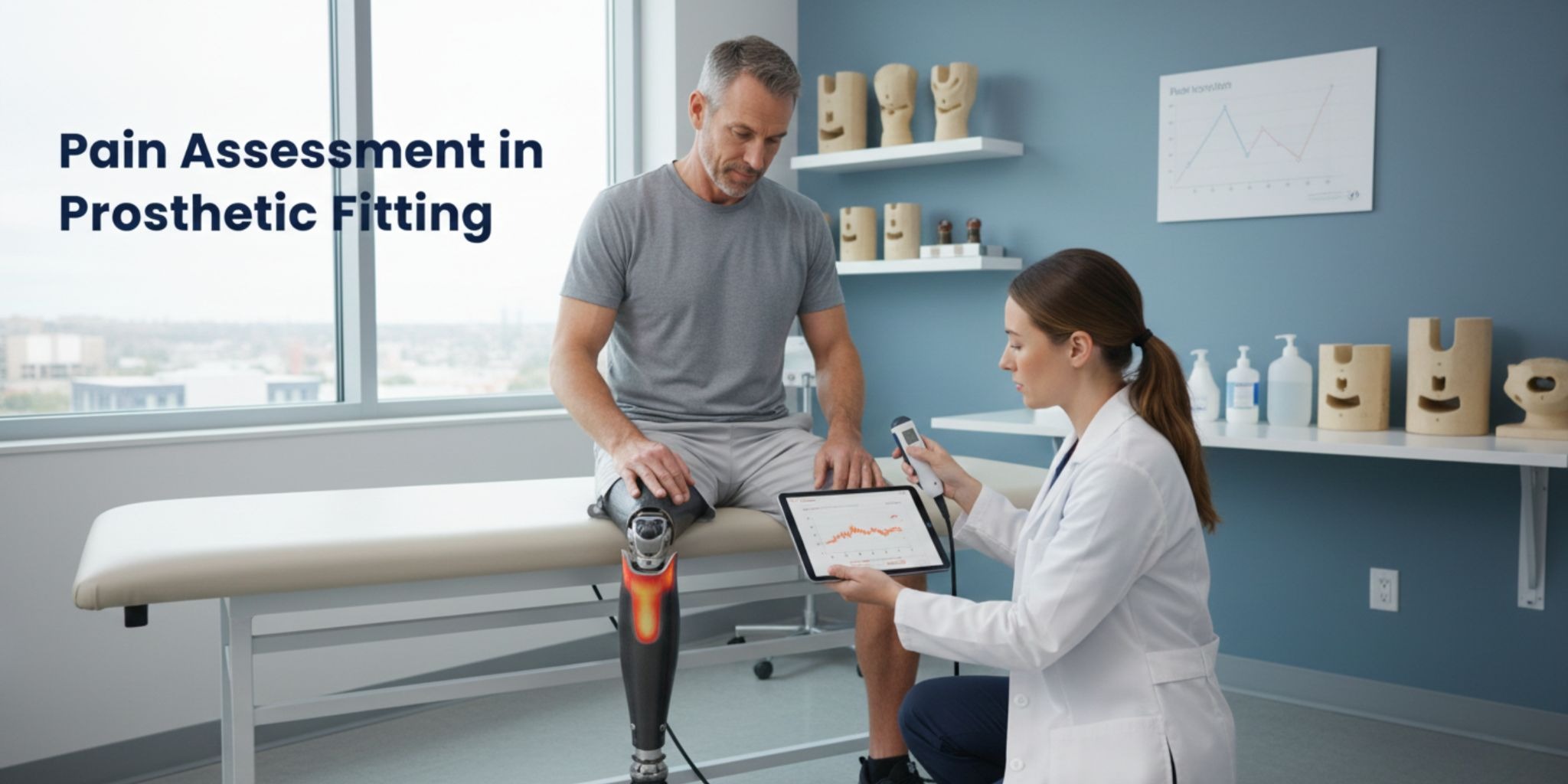
3. Pressure Mapping Systems
Specialized sensors measure pressure distribution inside the socket.
This method helps identify:
- High-pressure zones
- Poor weight distribution
- Potential ulcer-risk areas
Pressure mapping is especially useful during custom socket fabrication.
4. Palpation and Physical Examination
Clinicians perform hands-on assessments to detect:
- Tender spots
- Neuromas
- Swelling
- Skin breakdown
- Muscle imbalance
This physical evaluation helps differentiate between soft-tissue pain and structural issues.
5. Gait Analysis
Pain often affects walking patterns.
Through observational or instrumented gait analysis, clinicians examine:
- Step symmetry
- Limb loading
- Prosthetic alignment
- Compensatory movements
Improper alignment can be corrected immediately to reduce pain.
6. Range of Motion (ROM) and Strength Testing
Reduced ROM or muscle weakness can cause compensatory stress, leading to pain.
Clinicians test:
- Hip and knee mobility
- Muscle power
- Joint stability
These results guide rehabilitation exercises or prosthetic modifications.
7. Diagnostic Imaging (if required)
X-rays, ultrasound, or MRI may be used when there is:
- Persistent unexplained pain
- Suspected bone spurs
- Deep tissue damage
- Neuromas or infections
Though not always necessary, imaging helps confirm internal causes.
8. Socket Fit Assessment
A detailed evaluation of the socket involves:
- Checking total contact
- Studying limb volume
- Verifying suspension effectiveness
- Inspecting interface materials
Poor fit remains one of the leading causes of residual limb pain.
9. Residual Limb Skin Assessment
Clinicians examine the skin for:
- Redness
- Heat spots
- Blisters
- Ulcers
- Allergic reactions
Skin assessment is crucial for immediate intervention and long-term comfort.
10. Patient Interview and Pain History
A structured interview helps clinicians understand:
- When pain started
- What activities trigger it
- Whether it increases with prosthetic use
- Past medical history
- Psychological factors
Patient-centered communication ensures a holistic understanding of pain.
Importance of Accurate Pain Assessment
Accurate evaluation of pain during prosthetic fitting helps:
- Improve socket comfort
- Prevent skin issues
- Enhance gait stability
- Increase user confidence
- Reduce long-term complications
- Personalize prosthetic design and materials
A well-assessed and well-fitted prosthesis ultimately increases prosthesis acceptance and daily use.
How Clinicians Address Pain After Assessment?
- Socket modification: Adjustments to relieve pressure points
- Realignment: Correcting prosthetic alignment issues
- Liner/material changes: Switching to softer or hypoallergenic materials
- Volume management: Adding socks or designing new sockets
- Targeted physiotherapy: Strengthening and mobility exercises
- Medication or pain therapy: For phantom or neuropathic pain
- Advanced solutions: Vacuum suspension systems, custom gel liners
Every intervention is based on the findings of thorough pain assessment.
Pain Assessment Is Key to Successful Prosthetic Fitting
Comprehensive and accurate pain assessment is crucial for achieving optimal prosthetic comfort and function. Using tools such as VAS, gait analysis, pressure mapping, and physical examination helps clinicians pinpoint the exact cause of discomfort and address it effectively. A proactive approach ensures better mobility, reduced complications, and a long-lasting, comfortable prosthetic experience. Choosing solutions from the best prosthetics manufacturer in India further enhances fit quality, reduces pain, and supports long-term user satisfaction.
For expert prosthetic evaluation, custom fitting, and advanced pain-management solutions, reach out to PROACTIVE Technical Orthopaedics Pvt. Ltd. Their skilled team uses precise clinical assessment methods to ensure every user receives a safe, comfortable, and high-performance prosthetic fit.
Frequently Asked Questions
1. Why is pain assessment important in prosthetic fitting?
It identifies the source of discomfort and helps clinicians make necessary adjustments for comfort and safety.
2. What if I feel pain only after a few hours of wearing my prosthesis?
It may indicate socket pressure or alignment issues. A clinician should evaluate the fit.
3. Is pain normal when starting with a new prosthesis?
Mild discomfort is expected initially, but persistent pain is not normal and should be assessed.
4. Can pressure mapping help reduce pain?
Yes, it identifies high-pressure areas inside the socket, allowing accurate modifications.
5. How often should pain be assessed?
During every fitting session, follow-up visit, and whenever discomfort occurs.
6. What causes residual limb pain?
Common reasons include poor fit, skin irritation, neuromas, swelling, and overuse.
7. How does gait analysis help with pain reduction?
It detects alignment issues and compensatory walking patterns that may cause pain.
8. What should I do if my pain increases suddenly?
Remove the prosthesis, inspect the skin, and contact your prosthetist immediately.
9. Can improper alignment cause back or hip pain?
Yes, poor alignment affects overall posture and gait, leading to secondary pain.
10. How can PROACTIVE Technical Orthopaedics Pvt. Ltd. help?
They offer expert clinical assessments, precision fitting, and personalized adjustments to eliminate pain and improve performance.