

Summary: A prosthetic hand can significantly improve independence, functionality, and quality of life for individuals with upper limb loss. However, with a wide range of prosthetic options available today, selecting the right device can feel overwhelming. The best prosthetic hand is one that aligns with your daily activities, lifestyle, comfort requirements, and personal goals. This guide explores the different types of prosthetic hands, key factors to consider when choosing one, and how modern technology is helping users perform everyday tasks with greater ease and confidence.
Introduction
The human hand plays an essential role in nearly every aspect of daily life. From eating and dressing to working, driving, and communicating, countless tasks depend on hand function. When limb loss occurs, adapting to everyday activities can be challenging, but modern prosthetic technology offers solutions that help restore independence and confidence.
Today’s prosthetic hands are more advanced than ever before. They are designed to support a variety of lifestyles, ranging from basic daily living to complex occupational and recreational activities. Some focus on simplicity and durability, while others incorporate sophisticated electronic systems that enable precise movement and control.
Choosing the right prosthetic hand is not simply about selecting the most advanced technology. It is about finding a solution that fits your needs, goals, and daily routine. Understanding the available options can help you make an informed decision and maximize the benefits of your prosthetic device.
Understanding Modern Prosthetic Hands
A prosthetic hand is an artificial device designed to replace the function of a missing hand. Depending on the user’s needs, these devices can range from simple mechanical systems to highly advanced myoelectric hands capable of performing multiple grip patterns.
The purpose of a prosthetic hand extends beyond appearance. While cosmetic improvements can help users feel more confident, the primary objective is to restore functionality and enable participation in daily activities.
Modern prosthetic hands are designed to assist with tasks such as holding objects, carrying items, typing, cooking, using tools, and performing personal care activities.
Why Daily Activities Should Guide Your Choice
One of the most important considerations when selecting a prosthetic hand is how you intend to use it every day.
A university student, office worker, athlete, artist, and construction worker all have different functional requirements. The ideal prosthetic hand for one person may not be suitable for another.
Rather than focusing solely on features or appearance, it is helpful to think about the activities that matter most in your life. Understanding your priorities allows your prosthetist to recommend a device that supports your specific goals.
Body-Powered Prosthetic Hands
Body-powered prosthetic hands have been used successfully for decades and remain a popular choice for many users.
These devices rely on cables and harness systems that convert body movements into prosthetic hand movements.
One of the main advantages of body-powered prosthetics is their durability. They are often well-suited for physically demanding environments where reliability is critical.
Many users appreciate their simplicity because they do not require batteries or electronic components. Maintenance is generally straightforward, making them a practical option for individuals who prioritize function and durability.
Although body-powered devices may not offer the same range of movements as advanced electronic systems, they continue to provide excellent performance for many daily activities.
Myoelectric Prosthetic Hands
Myoelectric prosthetic hands represent one of the most significant advancements in upper limb prosthetic technology.
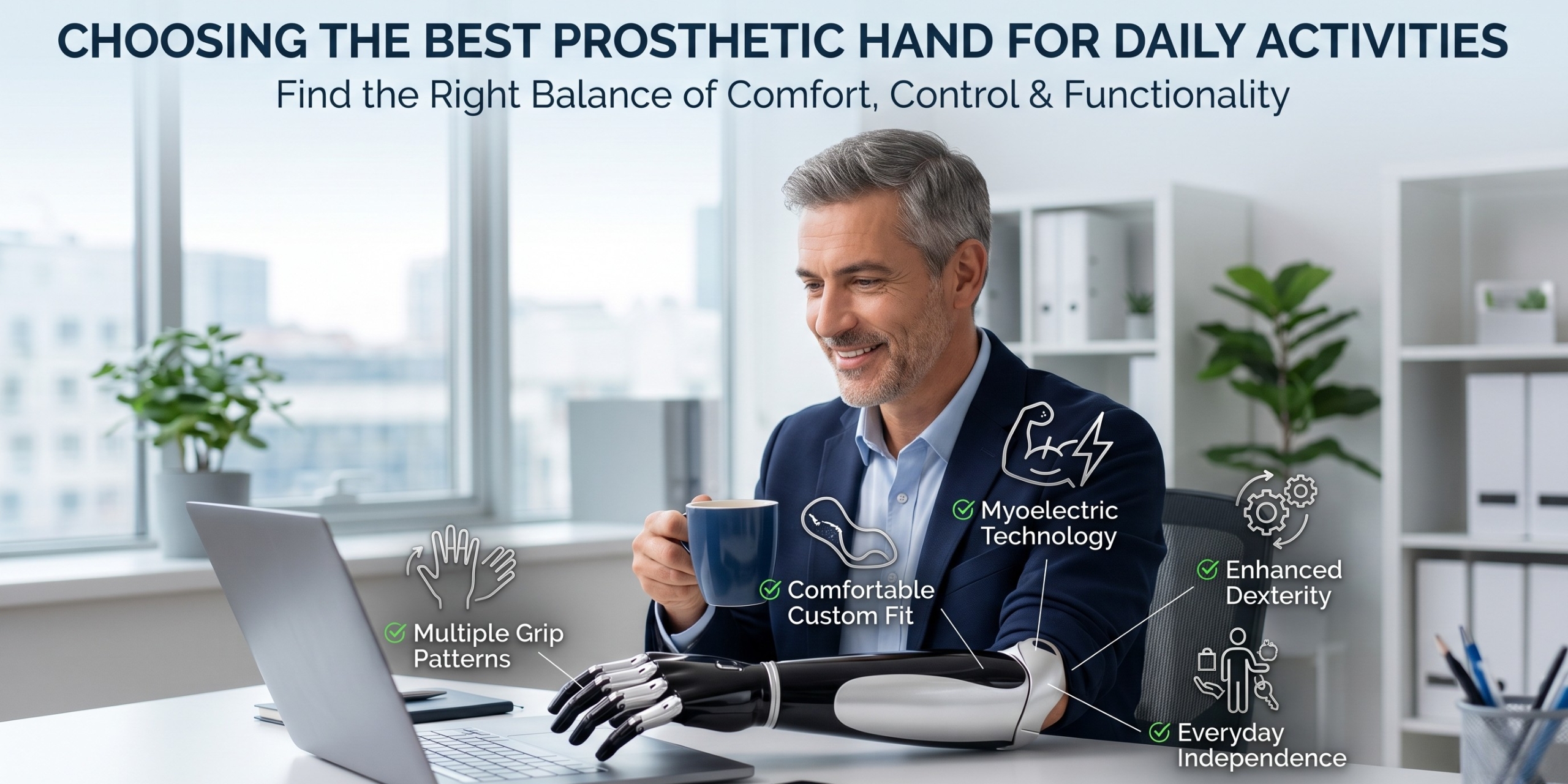
These devices use sensors placed on the residual limb to detect electrical signals generated by muscle contractions. The prosthetic interprets these signals and translates them into movement.
For many users, myoelectric systems provide a more natural and intuitive experience. They often allow for multiple grip patterns and greater precision when handling objects.
Tasks such as holding a coffee cup, typing on a keyboard, using a smartphone, or picking up delicate items become easier with advanced control systems.
Myoelectric hands are particularly beneficial for individuals seeking greater functionality in professional, educational, and social settings.
Multi-Articulating Prosthetic Hands
Among the most advanced prosthetic options available today are multi-articulating hands.
Unlike traditional prosthetic hands that open and close as a single unit, multi-articulating devices feature individually moving fingers. This allows users to perform a wider variety of grip patterns and hand positions.
These systems are designed to mimic natural hand movement more closely, making them useful for complex tasks that require precision and dexterity.
For individuals who frequently handle small objects or perform detailed work, multi-articulating prosthetic hands can offer substantial functional advantages.
Comfort Matters More Than Many People Realize
Even the most technologically advanced prosthetic hand will not be effective if it is uncomfortable to wear.
Comfort begins with the socket, which connects the prosthetic device to the residual limb. A properly fitted socket distributes pressure evenly, minimizes irritation, and improves overall control.
As residual limbs can change shape over time, periodic adjustments may be necessary to maintain comfort and performance.
Users who are comfortable wearing their prosthetic are more likely to use it consistently and gain greater long-term benefits.
Considering Your Occupation
Your profession can significantly influence the type of prosthetic hand that best suits your needs.
An office professional may prioritize dexterity for computer work and document handling. A technician may require a strong grip for tools and equipment. Healthcare workers often need reliable function for a variety of daily tasks.
Understanding workplace demands helps ensure that the prosthetic device supports productivity and efficiency.
Many modern systems can also be customized with task-specific attachments to enhance performance in specialized work environments.
Lifestyle and Recreational Activities
Daily life extends beyond work responsibilities. Hobbies, sports, and leisure activities are also important factors to consider.
Individuals who enjoy activities such as cycling, fitness training, fishing, photography, or gardening may benefit from prosthetic solutions designed to accommodate these interests.
Some prosthetic systems offer interchangeable attachments that allow users to switch between everyday functions and activity-specific tools.
Choosing a prosthetic hand that supports both work and recreation can significantly improve overall satisfaction and quality of life.
The Importance of Training and Rehabilitation
Receiving a prosthetic hand is only the first step. Learning how to use it effectively requires training and practice.
Occupational therapists play a key role in helping users develop the skills needed for daily activities. Rehabilitation often focuses on improving coordination, grip control, object manipulation, and task performance.
With time and consistent practice, many users become increasingly proficient and discover new ways to maximize the capabilities of their prosthetic device.
The most successful outcomes often occur when prosthetic technology is combined with structured rehabilitation and ongoing support.
Future Trends in Prosthetic Hand Technology
The field of upper limb prosthetics continues to evolve rapidly.
Innovations such as artificial intelligence, sensory feedback systems, advanced robotics, and machine learning are creating new opportunities for prosthetic users.
Researchers are developing systems that provide more natural movement, improved responsiveness, and enhanced user control. Some emerging technologies aim to restore sensory experiences, allowing users to receive feedback when touching or holding objects.
These advancements are expected to further improve functionality and independence in the years ahead.
Making the Right Choice for Your Needs
There is no single prosthetic hand that is ideal for everyone. The best choice depends on your daily activities, work requirements, lifestyle preferences, and personal goals.
Taking the time to evaluate how you use your hands throughout the day can help guide the decision-making process. Working closely with an experienced prosthetist ensures that your chosen device aligns with your needs and provides the best possible balance of comfort, functionality, and performance.
A carefully selected prosthetic hand can become an invaluable tool that supports independence, productivity, and confidence in everyday life.
Discover Personalized Upper Limb Prosthetic Solutions
At PROACTIVE Technical Orthopaedics, we understand that every individual’s needs are unique. As the best prosthetics manufacturer in India, we provide advanced prosthetic hand solutions designed to help users perform daily activities with greater comfort, precision, and confidence.
From body-powered devices to cutting-edge myoelectric systems, our team works closely with each patient to identify the most suitable solution based on their lifestyle and goals. If you’re considering a prosthetic hand for yourself or a loved one, contact PROACTIVE Technical Orthopaedics today and explore how personalized prosthetic care can help you regain independence and enhance your quality of life.