

Summary: Maintaining proper infection control in prosthetic users is essential for long-term mobility, health, and comfort. This blog explores the causes of infections related to prosthetic use, prevention guidelines, treatment protocols, and best practices recommended by PROACTIVE Technical Orthopaedics Pvt. Ltd., the best prosthetics manufacturer in India.
Prosthetic devices have transformed the lives of millions, enabling independence and functional movement. However, since prostheses create constant contact with the skin — especially in enclosed socket areas — the risk of infection must be taken seriously. Skin irritation, sweating, poor hygiene practices, or ill-fitting sockets can lead to bacterial or fungal growth. Without timely care, infections may worsen, resulting in pain, reduced prosthetic use, and in extreme cases, surgical intervention.
Proactive infection control ensures users maintain a healthy limb, better mobility, and longer-lasting prosthetic performance. This blog offers complete guidance for both new and experienced prosthetic wearers.
The Importance of Infection Control in Prosthetic Users
Hygiene + Fit = Safety
The skin inside the socket experiences pressure, friction, and moisture buildup. When unmanaged, this environment becomes ideal for bacteria and fungi. Infection control is essential to:
- Prevent sores, blisters, and abscesses
- Extend lifespan of prosthetic liners and components
- Maintain comfort and confidence
- Avoid costly and risky medical complications
The Role of Healthcare Teams
Regular follow-ups with prosthetists and clinicians help detect early signs of skin breakdown and adjust the prosthesis to ensure proper fit — a major barrier to infection.
Common Causes of Infection in Prosthetic Wearers
Skin Irritation Leading to Breakdown
- Excessive sweating inside the socket
- Friction from poor fit
- Allergic reactions to liner or materials
Improper Cleaning Habits
- Irregular washing of stump and prosthetic components
- Use of harsh or scented products
Underlying Medical Conditions
- Diabetes
- Poor blood circulation
- Weakened immunity
Environmental Exposure
- Dust and humidity
- Water exposure without proper drying
Prevention Protocols for Infection Control
1️⃣ Maintain Daily Limb Hygiene
- Wash the residual limb morning and night with mild antibacterial soap
- Dry completely, especially skin folds
- Avoid oils and lotions that cause moisture buildup under the liner
2️⃣ Keep Prosthetic Components Clean
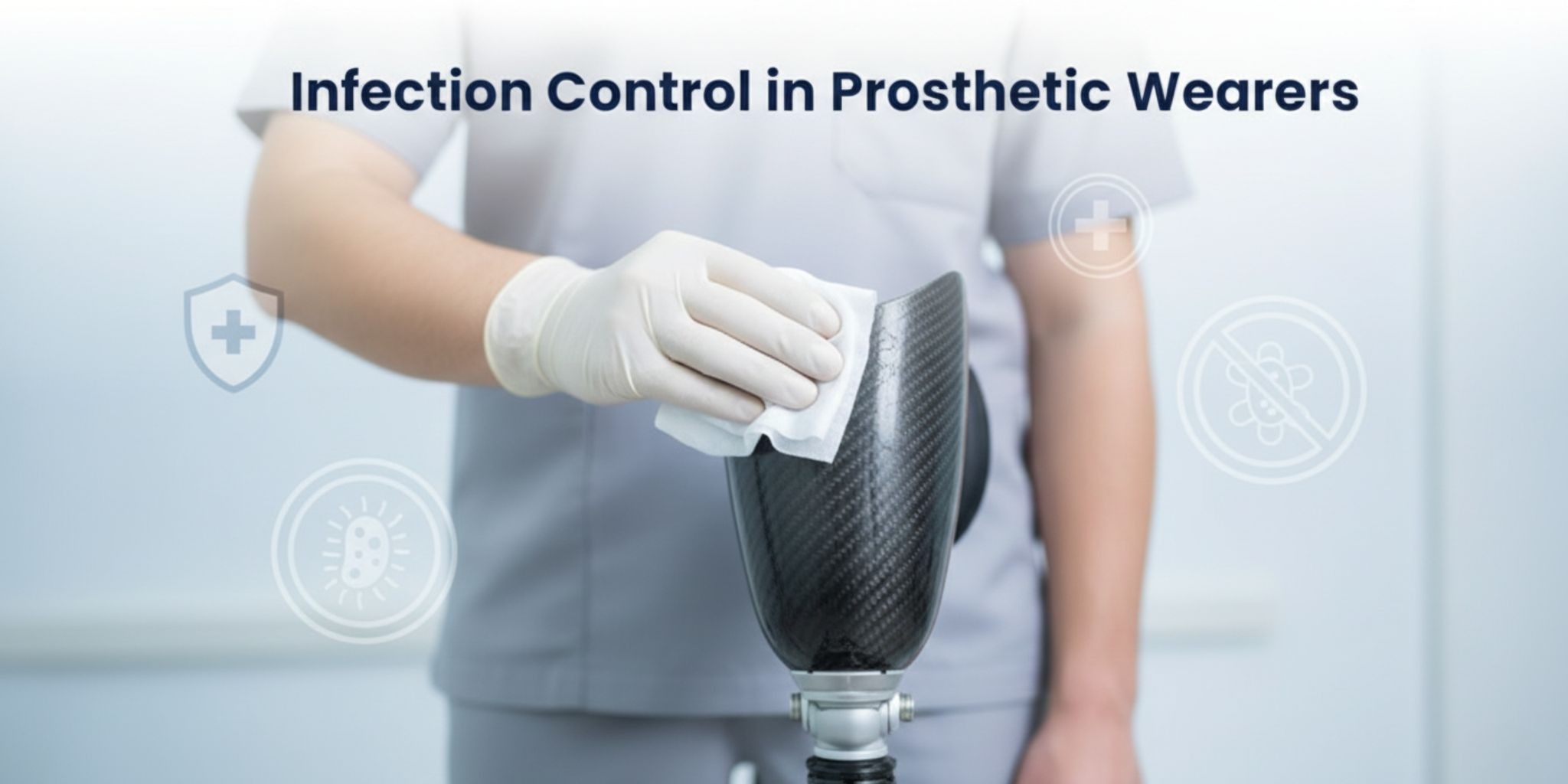
- Clean liners daily with approved cleansers
- Use alcohol wipes for socket interior when advised
- Air-dry components fully before wearing
3️⃣ Adopt Proper Skincare Routines
- Trim hair to reduce follicle irritation
- Monitor redness, rashes, pimples
- Apply doctor-recommended barrier creams if needed
4️⃣ Ensure Proper Prosthetic Fit
- Seek adjustments if pain, pressure marks, or instability occur
- Maintain consistent follow-ups with experts at PROACTIVE Technical Orthopaedics Pvt. Ltd., the best prosthetics manufacturer in India
5️⃣ Manage Sweat and Moisture
- Use moisture-wicking socks
- Keep spare socks and liners for mid-day changes
- Consider medical-grade antiperspirants
6️⃣ Healthy Lifestyle for Better Healing
- Maintain controlled blood sugar (for diabetic users)
- Stay hydrated
- Eat nutrient-rich foods to support skin health
Treatment Protocols for Prosthetic-Related Infections
Early Stage Skin Irritation
- Disinfection with mild antiseptics
- Temporary reduction of prosthetic use
- Socket or liner adjustment
Mild Bacterial Infections
- Prescription topical antibiotic creams
- Warm compresses for swelling relief
Fungal Infections (Common in Hot Climates)
- Antifungal creams or powders
- Increased drying and moisture control
Severe Infections
- Oral or IV antibiotics
- Negative pressure wound therapy (if ulceration occurs)
- Temporary discontinuation of prosthesis use may be required
Multidisciplinary Care Approach
At PROACTIVE Technical Orthopaedics Pvt. Ltd., infection management includes:
- Prosthetic evaluation for pressure points
- Advanced socket designs improving ventilation
- Patient education programs for preventive care
Best Practices for Long-Term Prosthetic Health
- Inspect the limb daily using a mirror
- Replace worn socks, liners, and components promptly
- Avoid sharing cleaning supplies and textiles
- Follow proper wearing schedules
- Schedule periodic socket fit checkups
Infection Control: A Key to Comfortable and Confident Prosthetic Use
Infection control is not just a hygiene routine — it’s a vital part of prosthetic life. With the right prevention methods, users can enjoy comfort, mobility, and safety for years. Early action and professional guidance ensure that small issues don’t turn into major medical concerns. Partner with the best prosthetics manufacturer in India, to ensure you receive expert support at every stage of your prosthetic journey.
Ready to experience safer, more advanced prosthetic care?
📞 Contact PROACTIVE Technical Orthopaedics Pvt. Ltd. today to schedule your expert consultation.
Empowering mobility. Enhancing lives.
Frequently Asked Questions (FAQs)
1. How often should I clean my prosthetic liner?
Daily cleaning is recommended to reduce odor and infection risk.
2. What products should I avoid on my residual limb?
Avoid scented or harsh soaps and greasy lotions that trap moisture.
3. Can I wear my prosthesis if the skin is irritated?
Reduce use temporarily, and consult a prosthetist if irritation persists.
4. When is redness a concern?
If redness lasts more than 20–30 minutes after removing the prosthesis.
5. What are early signs of infection?
Pain, swelling, pus, warmth, foul odor, or spreading redness.
6. Do diabetic users need extra care?
Yes — daily inspection and good glucose control are essential.
7. Can sweating increase infection risks?
Absolutely. Moisture enables bacterial and fungal growth.
8. How often should liners and socks be replaced?
Every 6–12 months depending on wear and hygiene.
9. Is swimming allowed with prosthetics?
Only with waterproof models. Always clean and dry afterward.
10. How frequently should I check socket fit?
Every 3–6 months or when limb volume changes occur.