

Summary: Skin complications such as dermatitis, ulcers, blisters, and infections are some of the most common issues experienced by prosthetic users. These challenges often arise due to friction, pressure, moisture, poor socket fit, and hygiene-related factors. This 1000-word blog explores the causes, symptoms, prevention tips, and professional support options for maintaining healthy skin while using prosthetic limbs. It also highlights how expert care from PROACTIVE Technical Orthopaedics Pvt. Ltd. and choosing the best prosthetics manufacturer in India can significantly enhance comfort and long-term mobility outcomes.
The skin plays a vital role in protecting the body, but for prosthetic users, it bears additional stress from constant contact with sockets, liners, socks, and movement-related friction. The connection between the residual limb and the prosthesis is sensitive and highly susceptible to irritation, infections, and breakdown. Even minor issues, if ignored, can worsen and impact mobility, comfort, and confidence.
Understanding common skin complications and learning how to prevent them empowers prosthetic users to maintain healthy, comfortable limb-socket interaction. This blog provides a detailed overview of key skin concerns, preventive strategies, and when to seek help from prosthetic experts.
Understanding Skin Complications in Prosthetic Users
Dermatitis
Dermatitis refers to inflammation of the skin, which may manifest as itching, redness, dryness, swelling, or rashes. Two common types affect prosthetic users:
Contact Dermatitis
Triggered by allergic reactions to materials such as adhesives, liners, or cleaning products. It often appears as:
- Red patches
- Itching or burning
- Raised bumps
Irritant Dermatitis
Often caused by friction, trapped sweat, or heat. Symptoms include:
- Dry, flaky skin
- Persistent irritation
- Chafing
If not managed early, dermatitis can escalate into wounds or deeper skin breakdown.
Ulcers
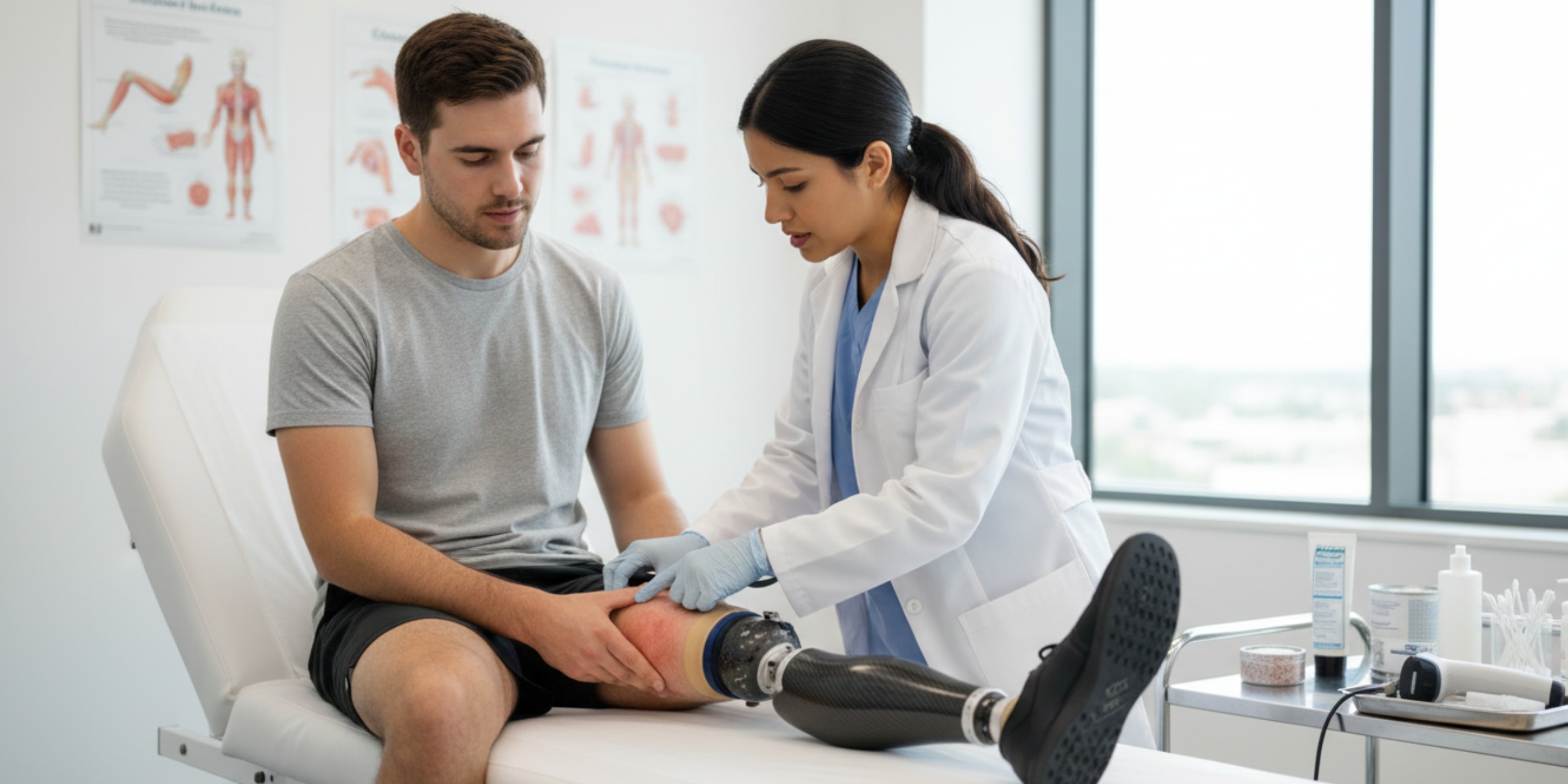
Ulcers are open wounds that form when prolonged pressure or friction damages the skin layers. Common signs include:
- Painful sores
- Drainage
- Inflamed skin
- Foul odor if infected
Ulcers typically develop when a prosthetic socket becomes ill-fitting, especially due to limb volume changes or long hours of prosthetic wear. Diabetic users or those with circulation issues are at even higher risk.
Folliculitis and Infection
Folliculitis occurs when hair follicles become inflamed due to pressure, heat, sweat buildup, or bacteria. It appears as:
- Pus-filled bumps
- Tender or itchy skin
- Warmth in the affected area
If bacteria spread, cellulitis or deep infections can occur, requiring urgent medical attention.
Blisters
Blisters form when repetitive shear forces cause skin layers to detach and fill with fluid. Contributing factors include:
- Excessive activity
- Improper socket alignment
- Moisture accumulation
Though small, blisters can quickly lead to infections if not treated promptly.
Cysts
Blockage of sweat glands due to constant pressure may lead to cyst formation. These lumps can become painful or infected and may need clinical intervention.
Causes of Skin Complications
Multiple factors contribute to skin issues for prosthetic users:
Poor Prosthetic Fit
A socket that is too tight or loose increases pressure, friction, and shear forces, causing ulcers and irritation.
Excessive Moisture
Sweat softens the skin, making it more prone to breakdown. Hot climates or long hours of wear exacerbate moisture buildup.
Inadequate Hygiene
Not cleaning the residual limb, liner, or socket regularly increases the risk of bacterial and fungal infections.
Material Sensitivity
Some users experience allergic reactions to silicone liners, gels, detergents, or adhesives.
Physical Activity
High activity levels increase heat, sweat, and friction, especially during sports or long walking sessions.
Weight or Limb Volume Changes
Weight gain, loss, or swelling may alter socket fit and create pressure imbalances.
Prevention Strategies
Maintain Proper Hygiene
- Wash your residual limb daily using mild, fragrance-free soap.
- Clean prosthetic liners and socks after every use.
- Wipe the socket interior with appropriate cleaning solutions.
- Keep the limb and liner completely dry before wearing the prosthesis.
Ensure Proper Prosthetic Fit
Visit your clinic regularly to check socket fit and alignment. Any discomfort should be evaluated immediately to prevent skin damage.
Use Skin-Friendly Products
- Apply hypoallergenic moisturizers at night.
- Avoid lotions before wearing your prosthesis as they increase slipperiness.
- Use powders or antiperspirants designed for prosthetic users to reduce sweat.
Manage Heat and Moisture
- Use breathable, moisture-wicking prosthetic socks.
- Change socks throughout the day if they become damp.
- Air out the limb periodically during long wear durations.
Daily Skin Inspection
Check the limb every day for:
- Redness
- Blisters
- Scratches
- Swelling
- Discoloration
Early signs allow quick correction and help prevent severe injury.
Gradual Increase in Wear Time
Users who are new to a prosthesis should gradually increase wear time to allow the skin to adapt and toughen.
Balanced Socket Pressure
A well-designed and well-fitted socket ensures even pressure distribution, reducing the risk of ulcers and irritation. Skilled prosthetists play a crucial role in achieving this.
When to Seek Professional Help
It’s time to consult a prosthetist or clinician if you notice:
- Redness lasting more than 24 hours
- Persistent pain
- Bleeding, ulcers, or open wounds
- Any type of discharge
- Spreading redness or fever (signs of infection)
- Increasing discomfort while wearing the prosthesis
Delaying treatment can worsen conditions and require longer recovery.
The Role of Skilled Prosthetic Professionals
Prosthetic experts ensure proper fit, recommend high-quality materials, and adjust sockets based on limb changes. Clinics such as PROACTIVE Technical Orthopaedics Pvt. Ltd. specialize in creating custom-fitting prostheses, offering advanced liners, and guiding users in skin care management. Choosing solutions from the best prosthetics manufacturer in India helps enhance safety, comfort, durability, and overall performance.
Prioritizing Skin Health for Comfortable Prosthetic Use
Skin complications such as dermatitis, ulcers, blisters, and infections are common challenges faced by prosthetic users. However, with awareness, proper hygiene, correct prosthetic fitting, and proactive care, most of these issues can be prevented or effectively managed. Regular follow-ups with trained prosthetic professionals play a vital role in maintaining skin integrity and enhancing overall mobility. Choosing solutions from the best prosthetics manufacturer in India further ensures high-quality components, improved comfort, and long-term skin protection.
If you’re facing skin discomfort or need expert guidance for prosthetic care, contact PROACTIVE Technical Orthopaedics Pvt. Ltd. Their team of certified specialists provides comprehensive support, personalized fittings, and advanced prosthetic solutions to ensure safe and comfortable mobility. Reach out today and take a step toward healthier skin and enhanced prosthetic comfort.
Frequently Asked Questions
1. Why do skin problems occur in prosthetic users?
Skin problems occur due to friction, heat, moisture, pressure points, improper fit, and hygiene issues.
2. How can I prevent skin irritation inside the socket?
Maintaining daily hygiene, keeping the limb dry, and ensuring a proper socket fit are key preventive measures.
3. What should I do if my skin turns red after prosthetic use?
Monitor it for 24 hours. If the redness persists or worsens, consult your prosthetist.
4. Can prosthetic materials cause allergies?
Yes, some users may develop allergic reactions to liners, adhesives, or cleaning products.
5. How often should I clean the liner?
Ideally, you should clean it daily to prevent bacterial buildup.
6. Can sweating lead to infections?
Yes, excessive sweating softens the skin, increases friction, and promotes bacterial growth.
7. What should I do if I develop a blister?
Pause prosthetic use, keep the area clean, and seek professional evaluation to adjust the socket.
8. When are ulcers considered serious?
Any open wound or ulcer should be treated seriously, especially if it shows signs of infection.
9. How frequently should I visit my prosthetist?
Every 6–12 months, or sooner if you notice discomfort or skin issues.
10. How can PROACTIVE Technical Orthopaedics Pvt. Ltd. help?
They offer custom prosthetic designs, precise fittings, advanced materials, and ongoing support to ensure skin comfort and long-term prosthetic success.