
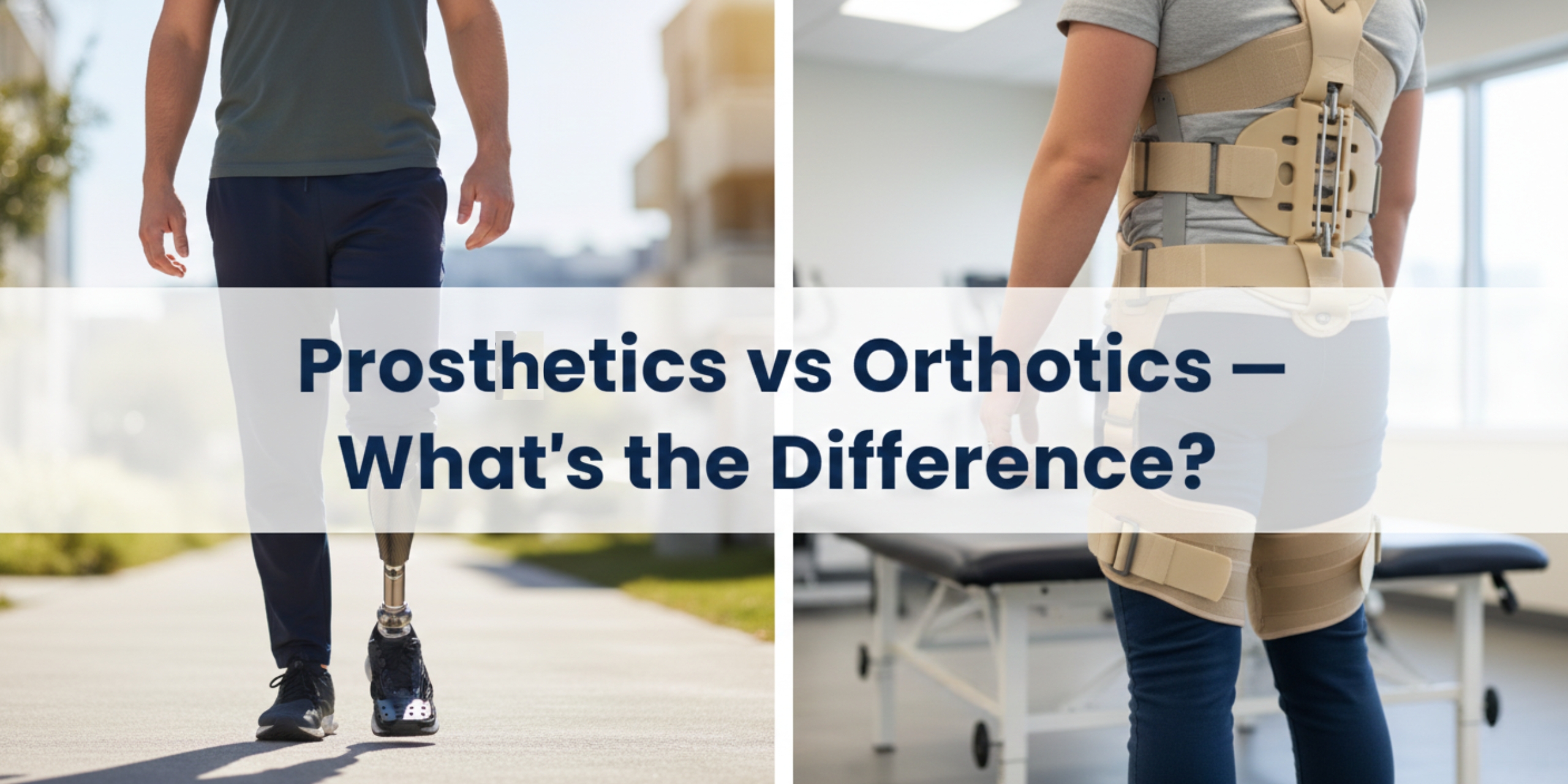

Summary: Prosthetics and orthotics are both essential branches of rehabilitation and medical support, but they serve different purposes. Prosthetics replace missing limbs or body parts, while orthotics support, align, and improve the function of existing body parts. Understanding the difference helps patients make informed decisions about treatment, comfort, and long-term mobility.
Millions of people worldwide rely on medical devices to enhance their mobility, independence, and overall quality of life. For individuals recovering from injury, amputation, neurological issues, or musculoskeletal conditions, prosthetics and orthotics play a transformative role. However, many patients and families often confuse the two terms.
This blog explains the difference between prosthetics and orthotics in simple language, helping you understand how each device works, who needs it, and how the right treatment can positively impact daily life.
What Are Prosthetics?
Prosthetics refer to artificial limbs or body parts designed to replace missing anatomical parts. These devices restore functionality and appearance after amputation caused by trauma, illness, congenital disability, diabetes, or other medical conditions.
Types of Prosthetics
- Upper-limb prosthetics: artificial arms, hands, and fingers
- Lower-limb prosthetics: artificial legs, knees, and feet
- Myoelectric and bionic prosthetics: advanced prosthetics powered by nerve responses or electric signals
- Cosmetic prosthetics: focus on appearance more than movement
Key Goals of Prosthetics
- Restore mobility and independence
- Improve balance and posture
- Enable daily activities including walking, holding objects, and driving
- Improve confidence and lifestyle after amputation
What Are Orthotics?
Orthotics are externally applied medical devices that support, protect, realign, or improve the function of existing body parts. Unlike prosthetics, orthotics do not replace limbs — they enhance or support their functionality.
Types of Orthotic Devices
- Foot and ankle orthoses (AFOs, insoles, shoe inserts)
- Spinal orthoses (back or neck braces)
- Knee and hip orthoses
- Wrist and hand braces
Key Goals of Orthotics
- Improve alignment and posture
- Reduce pain and discomfort
- Correct deformities or prevent their progression
- Support recovery after fractures or surgeries
- Enhance movement for neurological and muscular disorders
Prosthetics vs Orthotics — The Core Difference
Although both improve mobility and function, they serve entirely different purposes.
| Aspect | Prosthetics | Orthotics |
|---|---|---|
| Purpose | Replace missing limb/body part | Support & improve function of existing body part |
| Primary Users | Patients with amputation | Patients with abnormalities, injuries, pain, or weak muscles |
| Function | Mimics natural limb movement | Offers support, cushioning, and alignment |
| Example | Artificial leg | Spine brace or foot orthotic |
Simply put: prosthetics substitute, orthotics assist.
Who Needs Prosthetics and Orthotics?
Candidates for Prosthetics
- Individuals with limb amputation due to accidents, diabetes, cancer, trauma, or birth defects
- Individuals seeking cosmetic limb replacement
Candidates for Orthotics
- People with flat feet, scoliosis, knee pain, or joint pain
- Patients recovering from orthopedic surgery or fractures
- People with neurological conditions such as cerebral palsy, stroke, or spinal cord injuries
Choosing the Right Solution
Whether someone needs prosthetics or orthotics depends upon:
- Medical diagnosis and treatment plan
- Level of physical activity
- Personal goals and lifestyle
- Expert recommendation from a clinician or prosthetist/orthotist
A professional evaluation ensures correct measurements, proper fitting, customization, and long-term support for mobility and comfort.
A Final Thought
Prosthetics and orthotics are life-changing medical innovations that improve mobility, independence, and confidence. Prosthetics replace missing body parts, whereas orthotics support and enhance the function of existing body parts. With proper assessment, customization, and care from the best prosthetics manufacturer in India, both solutions can dramatically improve physical function and overall quality of life.
If you or your loved one needs a reliable prosthetic or orthotic solution, expert guidance matters. Connect with PROACTIVE Technical Orthopaedics Pvt. Ltd. for customized devices, clinical evaluation, precise fitting, and long-term support to live a more active and independent life.
10 Frequently Asked Questions (FAQs)
1. What is the main difference between prosthetics and orthotics?
Prosthetics replace a missing body part, while orthotics support and improve the function of an existing body part.
2. Are prosthetics and orthotics painful to use?
With proper fitting and adaptation, they should not be painful. Mild discomfort initially is normal.
3. How long does a prosthetic limb last?
Typically 3–5 years depending on wear-and-tear, activity level, and maintenance.
4. Can children use prosthetics and orthotics?
Yes, both are available for children and must be adjusted as they grow.
5. Do orthotics help with knee or back pain?
Yes, orthotics improve alignment and reduce pressure on joints to relieve pain.
6. Are prosthetics waterproof?
Some models are water-resistant, and special waterproof options are available for swimming.
7. Will I be able to walk normally with a prosthetic?
Yes, with physiotherapy and consistent practice, most people walk confidently over time.
8. Do orthotics require a doctor’s prescription?
Custom orthotics require a clinical evaluation, while off-the-shelf orthotics do not.
9. Can prosthetics be used for sports?
Absolutely — there are special sports prosthetics designed for running, swimming, cycling, etc.
10. How can I know whether I need prosthetics or orthotics?
Consulting a specialist or prosthetist/orthotist will determine the most suitable option.