

Summary: This comprehensive guide explores prosthetic limbs, from their basic definition to the various types available today. Whether you’re newly considering a prosthetic device, supporting someone who needs one, or simply curious about this life-changing technology, this article breaks down everything you need to know about artificial limbs in an accessible, easy-to-understand format.
Losing a limb can be a life-altering experience, but modern prosthetic technology offers hope and renewed independence to millions of people worldwide. A prosthetic limb is more than just a replacement body part—it’s a gateway to restored mobility, confidence, and quality of life. Understanding what prosthetic limbs are, how they work, and what options are available is the first step toward making informed decisions about your care or supporting loved ones on their journey.
In this beginner’s guide, we’ll explore the fundamentals of prosthetic limbs, demystify the technology, and help you understand how these remarkable devices are transforming lives every day.
What Exactly is a Residual Limb / Stump?
A residual limb is the part of the arm or leg that remains after an amputation and plays a critical role in successful prosthetic fitting and rehabilitation. It includes bones, muscles, nerves, blood vessels, and skin, all of which must heal properly to support a prosthetic device. The shape, length, skin condition, and sensitivity of the residual limb directly affect comfort, stability, and mobility with a prosthesis. Proper care—such as hygiene, compression therapy, skin inspection, and gradual strengthening—is essential to prevent complications like skin breakdown, swelling, or pain. A well-managed residual limb helps ensure better prosthetic alignment, improved function, and long-term comfort for the user, making it a key focus in prosthetic and orthotic rehabilitation.
What Exactly Is a Prosthetic Limb?
A prosthetic limb is an artificial device designed to replace a missing arm, leg, hand, or foot. These custom-made devices serve both functional and cosmetic purposes, helping individuals regain the ability to perform daily activities while also restoring their body’s natural appearance.
Prosthetic limbs are carefully engineered to mimic the movement, weight distribution, and sometimes even the sensation of natural limbs. They’re prescribed and fitted by healthcare professionals called prosthetists, who work closely with patients to ensure the device meets their specific needs, lifestyle, and physical condition.
The Main Components of a Prosthetic Limb
Understanding the basic parts of a prosthetic limb helps demystify how these devices work:
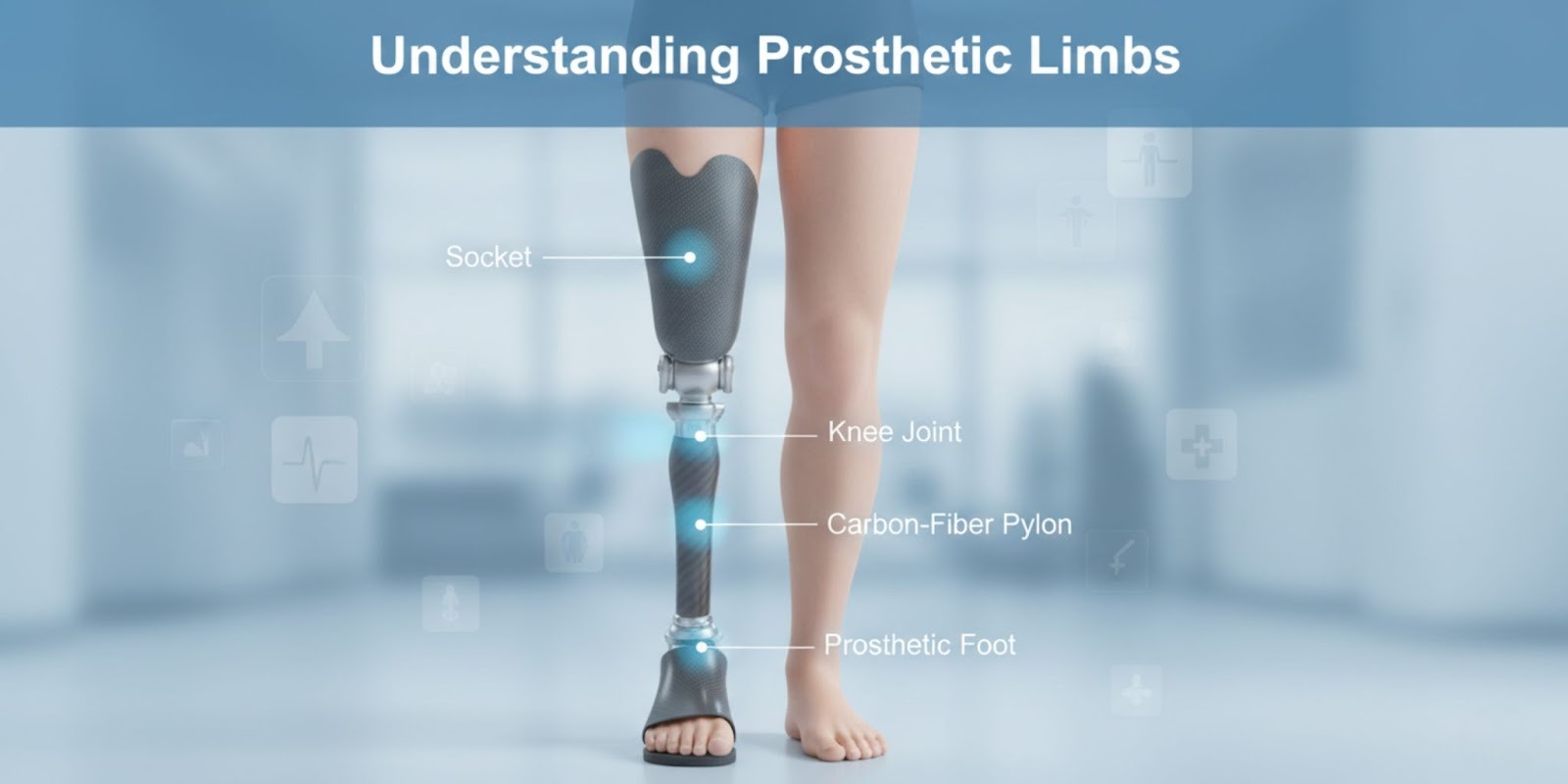
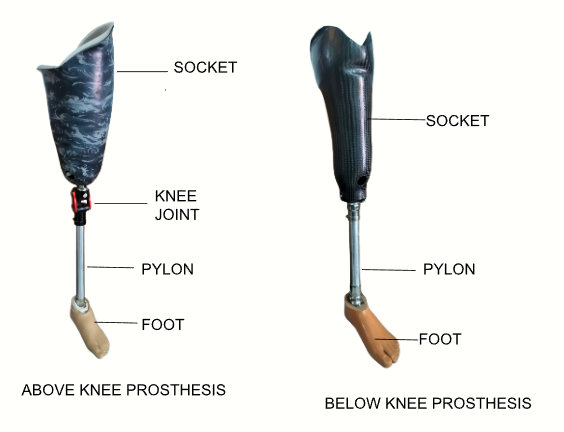
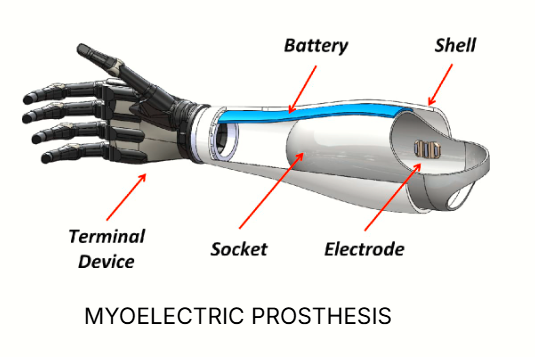
The Socket is the interface between the residual limb / stump and the prosthesis .
A prosthetic socket is the part of a prosthetic limb that fits directly over the residual limb and connects the user to the prosthesis.
It distributes body weight and pressure evenly to ensure comfort and stability during movement.
A well-designed socket improves control, reduces skin problems, and enhances overall mobility.
Proper socket fit is essential for safe, comfortable, and effective prosthetic use.
The Suspension System keeps the prosthetic securely attached to your body. This might include straps, suction mechanisms, vacuum systems, or specialized liners that create a seal.
The Pylon serves as the structural support, essentially acting as the “skeleton” of the prosthetic. Modern pylons are typically made from lightweight materials like carbon fiber or titanium.
Prosthetic Foot and Terminal Device are essential components of a prosthetic limb that restore function, balance, and mobility for the user.
A prosthetic foot supports body weight, absorbs shock, and helps simulate natural walking by providing stability and smooth gait progression. It plays a key role in improving posture, energy efficiency, and confidence during standing and walking.
A terminal device, commonly used in upper-limb prosthetics, is the functional end component—such as a hook or prosthetic hand—that enables the user to perform daily activities like gripping, holding, and manipulating objects. Together, the prosthetic foot and terminal device are selected based on the user’s activity level, lifestyle, and rehabilitation goals to ensure optimal performance and comfort.
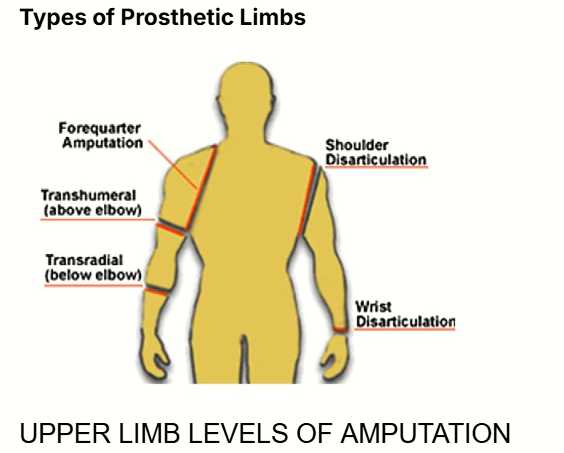
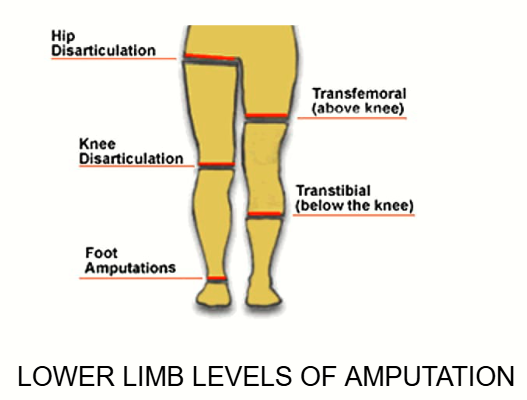
Prosthetic limbs fall into two main categories based on the missing body part:
Lower Limb Prosthetics replace legs, feet, or portions of the lower body. These include below-knee prosthetics, above-knee prosthetics, partial foot prosthetics, and hip disarticulation prosthetics. Lower limb devices focus primarily on restoring mobility, balance, and the ability to walk.
Upper Limb Prosthetics replace arms, hands, or fingers. Options range from cosmetic devices that restore appearance to highly functional prosthetics with mechanical or electronic components that allow for gripping, grasping, and manipulating objects.
Technology Levels in Prosthetic Limbs
Prosthetic technology exists on a spectrum, from basic mechanical devices to cutting-edge computerized systems:
Passive Prosthetics have no moving parts and primarily serve cosmetic purposes or provide basic support. While simple, they’re lightweight, durable, and require minimal maintenance.
Body-Powered Prosthetics use cables, harness, and the user’s own body movements to control the device. These offer good functionality without requiring batteries or complex electronics.
Myoelectric Prosthetics represent advanced technology, using electrical signals from remaining muscles to control motorized components. Sensors detect muscle contractions and translate them into natural-seeming movements.
Microprocessor-Controlled Prosthetics feature computerized components that automatically adjust to different walking speeds, terrains, and activities. These “smart” prosthetics can significantly improve gait quality and reduce energy expenditure.
Who Needs a Prosthetic Limb?
People may require prosthetic limbs for various reasons:
Limb loss due to trauma from accidents, injuries, or combat represents a significant portion of prosthetic users. Vascular diseases, particularly those caused by diabetes and peripheral artery disease, can necessitate amputation when circulation becomes critically impaired. Cancer, especially bone cancer, sometimes requires amputation as part of treatment. Congenital limb deficiency means some individuals are born without fully formed limbs and benefit from prosthetics from early childhood.
The Journey to Getting a Prosthetic Limb
Receiving a prosthetic limb is a process that requires patience, commitment, and collaboration with healthcare professionals. After amputation or when preparing for a prosthetic, the initial phase involves healing, managing residual limb swelling, and beginning physical therapy to strengthen surrounding muscles.
Working with a prosthetist comes next—these specialists assess your needs, take detailed measurements, and create a custom socket that fits your unique anatomy. The fitting process typically involves multiple appointments to ensure optimal comfort and function.
Learning to use your prosthetic requires dedication. Physical therapists guide you through exercises and activities that help you adapt to the device, build strength, and develop new movement patterns. This rehabilitation phase is crucial for achieving the best possible outcomes.
The Future of Prosthetic Technology
The field of prosthetics is advancing rapidly. Researchers are developing prosthetics with sensory feedback, allowing users to “feel” through their artificial limbs. Osseointegration—where the prosthetic anchors directly to the bone—eliminates the need for sockets in some cases. Artificial intelligence is making prosthetics more intuitive, predicting user intent and adapting automatically to different situations.
3D printing technology is making custom prosthetics more affordable and accessible, particularly in developing regions. These innovations promise even better functionality, comfort, and quality of life for future prosthetic users.
Embracing a New Chapter with Confidence
Prosthetic limbs represent a remarkable intersection of medical science, engineering, and human resilience. While losing a limb is undoubtedly challenging, modern prosthetic technology offers genuine hope for restored independence and an active lifestyle. Understanding the basics of prosthetic limbs—what they are, how they work, and what options exist—empowers individuals and families to make informed decisions and approach the journey with confidence.Whether you’re beginning this journey yourself or supporting someone who is, remember that every person’s experience with prosthetics is unique. With the right healthcare team, including partnering with the best prosthetics manufacturer in India, proper fitting, dedicated rehabilitation, and time, prosthetic limbs can truly be life-changing devices that open doors to renewed possibilities.
Call to Action
Ready to Learn More About Prosthetic Solutions?
At PROACTIVE Technical Orthopaedics Pvt. Ltd., we specialize in providing cutting-edge prosthetic and orthotic solutions tailored to your unique needs. Our experienced team of certified prosthetists and orthotists is dedicated to helping you regain mobility, independence, and confidence.
We offer comprehensive consultations, state-of-the-art fitting technology, and ongoing support throughout your prosthetic journey. Don’t navigate this path alone—let our experts guide you toward the best solution for your lifestyle and goals.
Contact PROACTIVE Technical Orthopaedics Pvt. Ltd. today to schedule your consultation and take the first step toward a more active, fulfilling life.
Frequently Asked Questions
How long does a prosthetic limb last?
The lifespan of a prosthetic limb varies depending on the type, usage level, and maintenance. Generally, lower limb prosthetics last 3-5 years, while upper limb devices may last 5-7 years. Children outgrow prosthetics more quickly and typically need new devices every 12-24 months. Regular maintenance and proper care can extend the life of your prosthetic.
Is wearing a prosthetic limb painful?
When properly fitted, prosthetic limbs should not cause significant pain. Initial adjustment periods may involve some discomfort as your body adapts to the device. Ongoing pain usually indicates fitting issues, skin problems, or changes in your residual limb that require attention from your prosthetist. Regular follow-up appointments help address comfort concerns promptly.
How much does a prosthetic limb cost?
Prosthetic limb costs vary widely based on technology level and complexity. Basic prosthetics may cost 15000 and above , while advanced microprocessor-controlled devices can range from 1700000 or more. Many insurance plans cover prosthetics, though coverage varies. Financial assistance programs and payment plans may be available to help manage costs.
Can I shower or swim with my prosthetic limb?
Most standard prosthetic limbs are not waterproof and should be removed before bathing or swimming. However, specialized waterproof prosthetics are available for aquatic activities. Many users have a separate “shower leg” or “swimming prosthetic” designed specifically for water use. Discuss your lifestyle needs with your prosthetist to explore waterproof options.
How long does it take to learn to use a prosthetic limb?
The learning curve varies significantly by individual, amputation level, and prosthetic type. Basic walking with a below-knee prosthetic might take a few weeks to a few months, while above-knee prosthetics or upper limb devices may require several months of intensive therapy. Commitment to physical therapy and regular practice significantly impacts the timeline.
Can I exercise and play sports with a prosthetic limb?
Absolutely! Many prosthetic users engage in sports and exercise, from walking and swimming to running, cycling, and even extreme sports. Specialized sports prosthetics are designed for specific activities and can withstand the demands of athletic performance. Discuss your activity goals with your prosthetist to ensure your device supports your lifestyle.
Will people be able to tell I’m wearing a prosthetic?
Modern prosthetics are increasingly realistic in appearance. Cosmetic covers can closely match your skin tone and natural limb appearance. While some prosthetic types may be more visible, many users find that others don’t notice their prosthetic in everyday situations, especially when wearing long pants or sleeves.
How often do I need to see my prosthetist?
Initially, you’ll have frequent appointments for fitting adjustments and training. After the initial fitting period, most users see their prosthetist every 6-12 months for routine check-ups and adjustments. You should also schedule appointments whenever you experience discomfort, notice changes in fit, or encounter functional issues with your device.
Can children use prosthetic limbs?
Yes, children can benefit greatly from prosthetic limbs, often starting from as young as 6-12 months for lower limbs. Pediatric prosthetics are specially designed for growing bodies and active lifestyles. Because children grow quickly, they need more frequent prosthetic replacements. Early prosthetic use can significantly support normal development and activity levels.
What happens if my prosthetic limb breaks or malfunctions?
Contact your prosthetist immediately if your prosthetic breaks or malfunctions. Many prosthetic clinics offer emergency repair services and loaner devices while yours is being fixed. Regular maintenance appointments can prevent many issues. Some insurance plans cover repairs and replacements when medically necessary. Keep your prosthetist’s contact information readily available for urgent situations.