


Summary: Discover the fundamentals of artificial limbs, exploring how modern prosthetics work, the different types available for upper and lower extremities, and the advanced technologies that restore mobility and independence.
Losing a limb due to trauma, circulation issues, or congenital conditions is a life-altering event. However, advancements in medical technology have transformed how individuals recover and regain their independence. An artificial limb, clinically known as a prosthesis, is a custom-fabricated medical device designed to replace a missing body part.
Modern prosthetics do far more than just replace the physical appearance of a limb; they are sophisticated mechanical and electronic tools engineered to restore essential functions. Whether the goal is to walk securely around the house, return to physical labor, or compete in high-performance sports, understanding the basics of how these devices function is the first step in the rehabilitation journey.
Core Components of a Prosthetic Limb
While every prosthesis is uniquely customized to the individual user, most artificial limbs share four fundamental components that work together to provide stability, comfort, and movement.
The Socket
The socket is the most critical part of any prosthesis. It is the custom-molded receptacle that fits over the user’s residual limb (stump). Because all of the user’s weight and movement forces are transferred through this connection, a perfectly fitted socket is essential to prevent chafing, pressure sores, and pain.
The Suspension System
The suspension system is the mechanism that keeps the prosthetic limb securely attached to the body. Depending on the amputation level and user activity, this can be achieved through:
- Suction: Creating an airtight seal using a silicone liner equipped with a one-way air valve.
- Pin Lock Systems: A silicone sleeve worn over the residual limb features a metal pin at the bottom that clicks securely into a locking mechanism inside the socket.
- Belts and Harnesses: Traditional strapping methods often used for complex upper-body amputations to anchor the device to the torso.
The Pylon
The pylon is the internal skeletal structure (usually a lightweight titanium, aluminum, or carbon-fiber tube) that connects the socket to the terminal device. It provides structural support and bears the weight of the user. Many modern pylons are designed with shock-absorbing properties to reduce the impact on the user’s joints during walking or running.
The Terminal Device
This is the functional end of the prosthesis. For lower limbs, it is the prosthetic foot or a combined knee-foot setup. For upper limbs, it is a prosthetic hand, hook, or specialized attachment.
Types of Lower Extremity Prosthetics
Lower limb prosthetics focus heavily on weight-bearing stability, shock absorption, and energy return to replicate a natural human gait.
Transtibial (Below-Knee) Prostheses
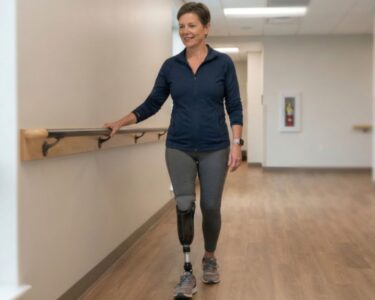
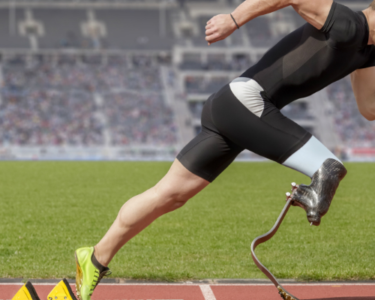
Designed for amputations below the knee, these devices consist of a socket, a pylon, and a prosthetic foot. Because the user retains their natural knee joint, controlling a transtibial prosthesis is generally highly intuitive, allowing many users to return to their pre-amputation activity levels. Modern carbon-fiber feet act as springs—storing energy when the heel strikes the ground and releasing it at the toe-off to create a smooth forward propulsion.
Transfemoral (Above-Knee) Prostheses
Amputations above the knee require a prosthesis that replaces both the knee and the foot, making it mechanically more complex. The user must learn to control the artificial knee joint to prevent it from buckling under their weight. Advanced transfemoral systems utilize microprocessor-controlled knees packed with sensors and gyroscopes. These “smart” knees read the user’s gait in real-time, automatically adjusting hydraulic or pneumatic resistance to allow for seamless walking down stairs or navigating uneven terrain safely.
Types of Upper Extremity Prosthetics
Upper extremity prosthetics prioritize dexterity, grip strength, and range of motion. Because the human hand performs highly complex tasks, these devices are categorized by how they are powered and controlled.
Passive Prosthetics
Passive limbs prioritize aesthetics and body symmetry over mechanical function. While they do not have moving joints controlled by the user, they are highly realistic, lightweight, and can be used effectively to stabilize objects, hold down paper, or assist the dominant hand.
Body-Powered Prosthetics
These durable devices are operated using the user’s own physical movements. A harness is worn across the shoulders and back; when the user flexes their shoulder, a cable pulls open the terminal device (usually a durable metal split-hook or a mechanical hand). They are highly reliable, offer physical feedback (the user can feel the cable tension), and are ideal for heavy manual labor.
Myoelectric (Bionic) Prosthetics
Myoelectric limbs represent the cutting edge of upper extremity function. They use surface electrodes built directly into the socket to detect the tiny electrical signals generated by the remaining muscles in the residual limb. When the user simply thinks about flexing their arm, the electrodes read the muscle firing and translate it into motorized movement, such as pinching a prosthetic hand closed or rotating a mechanical wrist.
The Fitting and Rehabilitation Process
Adapting to an artificial limb is a physical and mental marathon, not a sprint.
The process begins shortly after surgery with compression garments used to reduce swelling and shape the residual limb. Once the surgical site has fully healed, a prosthetist casts the limb to create a clear “test socket.” Because the residual limb shrinks and changes volume rapidly in the first year, users typically wear a temporary prosthesis for several months.
Once the limb volume stabilizes, a definitive (long-term) prosthesis is fabricated. Physical therapy is vital during this entire window, teaching the user how to balance, walk, or manipulate objects without developing compensatory injuries in other parts of their body.
Start Your Rehabilitation Journey!
Finding the right prosthetic solution is a deeply personal process that requires expert clinical guidance. If you or a loved one are navigating life after an amputation, it is essential to partner with a trusted engineering and clinical team to explore custom-designed devices tailored precisely to your goals and lifestyle.
To explore cutting-edge, internationally recognized prosthetic technology designed and fitted right here in India, connect with the best prosthetics manufacturer in india. Their team specializes in high-performance bionic limbs, microprocessor knees, and customized socket fabrications engineered to help you reclaim your mobility and independence. Reach out to a specialized prosthetic specialist today to discover how modern technology can transform your rehabilitation journey.
Frequently Asked Questions (FAQs)
1. What is an artificial limb?
An artificial limb, or prosthesis, is a custom-made medical device designed to replace a missing body part (such as an arm, leg, hand, or foot) to restore both physical appearance and mechanical function.
2. How does a prosthetic limb stay attached to the body?
Prosthetics use a suspension system to stay securely attached. Common methods include suction (creating an airtight seal with a silicone liner), a locking pin that clicks into the socket, or harnesses and belts strapped around the body.
3. What is a socket and why is it important?
The socket is the custom-molded top portion of the prosthesis that your residual limb fits directly into. It is the most critical part of the device because it bears your weight and dictates how comfortable the limb is to wear.
4. How long does a prosthetic limb last?
While the internal metal pylon and joints can last for many years, the socket usually needs to be replaced every 2 to 4 years. This is because a person’s residual limb naturally changes shape and volume over time, requiring a new custom fit.
5. What are myoelectric prosthetics?
Myoelectric prosthetics are advanced bionic limbs, primarily used for arms and hands. They use sensors resting against the skin to read electrical signals from your remaining muscles, allowing you to control the motorized hand simply by flexing your arm.
6. Do prosthetic legs bend at the knee?
Yes, for individuals with above-knee amputations, the prosthesis includes an artificial knee joint. Basic models use mechanical friction to control the swing, while advanced microprocessor knees use computer sensors to adjust the joint’s stiffness in real-time to prevent falls.
7. Does it hurt to wear a prosthesis?
A properly fitting prosthesis should not cause pain, though it takes time to build up a tolerance to wearing one. If you experience sharp pain, chafing, or pressure sores, it usually means the socket needs to be adjusted by your prosthetist.
8. Can I shower or swim with an artificial limb?
Most standard prosthetics are not waterproof and contain metal parts that can rust or electronics that will short out. However, you can work with your prosthetist to build a specialized, fully waterproof “water leg” specifically for showering or swimming.
9. How soon after amputation can I get a prosthesis?
Typically, the fitting process begins 6 to 10 weeks after surgery, once the incision has fully healed and the initial swelling has subsided. However, every patient’s timeline varies based on their specific healing process and overall health.
10. Will I need physical therapy to use an artificial limb?
Absolutely. Physical and occupational therapy are critical components of the process. Therapists teach you how to properly put on the device, walk with a natural gait, and rebuild your core strength to use the limb safely.