

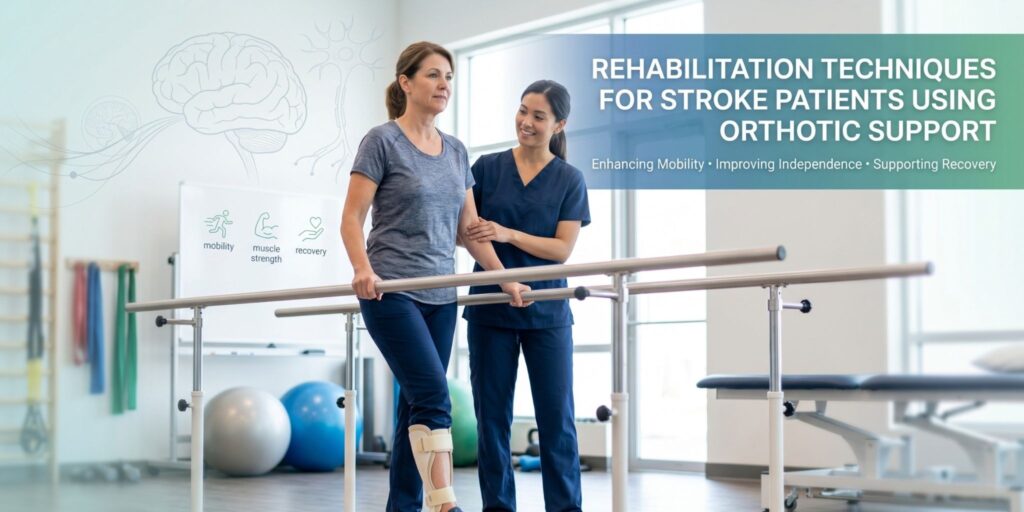
A Complete Guide to Improving Mobility, Balance, and Independence
Stroke is one of the leading causes of long-term disability worldwide. Many stroke survivors experience weakness, muscle stiffness, balance problems, and difficulty walking, which can significantly affect their quality of life. Fortunately, modern stroke rehabilitation techniques combined with orthotic support can help patients regain mobility, improve function, and return to daily activities with greater confidence.
At Proactive Technical Orthopaedics’, we believe that successful recovery requires a combination of medical care, physical rehabilitation, and properly designed orthotic devices tailored to each patient’s needs.
This guide explains how orthotic support plays a vital role in stroke rehabilitation and the techniques that help maximize recovery.
Understanding Stroke and Its Physical Effects
A stroke occurs when blood flow to a part of the brain is interrupted, causing damage to brain cells. Depending on the affected area, patients may experience:
- Muscle weakness or paralysis
- Foot drop
- Difficulty walking
- Poor balance and coordination
- Spasticity (muscle stiffness)
- Joint instability
- Reduced hand and arm function
- Increased risk of falls
These challenges often make simple activities such as standing, climbing stairs, or walking independently difficult.
Early and structured stroke rehabilitation therapy is essential to improve outcomes.
What Is Orthotic Support in Stroke Rehabilitation?
Orthotic support involves the use of specially designed braces and supportive devices that improve body alignment, stabilize joints, and assist movement.
Orthoses do not simply provide support—they work alongside rehabilitation exercises to encourage proper movement patterns and prevent secondary complications.
Benefits of Orthotic Support for Stroke Patients
- Improves walking ability
- Corrects foot drop
- Enhances balance and stability
- Prevents joint deformities
- Reduces muscle fatigue
- Increases confidence during mobility
- Minimizes the risk of falls
- Promotes independence in daily life
Combining orthotic management for stroke patients with physical therapy often leads to better long-term recovery.
Common Orthotic Devices Used After Stroke
1. Ankle Foot Orthosis (AFO)
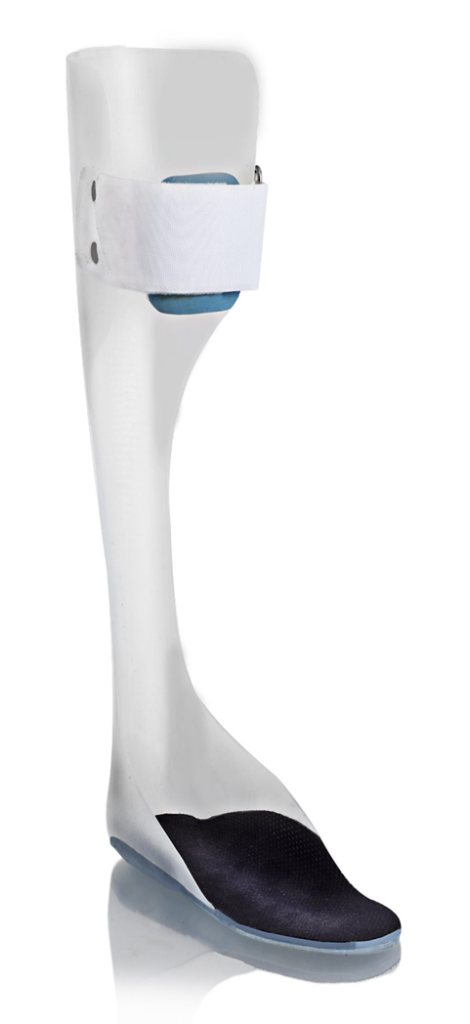
An AFO is one of the most commonly prescribed orthotic devices for stroke survivors.
It helps by:
- Preventing foot drop
- Supporting ankle stability
- Improving toe clearance during walking
- Enhancing gait efficiency
- Reducing the risk of tripping
Patients with lower limb weakness often benefit significantly from custom-designed AFOs.
2. Knee Ankle Foot Orthosis (KAFO)
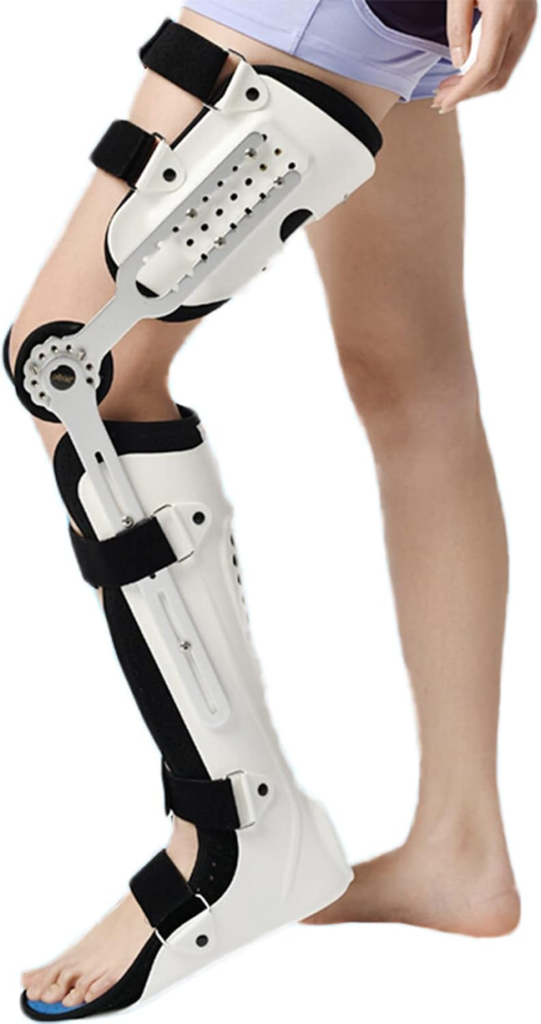
When knee instability is severe, a KAFO provides additional support to both the knee and ankle.
It is recommended for patients with:
- Severe muscle weakness
- Knee buckling
- Advanced gait impairment
3. Hand and Wrist Orthosis
Upper limb weakness is common after stroke.
Hand splints and wrist orthoses help:
- Maintain proper positioning
- Reduce muscle tightness
- Prevent contractures
- Improve functional use of the hand
4. Resting Splints
These are mainly used during rest or night time to maintain proper joint alignment and reduce abnormal muscle tone.
Key Rehabilitation Techniques for Stroke Patients
Early Mobilization
Starting rehabilitation early helps prevent complications associated with prolonged bed rest.
Benefits include:
- Improved circulation
- Reduced muscle wasting
- Better joint flexibility
- Enhanced neurological recovery
Therapists gradually introduce sitting, standing, and walking exercises according to the patient’s condition.
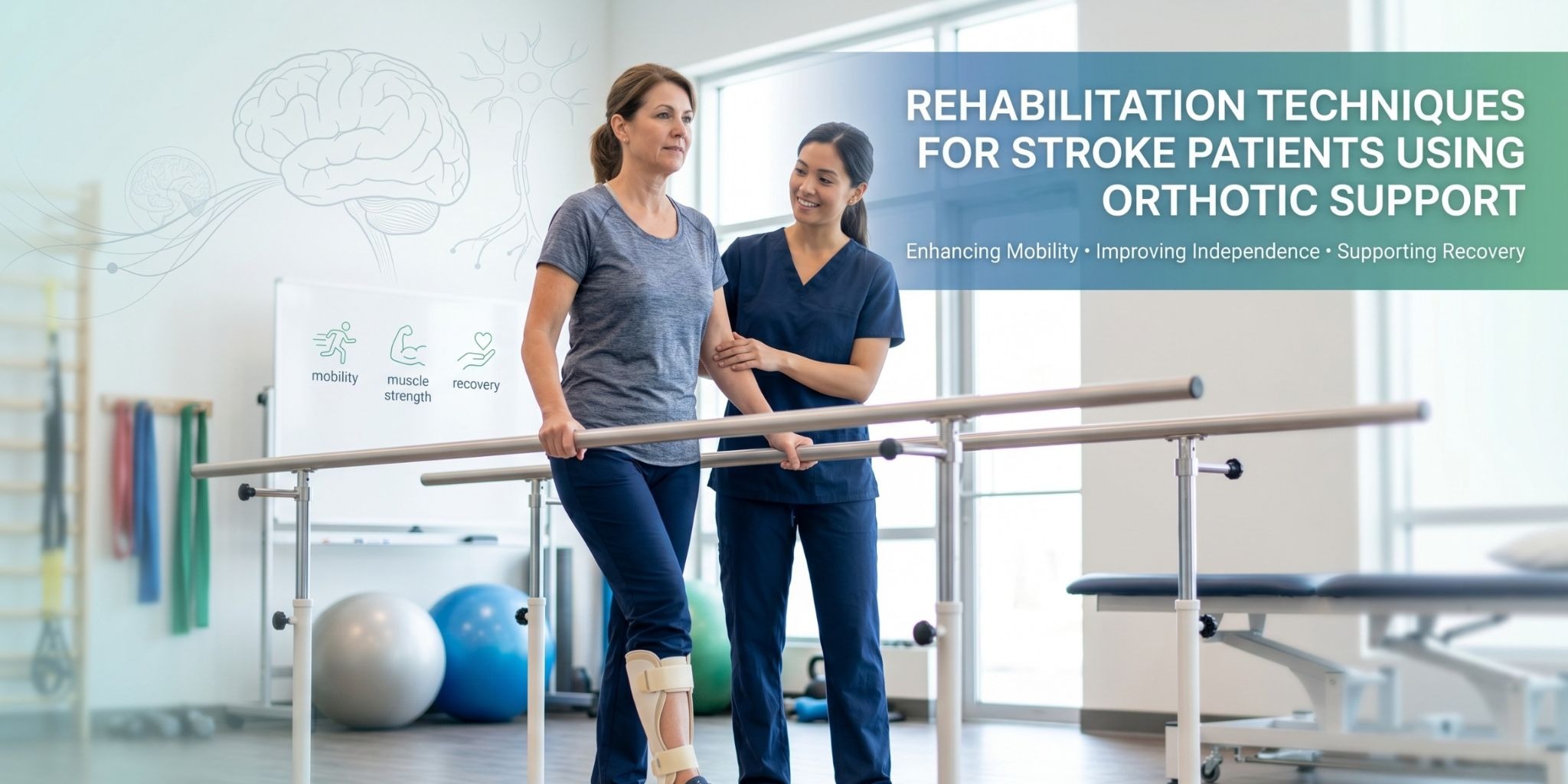
Gait Training with Orthotic Support
Walking recovery is one of the primary goals of stroke rehabilitation.
Gait training focuses on:
- Correct walking pattern
- Weight shifting
- Step length improvement
- Heel strike training
- Balance during movement
Using an AFO during gait training allows patients to walk with better stability and less energy expenditure.
Regular gait training can improve overall mobility and confidence.
Strengthening Exercises
Muscle weakness after stroke affects both mobility and posture.
Therapists recommend exercises that strengthen:
- Hip muscles
- Quadriceps
- Hamstrings
- Calf muscles
- Core muscles
- Shoulder and arm muscles
Orthotic support helps patients perform these exercises safely while maintaining proper alignment.
Balance and Coordination Training
Many stroke survivors experience poor balance, increasing the likelihood of falls.
Balance training may include:
- Standing exercises
- Weight transfer activities
- Single-leg support practice
- Stability exercises
- Functional reaching tasks
Orthotic devices provide the necessary support while patients rebuild confidence.
Range of Motion Exercises
Joint stiffness can develop if movement is limited.
Passive and active range of motion exercises help:
- Maintain flexibility
- Prevent contractures
- Improve circulation
- Reduce stiffness
Splints and orthoses assist in preserving correct joint positioning.
Functional Task Training
The goal of rehabilitation is not only movement but also independence.
Functional training includes:
- Walking indoors and outdoors
- Climbing stairs
- Sitting and standing
- Dressing
- Personal hygiene
- Household activities
Orthotic devices enable safer participation in these daily activities.
Spasticity Management
Spasticity causes muscles to become tight and difficult to control.
Management strategies include:
- Stretching exercises
- Positioning techniques
- Splinting
- Orthotic support
- Physical therapy interventions
Proper orthotic management helps reduce abnormal muscle patterns and improves comfort.
Neuromuscular Re-Education
This therapy retrains the brain and muscles to work together again.
Techniques include:
- Repetitive movement practice
- Task-specific exercises
- Mirror therapy
- Sensory stimulation
- Balance activities
Orthotic devices guide correct movement patterns during these exercises.
The Importance of Customized Orthotic Solutions
Every stroke patient has unique rehabilitation needs.
Factors considered while designing an orthosis include:
- Level of muscle weakness
- Walking ability
- Joint range of motion
- Spasticity
- Body weight
- Functional goals
A customized orthotic solution provides better comfort, improved function, and greater patient satisfaction.
At Proactive Technical Orthopaedics’, personalized assessment helps ensure that each orthotic device matches the patient’s rehabilitation goals.
Psychological Benefits of Orthotic-Assisted Rehabilitation
Recovery after stroke can be emotionally challenging.
Improved mobility often leads to:
- Greater self-confidence
- Reduced fear of falling
- Increased social participation
- Better mental well-being
- Enhanced quality of life
When patients experience success in movement, they become more motivated to continue therapy.
The Role of Family in Stroke Rehabilitation
Family support significantly influences recovery.
Caregivers can help by:
- Encouraging exercise routines
- Assisting with orthotic use
- Monitoring skin condition
- Promoting independence
- Providing emotional support
Proper education about orthotic care ensures safe and effective usage.
Tips for Using Orthotic Devices Safely
To achieve the best results:
- Wear the orthosis as prescribed.
- Inspect the skin daily for redness or irritation.
- Keep the device clean and dry.
- Attend regular follow-up appointments.
- Report any discomfort immediately.
- Continue physical therapy alongside orthotic use.
A well-maintained orthosis performs better and lasts longer.
Long-Term Goals of Stroke Rehabilitation
Successful rehabilitation aims to:
- Improve walking ability
- Restore independence
- Enhance balance
- Reduce disability
- Prevent complications
- Improve participation in social activities
- Increase overall quality of life
Orthotic support serves as a valuable tool throughout this journey.
Future of Stroke Rehabilitation and Orthotic Technology
Advancements in rehabilitation science continue to improve patient outcomes.
Emerging developments include:
- Lightweight orthotic materials
- Dynamic ankle foot orthoses
- Smart rehabilitation devices
- Sensor-assisted gait analysis
- Custom digital orthotic design
- Advanced rehabilitation programs
These innovations offer stroke survivors greater mobility and comfort.
Conclusion
Stroke recovery is a gradual process that requires patience, consistency, and the right rehabilitation strategy. Combining evidence-based rehabilitation techniques with properly designed orthotic support helps patients regain mobility, improve balance, and achieve greater independence.
From gait training and strengthening exercises to customized ankle foot orthoses and upper limb splints, orthotic devices play a crucial role in modern stroke rehabilitation.
At Proactive Technical Orthopaedics, the focus is on providing patient-centered orthotic solutions that support long-term recovery and improve quality of life. With expert guidance, personalized care, and dedicated rehabilitation, stroke survivors can move toward a more active and independent future.