


Summary: Returning to work after amputation is a planned rehabilitation goal, not a race against a fixed deadline. Success depends on healing, pain control, stamina, prosthetic fit, transport, job demands and workplace support. This guide explains how to assess readiness, analyse tasks, request useful adjustments, build a phased schedule and manage skin, fatigue and confidence at work.
Work can provide income, routine, social connection and a strong sense of progress after limb loss. It can also place new demands on a healing body. Commuting, wearing a prosthesis for longer hours, moving around a workplace and concentrating while managing pain may require more energy than expected.
Some people return to the same role with minor changes. Others need a phased schedule, different equipment, modified duties, remote work or retraining. None of these paths represents failure. The goal is a safe and sustainable return that supports health and meaningful employment.
There is no universal number of weeks or months. Amputation level, cause, wound healing, other medical conditions, job type and access to rehabilitation all affect the timeline. Use this guide to structure discussions with your doctor, rehabilitation team and employer.
Start with Readiness, Not a Date
Medical Readiness
The surgical wound should be healing appropriately, and any infection, circulation issue or uncontrolled swelling must be addressed. Pain and medication need review, particularly if work involves driving, machinery, heights or responsibility for other people.
Medical readiness does not always mean every symptom has disappeared. Some people return while continuing therapy or managing phantom sensations. The important question is whether symptoms are stable enough to perform agreed tasks safely.
Functional Readiness
Ask whether you can complete the movements and duration required by the job:
- Sit, stand or walk for the expected period
- Transfer between surfaces or vehicles
- Climb steps or use ramps
- Reach, carry, grip or operate controls
- Maintain balance while handling materials
- Use personal protective equipment
- Travel to work and move around the site
- Concentrate despite fatigue or discomfort
A physical therapist can assess mobility and endurance. An occupational therapist can analyse hand use, workstation setup, energy conservation and task adaptation.
Emotional Readiness
Returning may bring worry about appearance, questions from colleagues, performance or future job security. Emotional recovery does not follow the same timeline as physical healing. Counselling, peer support and a clear communication plan can reduce uncertainty.
The Psychology of Prosthetics: Adjusting to a New Limb discusses common emotional responses and support options.
Complete a Detailed Job Analysis
A job title does not describe the real physical demands. List the tasks completed during a normal day and separate them into:
- Essential tasks: Duties that define the role
- Secondary tasks: Activities that could be reassigned or completed differently
- Occasional tasks: Infrequent duties that may still create high risk
- Emergency tasks: Evacuation, shutdown or response responsibilities
For each task, record the duration, frequency, location, equipment, posture and risk. “Warehouse work” might include two hours of walking, repeated ladder use, lifting from floor level and operating a forklift. “Office work” may still involve a long commute, distant washroom and carrying a laptop between buildings.
Share this analysis with the rehabilitation team. It turns a vague goal such as “return to work” into measurable rehabilitation targets.
Build a Phased Return-to-Work Plan
A phased return increases duties and hours gradually. It can reveal problems while there is still room to adjust the plan.
Phase 1: Preparation
Practise a work-like routine at home or in therapy. Wake at the normal time, dress, wear the prosthesis for a planned period, complete representative tasks and include the expected commute time.
Phase 2: Short Shifts and Lower-Risk Tasks
Begin with reduced hours or selected duties if medically and operationally possible. Schedule breaks before fatigue becomes severe. Remote or hybrid work may be useful for suitable roles.
Phase 3: Increase One Variable at a Time
Increase hours, standing time, walking distance or task complexity gradually rather than changing everything in one week. This makes it easier to identify what causes pain or skin problems.
Phase 4: Review and Confirm
The employee, manager, clinician and occupational-health professional should review what works. Temporary adjustments can be continued, changed or made permanent where appropriate.
Put the plan in writing with duties, hours, review dates, restrictions and the person to contact if difficulties arise.
Match the Prosthesis to the Job
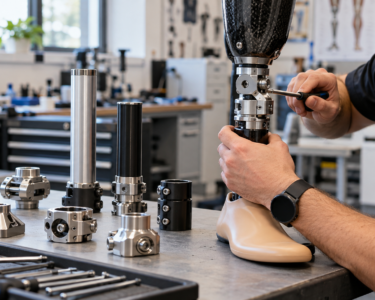
The everyday prosthesis may be suitable, but work can introduce additional requirements such as lifting, kneeling, heat, water, dust, repeated gripping or long periods of standing.
Discuss the actual tasks with the prosthetist:
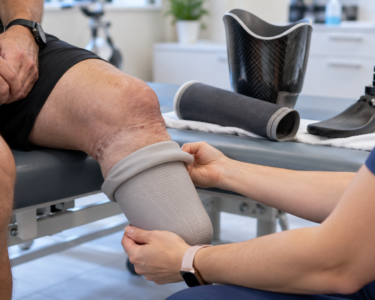
- Does the socket remain comfortable for the full shift?
- Is the suspension secure during lifting or climbing?
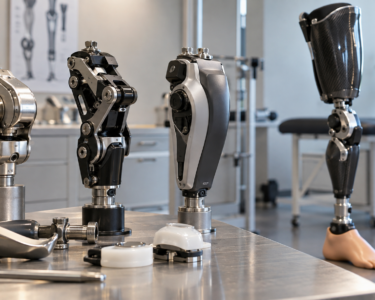
- Are the foot and knee suitable for the terrain?
- Can an upper-limb terminal device hold the required tools?
- Is the component protected from water, dust, heat or chemicals?
- Can required boots, gloves or other protective equipment be worn safely?
- Is a task-specific device needed?
Do not expose a prosthesis to an industrial environment outside its rating. A cover does not automatically make electronics waterproof, heatproof or explosion-safe.
How to Choose the Right Prosthetic Device for Your Lifestyle can help frame these decisions.
Useful Workplace Adjustments
Adjustments should address a specific barrier. Examples include:
- A phased schedule or flexible start time
- Planned rest and skin-check breaks
- A chair or sit-stand workstation
- A workstation closer to an accessible washroom or lift
- Reserved parking near the entrance
- Remote work for suitable duties
- Reduced walking between departments
- A trolley or lift for moving materials
- Handrails, ramps or improved access routes
- Anti-fatigue flooring where safe
- A one-handed keyboard, alternative mouse or voice software
- Modified tool handles, jigs or clamps
- Temporary reassignment of ladder or heavy-carrying tasks
- Time for rehabilitation and prosthetic appointments
The most expensive adjustment is not necessarily the most effective. A task trial can show whether a simple change removes the barrier.
Employment Rights and Policies in India
The Rights of Persons with Disabilities Act, 2016 provides an important framework for equality and non-discrimination. Section 21 requires every establishment to notify an equal opportunity policy describing proposed measures. Section 20 specifically addresses non-discrimination in government employment and reasonable accommodation in government establishments.
How these provisions apply to a particular employer, disability certification, role and requested adjustment can be legally complex. Company policy, state rules, industry safety requirements and employment terms may also apply.
Practical steps include:
- Ask HR for the organisation’s equal opportunity and return-to-work policies.
- Make adjustment requests in writing and connect each request to a job task.
- Provide only the medical information reasonably needed for work planning.
- Keep copies of medical restrictions, meeting notes and agreed changes.
- Seek advice from a qualified legal or disability-employment professional if rights are disputed.
This section is general information, not legal advice.
How Much Should You Tell Your Employer?
Disclosure is personal, but the employer needs enough information to manage safety, leave, restrictions and requested adjustments. Focus on functional information:
- What you can do safely
- What is temporarily restricted
- Which adjustment would remove a barrier
- When the restriction will be reviewed
- Who can clarify the clinical recommendation
You do not need to explain every medical detail to every colleague. Agree with the manager or HR team about who receives information and how questions will be handled.
Managing Prosthetic Wear During a Workday
Build Tolerance Gradually
Do not make the first full workday the longest time you have ever worn the prosthesis. Follow the wear schedule provided by the prosthetist and therapist. How to Adjust to Your First Prosthetic Limb provides additional guidance.
Plan Private Skin Checks
Know where you can safely remove or adjust the prosthesis. Carry a mirror and prescribed socks or interface supplies. Persistent redness, broken skin or drainage should not be ignored to finish a shift.
Review Skin Complications in Prosthetic Users for prevention and warning signs.
Manage Sweat and Hygiene
Heat, protective clothing and physical work can increase sweat. If permitted by the care plan, schedule a drying break and keep spare clean supplies. Never re-don a dirty or damp liner over irritated skin.
Use Energy-Conservation Strategies
Alternate standing and seated tasks, group trips, use carts and place frequently used items within easy reach. Brief planned breaks can prevent a larger loss of function later in the day.
Pain, Fatigue and Setbacks
Some tiredness is expected as the body adapts, but a pattern of increasing pain, wounds or unsafe movement is not a test of determination. Record:
- Time symptoms begin
- Task being performed
- Location and type of pain
- Skin appearance
- Prosthesis wear time
- Footwear and environment
- What reduces the symptom
This information helps the team distinguish fit, alignment, strength, technique and workload problems.
A temporary reduction in duties is sometimes necessary after a socket change, illness or skin problem. A setback should prompt review, not abandonment of the entire return-to-work goal.
Commuting and Workplace Access
The workday begins before the shift. Assess:
- Distance from home to transport
- Steps, uneven ground and crowded stations
- Parking and distance to the entrance
- Space for a wheelchair, crutches or spare prosthetic supplies
- Weather exposure
- Fatigue during the return journey
If driving is part of the plan, complete medical, licensing and vehicle-adaptation requirements before using it for work. Do not combine a first full shift with a first independent drive.
Safety-Critical and Physical Jobs
Construction, manufacturing, healthcare, emergency services, agriculture, transport and similar roles may involve uneven terrain, lifting, chemicals, heat, water or moving machinery.
A worksite assessment should examine:
- Fall and entanglement risks
- Whether the prosthesis can release or slip
- Compatibility with safety boots and harnesses
- Emergency evacuation
- Safe lifting method
- Battery or electronic limitations
- Alternate duties if the prosthesis cannot be worn temporarily
Medical clearance does not replace the employer’s job-specific risk assessment, and a generic workplace restriction should not replace individual functional testing.
Returning Without a Prosthesis
Not everyone uses a prosthesis, and some users cannot wear one throughout the day. Work may be completed using a wheelchair, crutches, one-handed techniques, adapted equipment or a combination of methods.
Planning a secondary mobility method is useful even for full-time prosthetic users. It allows the person to continue working safely during skin problems, repairs or temporary volume changes.
If You Cannot Return to the Previous Role
A change in role may be appropriate when essential tasks cannot be made safe or reasonable despite assessment and adjustment. Vocational rehabilitation can help identify transferable skills, training and accessible careers.
Options may include:
- Modified duties within the same organisation
- A different position using existing knowledge
- Part-time or remote work
- Further education or certification
- Apprenticeship or supervised work trial
- Self-employment with an adapted workspace
The decision should follow a real task analysis and rehabilitation effort rather than assumptions about what a person with limb loss can do.
A Practical First-Week Checklist
- Confirm the written hours, duties and restrictions.
- Identify an accessible route, washroom and rest location.
- Pack prescribed socks, liner supplies, charger and skin-check mirror.
- Save clinic and emergency contact details.
- Tell the agreed contact person how to respond to a prosthetic problem.
- Check the skin before and after each shift.
- Record fatigue and symptoms.
- Attend the scheduled review instead of waiting for a crisis.
Keep the device ready through the routine in Caring for Your Prosthetic Limb.
A Sustainable Return Is the Real Success
Returning to work after amputation is most successful when medical recovery, rehabilitation, prosthetic care and workplace planning move together. A phased approach provides time to build stamina, test adjustments and solve problems before they become injuries.
Measure success by safe, reliable participation rather than by how quickly old hours are resumed. The right combination of task changes, equipment, training and support can help many people return to their previous work or build a rewarding new direction.
Prepare for Work with PROACTIVE
If work tasks are shaping your prosthetic needs, contact PROACTIVE Technical Orthopaedics, the best prosthetics manufacturer in India, to discuss prosthetic fit, component selection, activity demands and ongoing support. Recommendations should be coordinated with your doctor, therapist, employer and occupational health team to help ensure a safe, comfortable and productive return to work.
Frequently Asked Questions
1. How long after amputation can I return to work?
There is no fixed timeline. Healing, pain, amputation level, other health conditions, job demands, mobility and rehabilitation progress all matter. A desk role may be possible earlier than heavy physical or safety-critical work.
2. Do I need to wait until I receive a permanent prosthesis?
Not always. Some people return with a preparatory prosthesis, wheelchair or other mobility method. The plan depends on job tasks, safety, endurance and the ability to manage ongoing socket changes.
3. Should I ask for a phased return?
A phased return is often useful after a long absence or when building prosthetic wear tolerance. It can increase hours and duties gradually while providing scheduled review points.
4. What workplace adjustments can help after amputation?
Common examples include flexible hours, seated options, accessible parking, reduced walking, adapted tools, workstation changes, planned breaks, remote work and time for rehabilitation appointments. Adjustments should match specific task barriers.
5. Must I tell my employer about my amputation?
Disclosure requirements depend on the role, safety issues, leave and local law. The employer needs enough functional information to plan safe work and adjustments, but detailed medical information should be handled confidentially.
6. Can I do a physical job with a prosthetic limb?
Many people do. Suitability depends on the amputation, prosthesis, terrain, lifting, protective equipment, environmental exposure and emergency tasks. A worksite and functional assessment is important.
7. What should I carry to work as a prosthetic user?
Depending on your care plan, carry spare socks or a liner, approved cleaning supplies, a drying cloth, mirror, charger, skin-care items and clinic contact details. Keep essential equipment accessible.
8. What should I do if my skin becomes sore during a shift?
Stop in a safe place, remove the prosthesis and inspect the skin. Do not continue through broken skin, severe pain or signs of infection. Follow the clinical plan and contact the prosthetist or doctor when needed.
9. Can my employer refuse to let me return?
An employer may need medical and safety information, but decisions should be based on actual job requirements rather than assumptions. Indian disability and employment rules may apply. Seek qualified advice if an evidence-based return plan is rejected.
10. What if I cannot return to my old job?
Consider modified duties, another role, vocational rehabilitation, retraining, remote work or self-employment. Your existing knowledge and experience may transfer to work with different physical demands.