

Summary: Delve into the anatomy of modern artificial limbs by exploring the critical components from the socket and suspension system to the pylon and terminal devices—that work together to restore mobility, comfort, and independence.
When you look at a modern artificial limb, you are seeing a marvel of biomechanical engineering. Far from being a single, solid piece of material, a state-of-the-art prosthesis is a modular system made up of highly specialized, interchangeable parts. Each component plays a vital role in ensuring the device is comfortable, stable, and responsive to the user’s unique movements.
Understanding the anatomy of a prosthesis is essential for anyone embarking on a rehabilitation journey. By learning the vocabulary and science behind how these devices function, amputees can better communicate with their clinical team, troubleshoot minor issues, and make informed decisions about their ongoing care and component upgrades.
The Socket: The Critical Connection
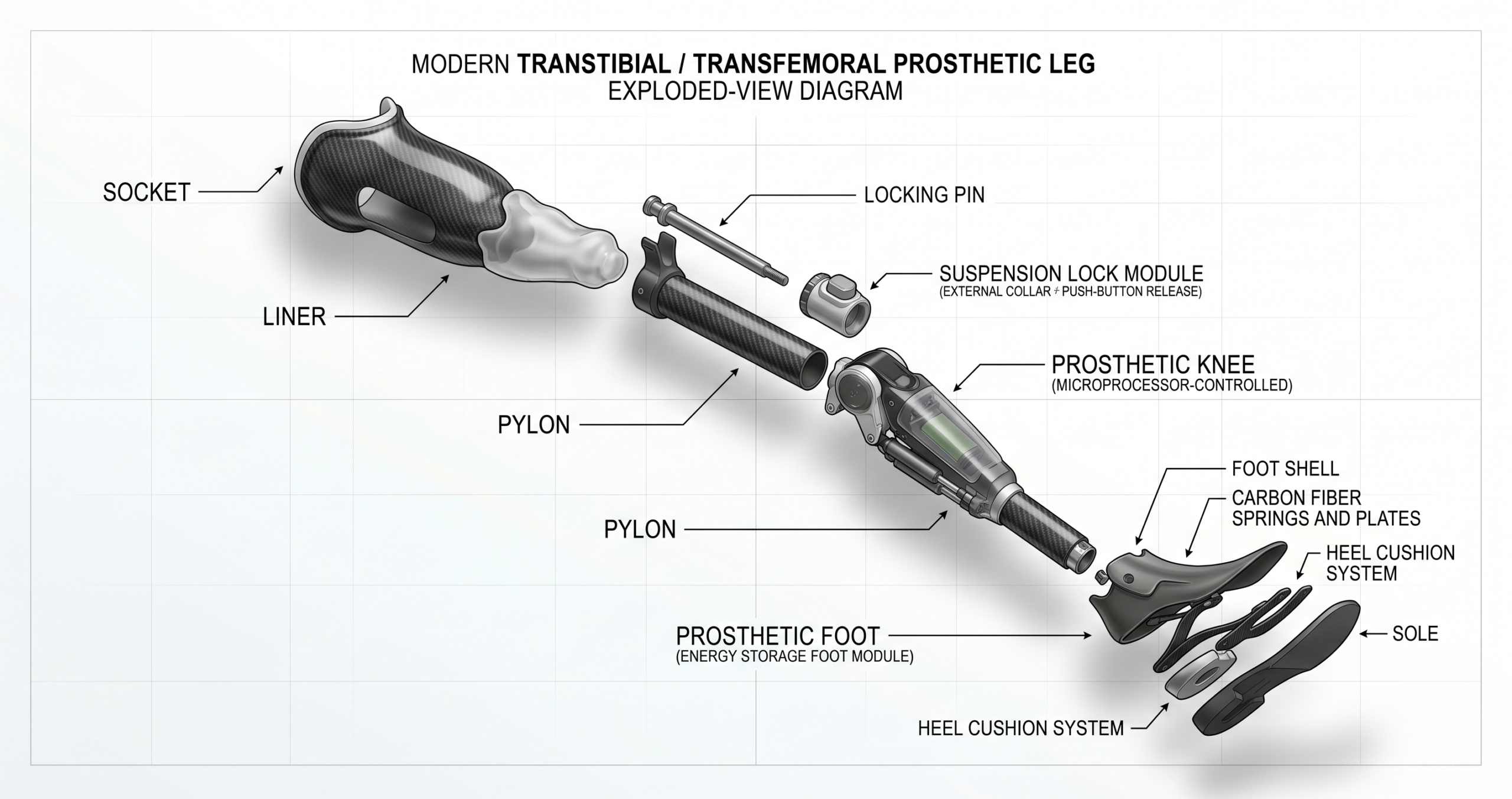
The socket is the foundation of the entire prosthesis. It is the cup-like, custom-molded receptacle that perfectly encases the residual limb (stump).
Because all of the user’s body weight and kinetic energy are transferred through the socket during movement, achieving a flawless fit is paramount. If the socket is too loose, the limb will slip and cause dangerous instability; if it is too tight, it can restrict blood flow and cause painful pressure sores. Sockets are typically fabricated from lightweight, durable materials like carbon fiber or thermo-plastics, and they must be periodically replaced or adjusted as the user’s residual limb naturally changes volume over time.
The Suspension System: Keeping Things Secure
No matter how well a socket is designed, it needs a mechanism to stay firmly attached to the body. The suspension system is the method used to anchor the prosthesis, preventing it from falling off or shifting during activity. Common suspension methods include:
- Suction: A silicone or urethane liner is rolled over the residual limb. When inserted into the socket, a one-way valve pushes air out, creating a strong, airtight vacuum seal.
- Pin-Lock Systems: The user wears a gel liner with a grooved metal pin at the bottom. This pin clicks into a locking mechanism at the base of the socket, holding it securely until the user presses a release button.
- Anatomical Suspension: For certain amputation levels, the socket is specially contoured to grip the natural bony prominences of the user’s remaining joints (such as just above the knee cap).
- Belts and Harnesses: Often used as secondary support or for complex upper-body amputations to strap the device securely to the torso.
The Pylon: The Internal Skeleton
The pylon serves as the internal framework or “skeleton” of the prosthesis. It is the structural tube that bridges the gap between the socket and the terminal device (the foot or hand).
Modern pylons are constructed from high-strength, ultra-lightweight materials such as titanium, aluminum, or carbon fiber. While their primary job is to bear weight and provide structural integrity, advanced pylons also incorporate shock absorbers and rotational torsion adapters. These features absorb the harsh impact of walking or running, protecting the user’s hips, lower back, and remaining natural joints from repetitive stress injuries.
Terminal Devices: The Functional End
The terminal device is the component that interacts directly with the environment. Depending on the level of amputation, this is the prosthetic foot, knee, hand, or specialized tool.
Lower Extremity Terminal Devices
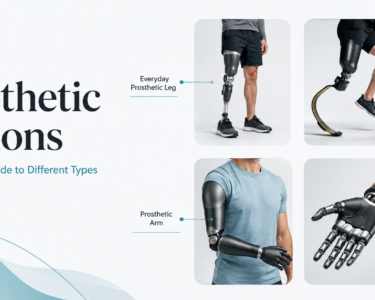
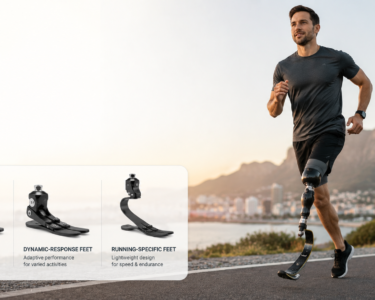
- Prosthetic Feet: Ranging from basic solid-ankle cushioned heel (SACH) feet for indoor walking to highly dynamic, curved carbon-fiber blades designed for sprinting. A standard transtibial prosthesis (below-knee) relies heavily on the foot’s energy-returning properties for a smooth gait.
- Prosthetic Knees: For above-knee amputations, the user requires an artificial knee joint that bends during the swing phase but locks securely when bearing weight. The most advanced systems are microprocessor-controlled knees, which use computer sensors to read terrain and adjust hydraulic resistance in real-time, preventing falls. These are critical components of any modern transfemoral prosthesis.
Upper Extremity Terminal Devices
- Mechanical Hooks and Hands: For a upper extremity prosthetics, heavy-duty body-powered hooks offer unmatched durability for manual labor, operated by a cable attached to a shoulder harness.
- Bionic Hands: Myoelectric limbs represent the cutting edge of upper limb tech, using sensors to read muscle signals and translate them into motorized finger movements.
- Cosmetic Restorations: For users who do not require mechanical gripping, passive limbs prioritize aesthetics and body symmetry, offering incredibly lifelike silicone replicas of fingers and hands.
Start Your Rehabilitation Journey
Finding the right prosthetic solution is a deeply personal process that requires expert clinical guidance. If you or a loved one are navigating life after an amputation, it is essential to partner with a trusted engineering and clinical team to explore custom-designed devices tailored precisely to your goals and lifestyle.
To explore cutting-edge, internationally recognized prosthetic technology designed and fitted right here in India, connect with the best prosthetics manufacturer in india. Their team specializes in high-performance bionic limbs, microprocessor knees, and customized socket fabrications engineered to help you reclaim your mobility and independence. Reach out to a specialized prosthetic specialist today to discover how modern technology can transform your rehabilitation journey.
Frequently Asked Questions (FAQs)
1. Are prosthetic limbs custom-made?
Yes, while parts like the pylon, foot, and knee are manufactured in standard sizes and weight categories, the socket is strictly custom-molded to fit the exact contours of the individual’s residual limb.
2. What materials are used to make prosthetic sockets?
Sockets are generally fabricated from lightweight, high-strength materials such as carbon fiber, thermo-formable plastics, and advanced fiberglass composites to ensure durability without adding unnecessary weight.
3. What is a prosthetic liner?
A liner is a soft, protective sleeve (usually made of silicone, gel, or polyurethane) worn directly over the skin of the residual limb. It acts as a cushion between the skin and the hard socket, preventing friction and aiding in suspension.
4. Can parts of my prosthesis be swapped out or upgraded?
Yes. Modern prosthetics are modular. This means if your activity level increases, your prosthetist can swap out a basic foot for a high-performance running blade without having to build you a brand-new socket.
5. What does the pylon do?
The pylon is the structural “leg bone” of the device. It connects the socket to the prosthetic foot or knee, bearing the user’s weight. Many modern pylons also feature built-in shock absorption to protect the user’s joints.
6. How does a pin-lock suspension system work?
A pin-lock system features a soft liner with a metal pin at the bottom. When you slide your limb into the socket, the pin clicks into a mechanical lock at the base, securing the leg. To remove it, you simply press a release button on the outside of the socket.
7. What is the difference between a mechanical knee and a microprocessor knee?
A mechanical knee uses simple friction or basic hydraulics to swing and lock, requiring the user to control it entirely with their hip movements. A microprocessor knee contains a computer and sensors that automatically adjust the joint’s stiffness in real-time, making it much safer on stairs and uneven ground.
8. What is an endoskeletal vs. exoskeletal prosthesis?
An endoskeletal prosthesis has an internal supporting structure (the pylon) that can be covered by a soft cosmetic foam. An exoskeletal prosthesis has a hard, rigid outer shell made of laminated plastic or wood that bears the weight directly; these are much heavier and less common today.
9. Why does my residual limb change size, and how does it affect the socket?
Following an amputation, the residual limb naturally shrinks as surgical swelling goes down and muscles atrophy. This volume change makes the socket fit loosely. Prosthetists manage this by adding “prosthetic socks” to fill the gap until a new socket is necessary.
10. Do I have to wear my prosthesis all day?
No, it is highly recommended to take your prosthesis off when sleeping to allow your skin to breathe and rest. Throughout the day, the duration of wear depends on your comfort, activity level, and the current fit of your socket.