

Summary
Choosing a prosthetic parts supplier is a clinical and procurement decision, not only a price comparison. Hospitals, P&O centres, NGOs, distributors and fabrication clinics should evaluate product range, technical specifications, body-weight ratings, manufacturing quality, compatibility, lead time, documentation, after-sales support and the supplier’s ability to maintain consistent batches. This guide provides a practical framework for selecting a dependable long-term prosthetic components partner.
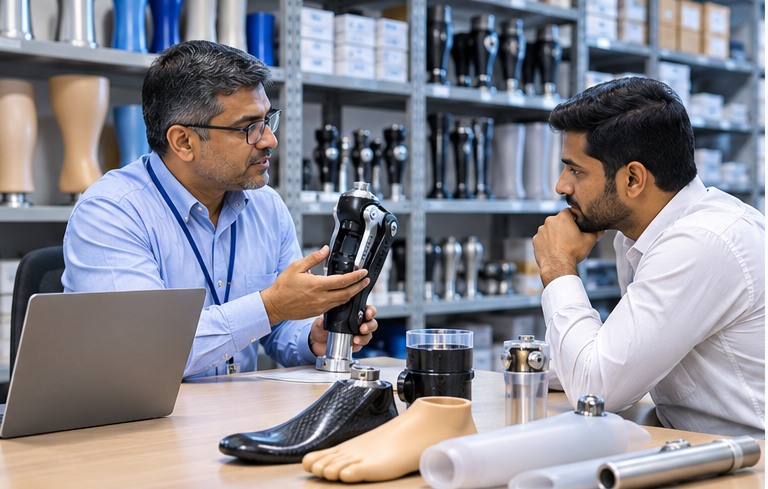
A prosthetic parts supplier can directly affect how efficiently a clinic fits patients, manages inventory and responds to repairs. When socket adapters, knees, feet, pylons, locks or liners arrive late or vary between batches, the consequences are not limited to purchasing. Technicians lose time, fittings are delayed and clinical teams may have to redesign assemblies around whatever is available. The right supplier therefore needs to combine reliable manufacturing, transparent specifications and practical technical support.
Start With the Supplier’s Product Range
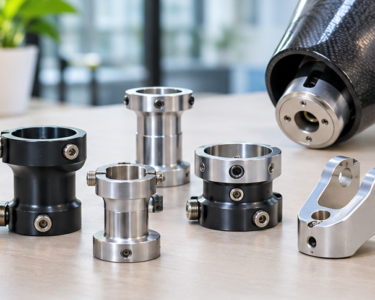
A useful supplier should be able to support the categories your clinic actually uses. That may include socket adapters, tube adapters, pylons, foot adapters, shuttle locks, silicone liners, prosthetic knees, prosthetic feet, complete kits and pediatric components. A broad range can simplify procurement, but only when each product family is clearly documented.
Protech Ortho’s current prosthetic product range includes modular components, knees, feet, kits, child prosthetics, raw materials, tools and machinery, while its B2B division supports institutional and distributor purchasing.
Check Whether the Company Manufactures or Only Trades
Ask which items are manufactured in-house, which are assembled from outside parts and which are simply distributed. A manufacturer that controls machining, molding, assembly and inspection may be able to respond faster to dimensional questions, repeat orders and technical complaints.
Trading is not automatically a weakness. Some suppliers combine manufacturing with carefully selected imported products. The important point is transparency: procurement teams should know who made the product and who is responsible for warranty and technical support.
Compare Technical Specifications, Not Product Names
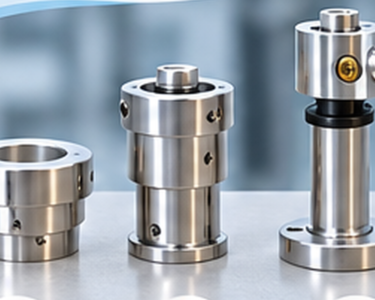
A product description such as 'pyramid adapter' or 'hydraulic knee' is not enough for bulk purchasing. Ask for product code, material, component weight, user-weight limit, dimensions, connection interface, flexion range where relevant, activity recommendation and environmental limits.
Weight ratings are especially important for load-bearing components. Purchasing teams should never assume that two visually similar adapters or knees have the same safe user limit.
Verify Compatibility With Your Existing Inventory
A supplier may offer good products that do not integrate smoothly with the clinic’s current components. Confirm pyramid and receiver geometry, tube diameter, thread type, liner pin system, shuttle-lock compatibility, build height and standard fasteners.
For clinics using modular lower-limb systems, consistent interfaces can reduce workshop errors and make future replacement easier. When adding a new supplier, trial the products with your approved component combinations before moving to a large order.
Review Quality Systems and Testing
Ask what quality-management system the supplier follows and what testing is performed on structural products. For prosthetic components, relevant load-testing standards and traceable inspection procedures are valuable indicators of manufacturing discipline.
Certificates should be checked for validity and scope rather than accepted simply because a logo appears in a brochure. For critical components, request supporting technical sheets and test information when needed.
Look for Batch-to-Batch Consistency
A clinic buying ten or one hundred adapters needs repeatability. Small changes in dimensions, threads, surface finish or hole location can create assembly problems and force technicians to modify their workflow.
Before approving a supplier for recurring orders, compare samples from more than one production batch where practical. Maintain an approved master sample or dimensional checklist for fast-moving parts.
Evaluate Lead Time and Stock Availability
A low unit price is not useful if the product is unavailable when a patient needs it. Ask which products are normally stocked, which are made to order, standard production lead times, minimum order quantities and how urgent replenishment is handled.
Clinics should identify fast-moving items such as common adapters, pylons, locks and foot sizes and maintain minimum stock. The supplier should be able to explain realistic replenishment times rather than promising every item immediately.
Check Packaging, Labelling and Traceability
Components should arrive protected from corrosion, impact and mix-ups. Product codes should be easy to identify, and batches should be traceable when quality complaints occur.
For international or institutional orders, ask whether packaging can support long-distance shipping and whether the supplier provides documents such as packing lists, certificates of origin, declarations or safety documents when applicable.
Assess After-Sales and Technical Support
When a prosthetist has a compatibility question, the answer needs to come from someone who understands the component. Ask whether technical or engineering support is available, how quickly warranty claims are handled and whether replacement parts can be supplied.
A supplier with both manufacturing and clinical experience may be especially useful because it can understand how a product behaves during fabrication and fitting, not only how it is sold.
Ask About OEM, Private Label and Custom Orders
Distributors and large hospital networks may need private labelling, custom packaging, modified components or contract manufacturing. Clarify minimum quantities, development charges, tooling ownership, approval samples and who controls technical drawings.
Protech Ortho’s B2B manufacturing program currently highlights OEM/ODM, CNC machining, silicone processing, carbon-fibre work and private-label support for institutional buyers.
Use a Controlled Trial Order
Before committing to a large quantity, place a smaller evaluation order. Check delivery time, packaging, product codes, dimensions, finish, compatibility and communication. Let both clinical and workshop teams review the items rather than leaving the decision only to purchasing.
Document problems objectively. If a thread is tight, record the part code and measurement. If a knee behaves differently from the specification, report the exact condition. This makes supplier evaluation more useful than general impressions.
Compare Total Procurement Cost
Unit price is only one cost. Include freight, customs where relevant, rejected parts, downtime, emergency purchases, warranty turnaround and the labour required to solve compatibility problems.
A slightly more expensive supplier can be better value if the products are consistent, documentation is clear and replacements are available without delay.
Create a Supplier Scorecard
A practical scorecard can include product quality, technical documentation, price, lead time, stock support, warranty, communication, traceability and clinical compatibility. Weight the criteria according to your organisation’s priorities.
Using the same scorecard for every supplier reduces bias and makes re-evaluation easier when pricing or quality changes.
Questions Procurement Teams Should Ask Before Approval
Ask whether the supplier can provide current technical sheets, recommended spare parts, packaging details, batch identification and a written process for non-conforming goods. If the organisation buys internationally, confirm export documentation, Incoterms, customs support and the point at which risk transfers.
Also ask who owns technical communication after the order is placed. A named account manager is useful, but difficult questions should be escalated to someone with engineering or clinical knowledge rather than remaining only with sales.
Choose a Supplier That Can Grow With Your Organisation
The right supplier should support today’s routine components and tomorrow’s growth. As a clinic expands into advanced knees, pediatric fittings, export distribution or workshop setup, the supplier should be able to provide compatible products and technical support.
Hospitals, clinics, NGOs and distributors can explore Protech Ortho’s prosthetic components or contact the B2B team for current specifications, bulk orders and technical discussions.
Frequently Asked Questions
What is the most important factor when choosing a prosthetic parts supplier?
Consistency and compatibility are among the most important factors because a low-cost part that varies between batches can disrupt fitting and safety.
Should I choose a manufacturer instead of a distributor?
Not always. Both can be reliable. The key is transparent sourcing, technical documentation, warranty responsibility and dependable support.
What specifications should I ask for?
Request product code, material, dimensions, component weight, user-weight rating, connection type and any relevant activity or environmental limits.
Why are weight limits important?
They indicate the maximum user load for which the component is intended and should always be respected.
Should a clinic trial new components before bulk ordering?
Yes. A small controlled trial can identify compatibility, dimensional or workflow issues before a large commitment.
How important is ISO or other quality certification?
Quality systems are useful indicators of process control, but clinics should also verify the scope and product-specific technical evidence.
What should I check in supplier packaging?
Look for secure protection, clear product codes, quantity accuracy and traceability information.
How should I compare prices from two suppliers?
Compare total landed cost, quality, documentation, lead time, warranty and service—not only unit price.
Do I need a separate supplier for knees, feet and adapters?
Not necessarily. A broad supplier can simplify procurement if the products are technically suitable and consistently supported.
Does Protech Ortho supply bulk prosthetic components?
Yes. Protech Ortho’s B2B division supplies prosthetic and orthotic components, equipment, raw materials and related products for institutional and distributor buyers.