

Summary
Prosthetic socket adapters connect the custom socket to the modular structure of a prosthesis. Although they are small components, they influence alignment, build height, strength, rotation, serviceability and compatibility. This guide explains the main socket-adapter types, materials, interfaces and selection checks used in below-knee and above-knee prosthetic systems.
A prosthetic socket is custom-made around one person, while the knee, pylon, foot and other structural parts are modular. The socket adapter is the bridge between those two worlds. If the adapter is poorly selected, the prosthetist may lose alignment range, exceed available build height or create an incompatible connection. If it is selected correctly, it becomes a strong and adjustable foundation for the rest of the prosthesis.
What Is a Prosthetic Socket Adapter?
A socket adapter is a structural component fixed to or incorporated into the distal portion of a prosthetic socket. It provides the interface required to connect the socket to modular components such as tube clamps, pylons, knees or foot systems.
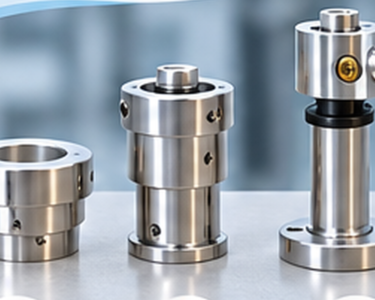
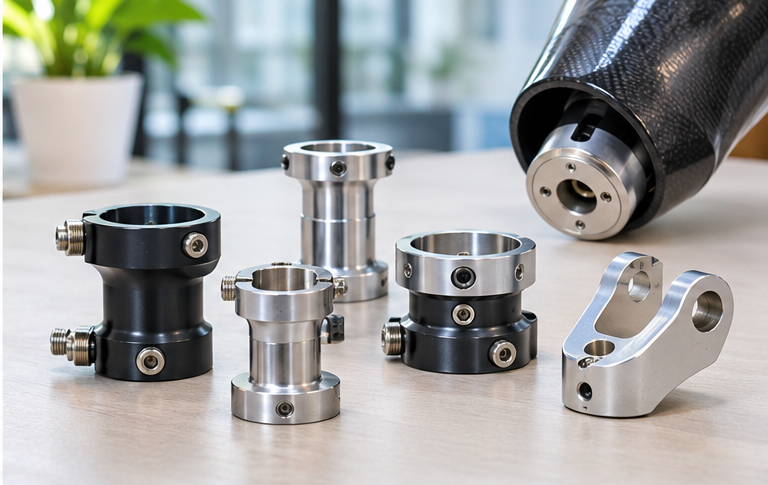
Protech Ortho’s current socket-adapter range includes four-prong lamination adapters, flat pyramidal adapters, pyramidal receiver adapters, threaded adapters, above-knee prong adapters, plastic socket adapters, draping adapters and quick-disconnect systems.
Why Socket Adapters Matter
The adapter transfers load from the socket into the rest of the prosthesis. It also determines how much angular and rotational adjustment the prosthetist can make during alignment.
Because it is part of the structural load path, the adapter’s material, weight rating and connection method must match the intended user and fabrication technique.
Four-Prong Lamination Socket Adapters
Four-prong adapters are commonly used in transtibial laminated sockets. The prongs are incorporated into the laminate to create a secure anchor while the distal pyramid provides a modular connection.
Different versions may use carbon steel, stainless steel or titanium. Lighter materials can reduce component weight, but the selection should be based on the full technical specification rather than material name alone.
Flat Pyramidal Socket Adapters
A flat pyramidal adapter provides a fixed pyramid on a flat base. It can be used when the socket design requires a plate-style connection rather than a prong anchor.
The pyramid connects to a receiver below and allows the prosthetist to adjust alignment through the mating receiver’s set screws.
Pyramidal Receiver Socket Adapters
A receiver adapter places the adjustable receiver at the socket side rather than the pyramid. This can be useful when the component below carries the mating pyramid.
The important point is that pyramid and receiver orientation must be planned across the entire assembly. Two receiver components cannot connect directly without the correct mating interface.
Threaded Socket Adapters
Threaded adapters use a threaded structural connection and may include a rotatable pyramid or receiver. They are useful in assemblies where the socket anchor and modular alignment interface are separated.
Clinics should confirm thread specification, orientation and build height before lamination because a visually similar threaded adapter may not match the intended component.
Above-Knee Prong and Lamination Adapters
Transfemoral sockets may use three-prong or four-leg lamination anchors with threaded connectors and optional pyramidal interfaces. These designs need enough lamination area and correct positioning to transfer load safely.
The prosthetist must also consider space for the knee. Extra adapter height at the socket can reduce the build height available for the knee and foot below.
Plastic Socket Adapters
Thermoplastic sockets require adapters designed to integrate with plastic construction. Protech Ortho lists nylon plastic socket adapters combined with pyramidal or receiver elements for thermoplastic applications.
A plastic adapter should not be substituted for a lamination anchor simply because the distal interface looks similar. The socket construction method determines how the adapter must be secured.
Draping Socket Adapters
Draping or lamination adapters with serrated base plates are designed to integrate into specific socket fabrication techniques. The base helps create a secure interface with the socket material.
Technicians should follow the manufacturer’s recommended fabrication sequence rather than improvising attachment methods.
Quick Disconnectors
A quick disconnector allows one prosthetic section to be separated and reattached without completely dismantling the modular structure. These systems can be useful for specific functional or service requirements.
Because quick-disconnect systems add weight and build height, they should be prescribed for a clear reason rather than included automatically.
Pyramid vs Receiver: Understand the Difference
A pyramid is the male alignment element. A receiver is the mating female component secured with adjustment screws. The combination allows angular alignment in multiple directions.
Clinics should standardise product names in inventory because confusing the pyramid and receiver is one of the easiest procurement mistakes to make.
Material Selection: Steel, Stainless Steel, Titanium and Nylon
Carbon steel can provide economical strength, stainless steel adds corrosion resistance, titanium offers a high strength-to-weight ratio and nylon is used in some thermoplastic adapters.
Material choice affects price and weight, but the rated load and intended application should always guide selection.
Check the Body-Weight Rating
Adapters can have different user-weight ratings even when their shape is similar. Protech Ortho’s current range includes versions with different rated limits depending on material and design.
Always select the component according to the manufacturer’s stated rating and the clinical prescription.
Build Height and Alignment Range
Every millimetre matters when fitting a long residual limb or an above-knee system. Measure the total distance available for socket adapter, knee, pylon, foot adapter and foot before finalising the component set.
Alignment adjustability is valuable, but unnecessary stack height can create avoidable compromises.
Compatibility Checklist for Clinics
Before ordering, confirm socket type, amputation level, adapter material, distal interface, body-weight rating, build height, mating component, required set screws and whether the adapter is intended for lamination or thermoplastic use.
For repeat work, keep an internal compatibility matrix linked to the exact product code.
Inspection and Assembly
Check threads, pyramids, receivers, fasteners and surfaces before fabrication. Structural components should not be ground, drilled or welded casually to force compatibility.
Set screws and structural fasteners should be assembled according to the manufacturer’s procedure and torque requirements.
Common Socket-Adapter Selection Mistakes
A frequent mistake is ordering by shape instead of product code. Another is forgetting that a component with the correct pyramid may still have the wrong body-weight rating, build height or socket attachment method. Clinics also sometimes discover too late that a threaded connection or base plate adds more distal length than the planned assembly allows.
The safest workflow is to confirm the complete stack—socket, adapter, knee or tube clamp, pylon, foot adapter and foot—before final fabrication.
The Right Adapter Makes the Entire Prosthesis Easier to Build
How Clinics Can Standardise Adapter Inventory
Standardisation reduces both purchasing mistakes and technician training time. Clinics can define a preferred set of transtibial and transfemoral adapters, pyramids, receivers and fasteners for their most common systems, then keep alternative parts only for unusual prescriptions.
This approach also makes emergency replacement easier because technicians already know which components mate together and which torque procedures apply.
A socket adapter may be small, but it determines how successfully the custom socket integrates with the modular prosthesis. Correct interface selection, weight rating and build height reduce workshop rework and give the prosthetist more predictable alignment.
Clinics can review Protech Ortho’s prosthetic socket adapters and broader prosthetic components when planning modular inventory or bulk procurement.
Frequently Asked Questions
What is the purpose of a prosthetic socket adapter?
It connects the custom socket to the modular structural components of the prosthesis.
What is a four-prong socket adapter?
It is a lamination anchor with prongs that are incorporated into the socket and usually provide a distal pyramid connection.
What is the difference between a pyramid and a pyramidal receiver?
The pyramid is the male alignment element; the receiver is the mating adjustable component.
Are all socket adapters compatible with all prostheses?
No. Socket construction, interface, body-weight rating, build height and mating components must be checked.
Why are threaded socket adapters used?
They provide a threaded structural connection and can support different modular alignment configurations.
Can a thermoplastic socket use a lamination adapter?
The adapter must be appropriate for the socket construction method. Plastic sockets often use purpose-designed plastic adapters.
Does titanium always make the best adapter?
No. Titanium is lightweight and strong, but the best choice depends on rating, cost, application and compatibility.
What is build height?
It is the vertical space occupied by a component within the overall prosthetic assembly.
Can an adapter be modified in the workshop?
Structural modification should not be performed unless specifically supported by validated manufacturer guidance.
Where can clinics buy socket adapters in India?
Protech Ortho manufactures and supplies multiple socket-adapter categories for prosthetic clinics and institutional buyers.