

Summary: A prosthetic limb is a significant investment in your health and mobility. Proper care and maintenance extend its lifespan, protect your residual limb health, and ensure optimal performance. This guide covers daily cleaning routines, inspection habits, and when to seek professional servicing.
Your prosthetic limb works hard every day — often enduring the same physical demands as your natural body. Yet many users underestimate the importance of regular maintenance. Neglecting your prosthetic can lead to premature component wear, skin complications, and even injury. With the right habits, you can keep your device functioning at its best and avoid costly repairs or replacements.
1. Daily Cleaning Routine
The Socket and Liner
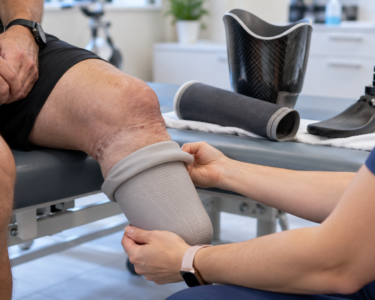
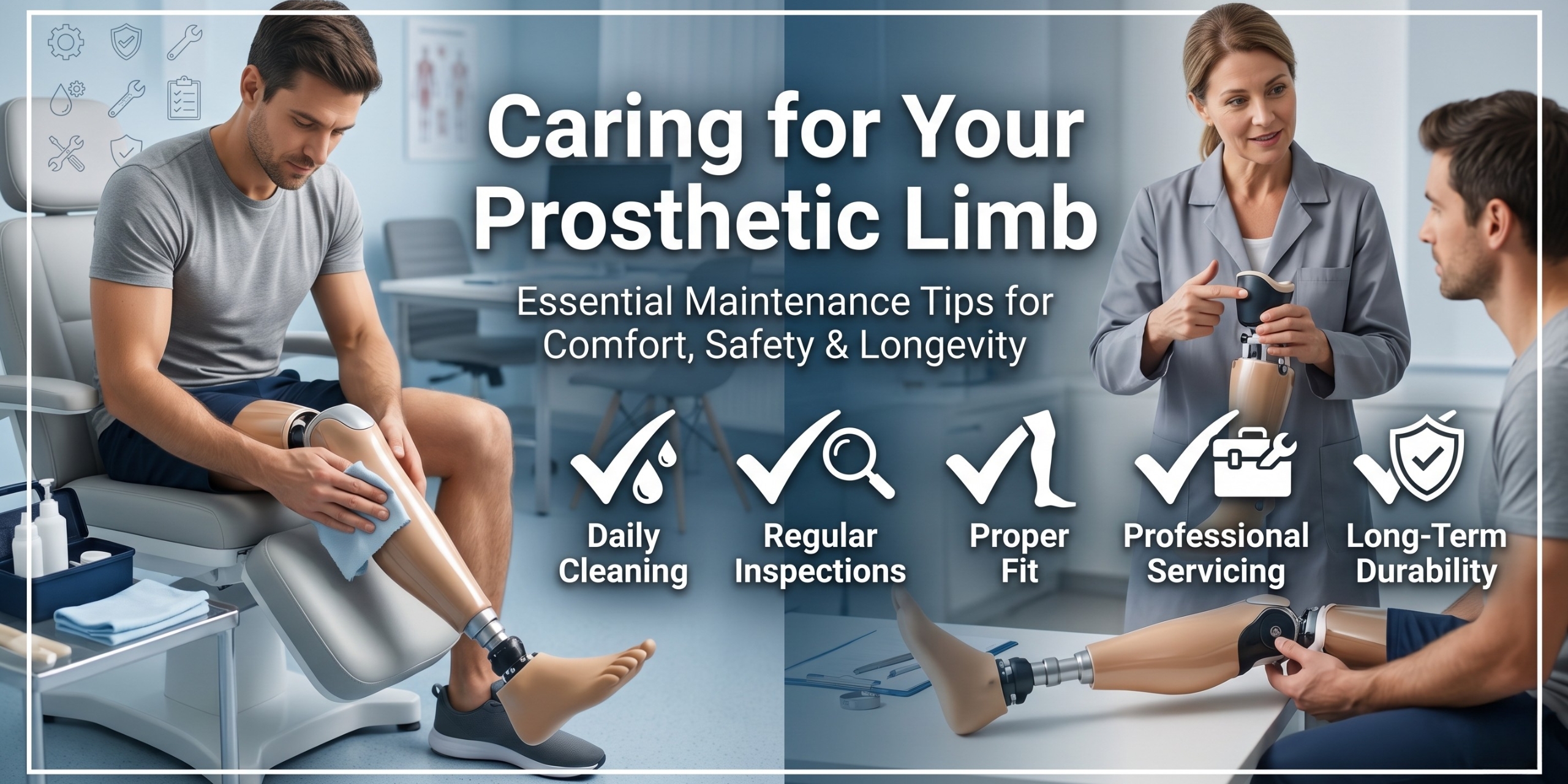
Clean the inside of the prosthetic socket and your liner daily. Use a mild soap and warm water or a recommended antibacterial solution. Allow to air-dry completely before wearing — never use a heat source. Inspect the liner for small holes, tears, or delamination, which can compromise the seal and cause skin issues.
The Residual Limb
Wash your residual limb every day with mild soap and water. Dry thoroughly, especially between skin folds. Inspect the skin for redness, blisters, open sores, or unusual pressure marks. These are early warning signs that require prompt attention from your care team.
2. Inspecting Mechanical Components
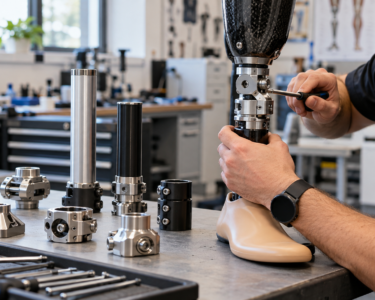
Weekly, inspect all mechanical parts of your prosthetic: joints, bolts, screws, and connections. Listen for unusual sounds during use — clicking, creaking, or grinding often signal a component issue. Check carbon fibre parts for cracks or delamination. If you have a microprocessor device, check the battery level daily and inspect charging ports for corrosion.
3. Prosthetic Feet and Knees
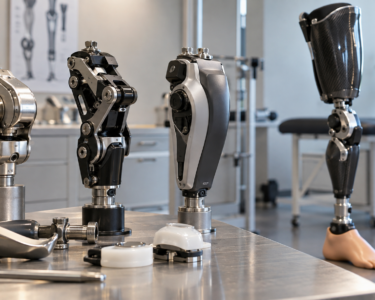
Prosthetic feet take the most impact and should be checked regularly for cracks, especially around the heel and toe. Microprocessor knees require periodic software updates, battery maintenance, and mechanical inspections by your prosthetist. Always follow the manufacturer’s maintenance schedule for electronic components.
4. Clothing and Prosthetic Socks
Wear the correct number and thickness of prosthetic socks as prescribed — this directly affects socket fit and comfort. Wash prosthetic socks daily with mild soap in warm water. Replace worn-out socks promptly, as thin or stretched socks alter the fit of your socket significantly.
5. Environmental Precautions
Keep your prosthetic away from extreme heat (car dashboards in summer), sand and grit (which can damage joint mechanisms), and excessive moisture unless you have a waterproof model. If you are swimming or working in water, use a purpose-built waterproof prosthetic or protective cover.
6. Professional Servicing Schedule
Even with perfect at-home care, your prosthetic needs professional servicing. Plan for a clinical visit every 3–6 months, or sooner if you notice changes in fit, comfort, or function. Major components like microprocessor knees typically have a recommended annual service interval. Keep a maintenance log and share it with your prosthetist at each visit.
7. Travel and Storage
When travelling, carry your prosthetic in a padded, ventilated bag. Bring a spare liner, extra socks, and a basic toolkit (if approved by your prosthetist). In humid climates, silica gel packs inside the storage bag help prevent moisture damage to electronic components.
Frequently Asked Questions (FAQs)
Q1: Can I get my prosthetic wet?
Standard prosthetics are not waterproof. Getting them wet can damage components and corrode metal parts. Waterproof prosthetics are available for those who need them — consult your prosthetist.
Q2: How do I know when my socket needs adjustment?
Signs include increased skin redness, blisters, pistoning (up-down movement in the socket), unusual sounds, or a change in your gait. Any of these warrant a visit to your prosthetist.
Q3: Can I repair my prosthetic at home?
Minor tasks like changing socks or cleaning are appropriate at home. Mechanical repairs, alignments, and electronic servicing must only be done by a certified prosthetist. Improper repairs can cause injury.
Q4: How long does a prosthetic limb last?
The socket typically lasts 1–3 years; the structural components 3–5 years with proper care. Electronic and microprocessor components may have shorter lifespans and manufacturer warranties. Regular maintenance significantly extends lifespan.
Q5: What should I do if my prosthetic breaks while I’m away from home?
Contact your prosthetist immediately for guidance. Keep the emergency contact details of your clinic readily available. Many reputable prosthetic providers have a network of partner clinics for emergency assistance.
Ready to Take the Next Step?
At PROACTIVE Technical Orthopaedics Pvt. Ltd., we specialize in providing advanced, customized prosthetic solutions tailored to your unique lifestyle and goals. Our team of experienced orthopaedic professionals is here to guide you every step of the way — from consultation to rehabilitation and beyond.
Contact PROACTIVE Technical Orthopaedics Pvt. Ltd. today — because every step matters.