

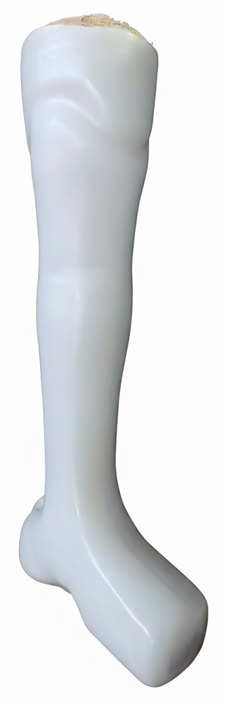
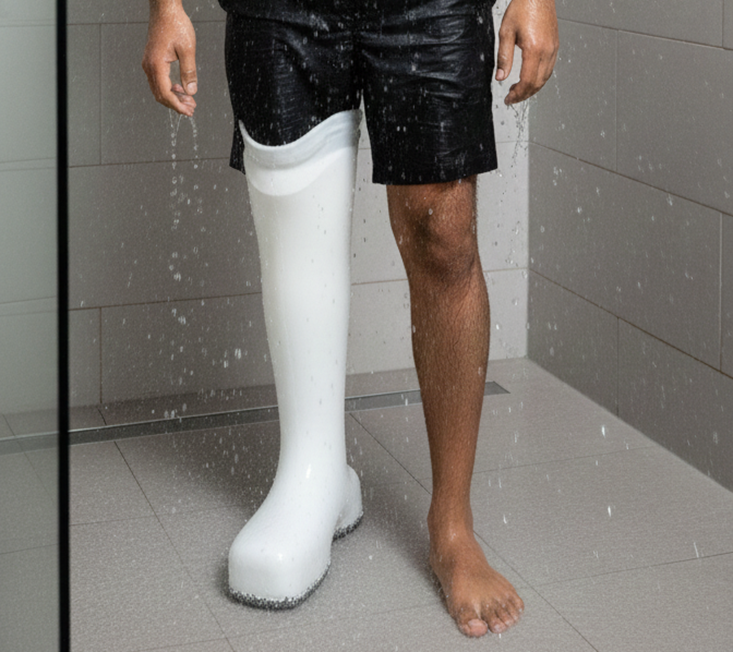
Lower-limb amputation significantly affects an individual’s mobility, independence, psychological well-being, and quality of life. While modern prosthetic technology has advanced considerably in terms of walking, mobility, and community participation, one important aspect of daily living often remains neglected: safe bathing and personal hygiene. For many below-knee amputees, bathing becomes one of the most difficult and unsafe activities of daily living, especially in the Indian household environment.
Conventional prostheses are not designed for wet environments. Exposure to water can cause corrosion of metallic components, fungal growth inside sockets, deterioration of liners, and long-term damage to prosthetic systems. As a result, many amputees remove their prosthesis before bathing, forcing them to stand on one limb or rely heavily on caregivers. This increases the risk of falls, compromises residual limb hygiene, and negatively impacts dignity and self-confidence.
In India, the challenge is even greater due to bathroom structures, slippery tiled floors, bucket-bathing practices, squat toilets, and limited accessibility modifications in rural and low-income households. Commercial waterproof shower prostheses available internationally are often expensive and inaccessible for the majority of Indian patients. Therefore, there is a strong clinical need for an affordable, lightweight, waterproof, and culturally adapted bathing prosthesis specifically designed for Indian below-knee amputees.
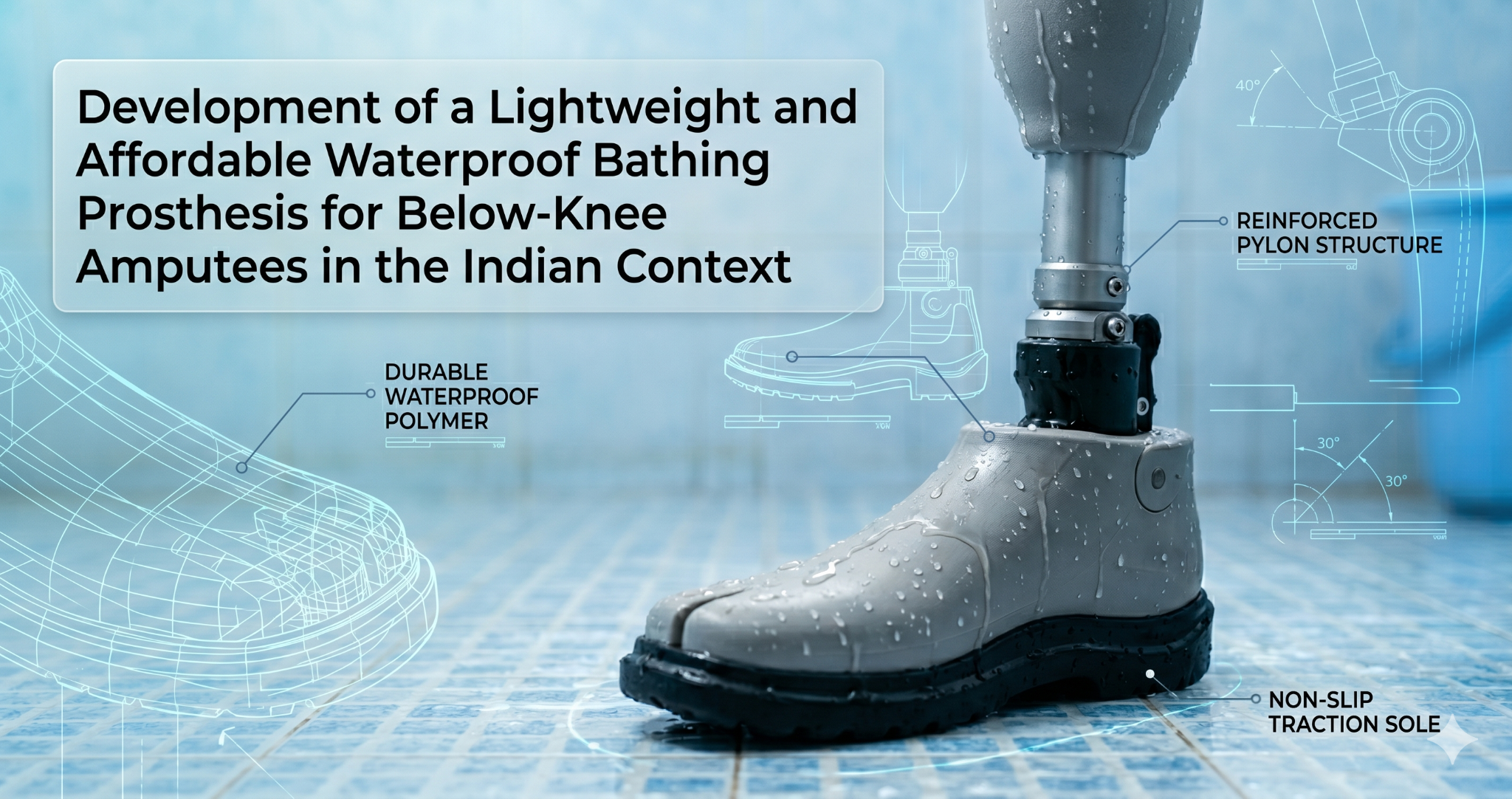
This clinical innovation presented at the OPAI XXIX National Conference by Dr. Sumit Bhowmik and PROACTIVE Technical Orthopaedics Private Limited focuses on the development of a waterproof bathing prosthesis that addresses safety, affordability, independence, and usability in Indian conditions.
Clinical Problem in the Indian Context
Bathing is a fundamental activity of daily living that directly affects hygiene, residual limb care, skin integrity, and psychological health. However, for below-knee amputees, bathing environments can become hazardous due to wet and slippery surfaces.
Major Clinical Challenges
1. Increased Fall Risk
Most amputees remove their prosthesis before entering the bathroom to avoid damaging the device. Bathing on one limb significantly compromises balance and stability. Wet ceramic tiles further increase the risk of slipping and fall-related injuries.
Falls in amputees may lead to:
- Residual limb trauma
- Soft tissue injury
- Fractures
- Fear of movement
- Reduced confidence in independent living
2. Damage to Conventional Prostheses
Standard prosthetic systems contain metallic pylons, screws, and mechanical components that are susceptible to:
- Rust formation
- Corrosion
- Material degradation
- Fungal and bacterial growth
Continuous exposure to moisture may reduce the functional lifespan of the definitive prosthesis and increase maintenance costs.
3. Compromised Residual Limb Hygiene
Without proper support during bathing, amputees may avoid adequate cleaning of the residual limb due to fear of falling. Poor hygiene may contribute to:
- Skin maceration
- Fungal infections
- Dermatitis
- Pressure-related skin breakdown
- Secondary complications affecting prosthetic fitting
4. Psychological and Social Impact
Dependence on caregivers during bathing often affects:
- Self-esteem
- Privacy
- Emotional well-being
- Confidence
- Personal dignity
This problem is particularly significant among elderly amputees and individuals living in rural settings with limited rehabilitation support.
Aim and Objectives of the Waterproof Bathing Prosthesis
The primary aim of this clinical project was to develop a lightweight, affordable, waterproof, and easy-to-use bathing prosthesis specifically for below-knee amputees in India.
Clinical Objectives
- To improve safety during bathing activities
- To reduce fall risk on slippery surfaces
- To preserve the definitive prosthesis from water damage
- To improve independence in personal hygiene
- To provide a low-cost and scalable prosthetic solution
- To adapt the design for Indian bathroom practices such as bucket bathing and squat-based postures
The project also aimed to ensure that the device could be fabricated using locally available materials and simple prosthetic manufacturing techniques, making it practical for widespread implementation in resource-limited settings.
Literature Review and Clinical Background
Previous literature has identified the need for activity-specific prosthetic devices for wet environments.
Fillauer CE emphasized that shower prostheses should prioritize:
- Simplicity
- Corrosion resistance
- Safety
- Functional stability
rather than cosmetic appearance or high-performance gait mechanics.
Further studies by Matias R and Ebrahim S introduced collapsible shower prostheses that improved portability and ease of storage.
Recent innovations in waterproof prosthetic design have increasingly focused on:
- User-centered rehabilitation
- Modular systems
- Lightweight materials
- Cost-effectiveness
- Independence in self-care activities
Despite these developments, there remains limited availability of affordable waterproof bathing prostheses in India, especially for economically weaker populations. This clinical gap formed the basis for the current innovation.
Materials and Methodology
The waterproof bathing prosthesis was fabricated using lightweight, non-corrosive thermoplastic materials that are commonly available in prosthetic and orthotic practice.
1. Polyethylene Inner Socket
The inner socket was fabricated using a 10 mm flexible polyethylene sheet.
Clinical Advantages
- Soft cushioning against the residual limb
- Improved comfort during sitting and bathing
- Waterproof barrier protection
- Flexibility for easy donning and doffing
Polyethylene was selected because of its lightweight nature and ability to tolerate repeated water exposure without degradation.
2. Polypropylene Outer Shell
A 6 mm polypropylene sheet was used for the external structural shell.
Clinical Advantages
- High durability
- Excellent water resistance
- Non-corrosive properties
- Easy thermoforming capability
- Structural stability during weight-bearing
The outer shell provided overall support while maintaining minimal device weight.
3. PVC Anti-Slip Sole
The prosthesis incorporated a textured PVC anti-skid sole designed specifically for wet bathroom surfaces.
Clinical Importance
The anti-slip sole significantly improved grip on:
- Wet ceramic tiles
- Cement floors
- Bathroom surfaces with soap residue
This design element played a critical role in reducing fall risk.
Fabrication Process
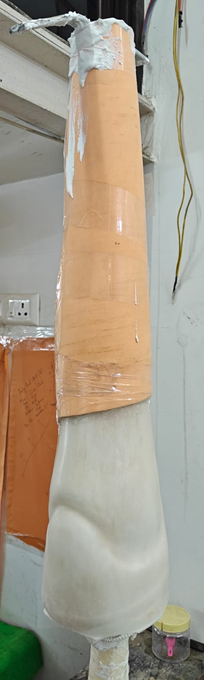
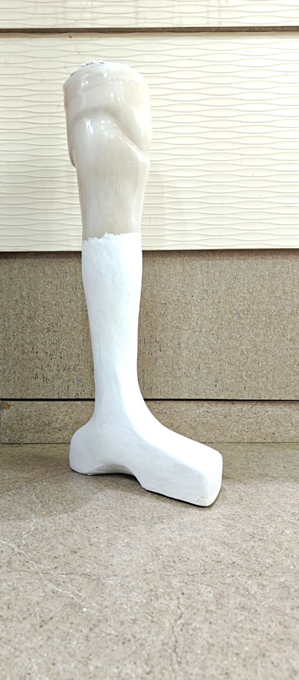
The prosthesis was fabricated using standard thermoforming techniques commonly used in prosthetic laboratories.
Clinical Fabrication Steps
- Residual limb assessment and measurement
- Positive model preparation
- Thermoforming of polyethylene inner socket
- Fabrication of polypropylene outer shell
- Integration of anti-slip PVC sole
- Addition of handle support system
- Final alignment and fitting
The design intentionally avoided complex mechanical components to reduce maintenance and overall production costs.
Key Design Features
Lightweight Construction
The final prosthesis weighed approximately 990 grams, significantly lighter than many conventional prosthetic systems that weigh between 1.4 and 1.6 kilograms.
Reduced weight improves:
- Ease of handling
- User comfort
- Energy efficiency
- Safety during transfers
Waterproof and Non-Corrosive Design
All materials used were resistant to:
- Water exposure
- Rust formation
- Moisture-related degradation
This ensures durability and long-term usability in wet conditions.
Ergonomic Stability
The prosthesis was designed to support safe sitting postures commonly used during bucket bathing practices in India.
This ergonomic adaptation improved:
- Stability
- Weight distribution
- Safety during transfers
Quick-Drying Hygienic Surface
The smooth thermoplastic surfaces allowed:
- Easy cleaning
- Rapid drying
- Reduced fungal growth
- Improved residual limb hygiene
Clinical Results and Performance Outcomes
Improved Safety
Field trial observations demonstrated improved safety during bathing activities.
Observed Benefits
- Better grip on wet surfaces
- Reduced fear of slipping
- Improved sitting balance
- Enhanced confidence during transfers
The anti-slip PVC sole played an essential role in minimizing instability on wet floors.
Increased Independence
A below-knee amputee participating in the field trial was able to:
- Bathe independently
- Perform hygiene activities safely
- Avoid caregiver dependency
Restoration of independent bathing significantly improved psychological well-being and confidence.
Improved Psychological Health
The prosthesis positively influenced:
- Self-esteem
- Dignity
- Emotional confidence
- Social independence
Patients often report that regaining independence in personal hygiene represents an important milestone in rehabilitation.
Economic Benefits
One of the most important outcomes was affordability.
The low production cost allows the bathing prosthesis to potentially be provided:
- As a supplementary device
- Alongside the definitive prosthesis
- Without major financial burden
This creates opportunities for large-scale implementation in government hospitals, rehabilitation centers, and rural prosthetic services.
Clinical Discussion
This innovation addresses an important but frequently overlooked aspect of prosthetic rehabilitation.
Most prosthetic interventions focus primarily on:
- Ambulation
- Community mobility
- Functional gait
However, activities of daily living such as bathing remain critical determinants of:
- Quality of life
- Psychological independence
- Residual limb health
- Long-term rehabilitation outcomes
In the Indian context, environmental and cultural factors significantly influence prosthetic design requirements. Western waterproof prosthetic systems may not adequately address:
- Bucket bathing
- Floor sitting
- Squat postures
- Small bathroom spaces
- Financial limitations
The present bathing prosthesis successfully integrates:
- Cultural adaptability
- Functional safety
- Low-cost fabrication
- Clinical practicality
Its use of locally available materials and simple manufacturing techniques makes it highly suitable for resource-constrained rehabilitation settings.
Furthermore, the design philosophy emphasizes preventive rehabilitation. By protecting the definitive prosthesis from moisture-related damage, the device may reduce long-term maintenance costs and prolong prosthetic lifespan.
Innovation Highlights
Patient-Centered Clinical Design
The prosthesis was designed specifically around the real-life needs of Indian amputees rather than adapting expensive imported technologies.
Cost-Effective Rehabilitation Solution
Affordable fabrication increases accessibility for low-income patients and rural populations.
Customizable Design
The device can be customized according to:
- Residual limb length
- Shape
- Volume
- Functional requirements
Resource-Limited Scalability
The simplicity of fabrication makes it suitable for:
- Prosthetic clinics
- Rehabilitation centers
- NGO-based limb fitting camps
- Government healthcare systems
Future Scope and Expansion
Future developments may include:
Above-Knee Waterproof Prostheses
Expanding the concept for transfemoral amputees will further improve accessibility and independence.
Water Sports Prosthetic Applications
The design may evolve for:
- Swimming
- Beach activities
- Aquatic rehabilitation
Integration with Rehabilitation Programs
Bathing prostheses can become part of comprehensive amputee rehabilitation protocols focusing on:
- Functional independence
- Fall prevention
- Activities of daily living training
Conclusion
The development of a lightweight and affordable waterproof bathing prosthesis represents an important advancement in patient-centered prosthetic rehabilitation within the Indian context. By addressing safety, hygiene, independence, and affordability, this innovation fills a major clinical gap often ignored in conventional prosthetic care.
The device demonstrates that effective rehabilitation solutions do not always require expensive technology. Through thoughtful design, locally available materials, and culturally adapted engineering, it is possible to improve the quality of life of below-knee amputees significantly through support from the best prosthetics manufacturer in India.
This bathing prosthesis not only protects the primary prosthetic device from water damage but also restores confidence, dignity, and independence in one of the most essential activities of daily living. Its simplicity, affordability, and scalability make it a promising solution for broader implementation across India’s prosthetic rehabilitation sector.