

Summary: Prosthetic limbs have transformed the lives of millions of people by restoring mobility, independence, and confidence. However, many misconceptions still surround prosthetic technology and the people who use these devices. From myths about comfort and functionality to misunderstandings about daily life with a prosthetic limb, misinformation can create unnecessary fears and unrealistic expectations. In this blog, we debunk some of the most common myths about prosthetic limbs and reveal the reality behind modern prosthetic care.
Prosthetic technology has advanced significantly over the past few decades, enabling individuals with limb loss to lead active, fulfilling, and independent lives. Modern prosthetic limbs are lighter, more durable, and more functional than ever before.
Despite these advancements, many myths and misconceptions continue to persist. These misunderstandings can influence public perception and sometimes discourage individuals from seeking prosthetic solutions that could greatly improve their quality of life.
Whether you’re considering a prosthetic limb, supporting a loved one through rehabilitation, or simply looking to learn more, understanding the facts can help separate reality from fiction.
Let’s explore and debunk some of the most common myths about prosthetic limbs.
Myth #1: Prosthetic Limbs Work Exactly Like Natural Limbs
One of the most widespread misconceptions is that modern prosthetic limbs can completely replicate the function of a natural arm or leg.
The Reality
While today’s prosthetics are highly advanced, they do not perfectly replace a natural limb. Prosthetic devices are designed to restore function and improve mobility, but they still require adaptation, training, and rehabilitation.
Many users achieve impressive levels of mobility and independence, but prosthetic limbs work differently from biological limbs and often require conscious control and adjustment.
The goal is not to create a perfect replacement but to help individuals perform daily activities as effectively and comfortably as possible.
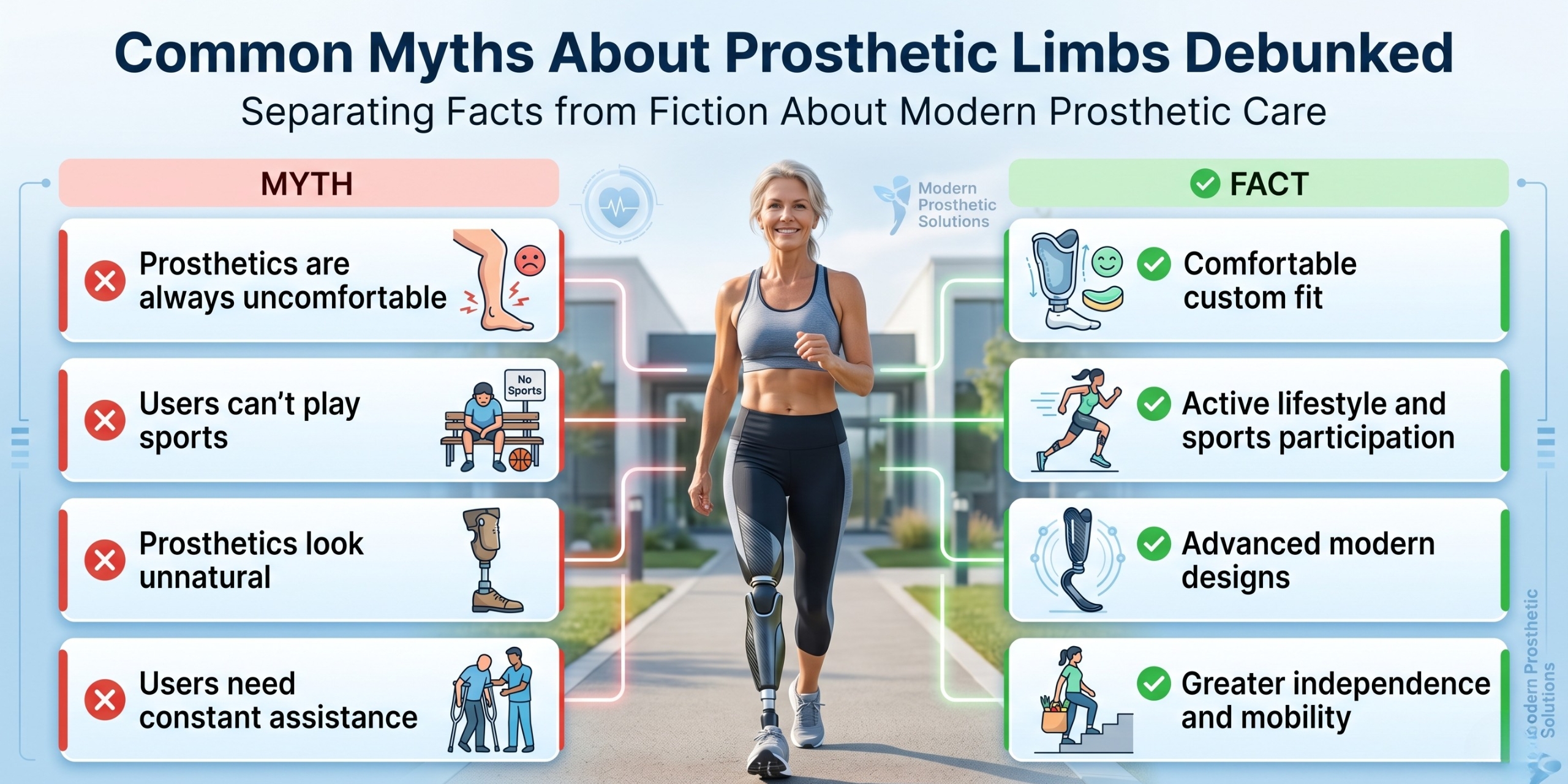
Myth #2: Prosthetic Limbs Are Uncomfortable All the Time
Many people believe that wearing a prosthetic limb is always painful or uncomfortable.
The Reality
A properly fitted prosthetic limb should be comfortable enough for daily use.
Although some discomfort may occur during the initial adjustment period, modern prosthetic sockets, liners, and suspension systems are designed to maximize comfort and reduce pressure.
Regular follow-up appointments and adjustments help ensure that the prosthetic continues to fit properly over time.
Persistent pain is not something users should simply accept. In many cases, discomfort can be resolved through professional adjustments.
Myth #3: People with Prosthetic Limbs Cannot Live Active Lives
Some individuals assume that limb loss automatically prevents participation in sports, exercise, or recreational activities.
The Reality
Many prosthetic users lead highly active lifestyles.
Modern prosthetic technology supports activities such as:
- Walking
- Running
- Cycling
- Swimming
- Hiking
- Weight training
- Competitive sports
Specialized sports prosthetics are designed specifically for athletic performance and can help individuals pursue their fitness goals.
In fact, many athletes with prosthetic limbs compete at national and international levels.
Myth #4: Prosthetic Limbs Are Only for Older Adults
Another common misconception is that prosthetic limbs are primarily used by older individuals.
The Reality
People of all ages use prosthetic devices.
Prosthetics can benefit:
- Children born with limb differences
- Teenagers recovering from injuries
- Working professionals
- Athletes
- Seniors
Modern prosthetic solutions are customized according to age, activity level, and individual goals.
Children, in particular, often adapt remarkably well to prosthetic devices and can participate in school, sports, and other activities alongside their peers.
Myth #5: Prosthetic Users Need Constant Assistance
Some people assume that individuals with prosthetic limbs are heavily dependent on caregivers.
The Reality
One of the primary goals of prosthetic rehabilitation is to increase independence.
With proper training and support, many prosthetic users can:
- Drive vehicles
- Work full-time jobs
- Travel independently
- Manage household tasks
- Participate in social activities
While support may be needed during the recovery and adjustment process, many individuals become highly self-sufficient.
Myth #6: Prosthetic Limbs Last Forever
People often assume that once a prosthetic limb is fitted, it never needs replacement or maintenance.
The Reality
Like any medical device, prosthetic limbs require regular maintenance and occasional replacement.
Several factors affect prosthetic lifespan, including:
- Activity level
- Daily wear and tear
- Component quality
- Changes in body weight
- Changes in residual limb shape
Routine checkups help ensure the prosthetic remains safe, comfortable, and effective.
In many cases, certain components may be upgraded or replaced without replacing the entire device.
Myth #7: Learning to Use a Prosthetic Limb Is Easy
Many people believe that users can immediately walk or perform activities as soon as they receive a prosthetic limb.
The Reality
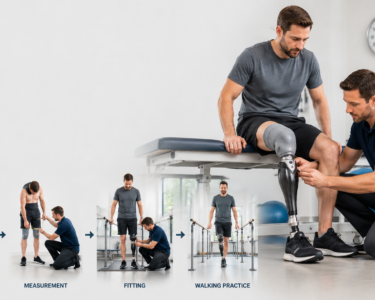
Adapting to a prosthetic limb requires time, practice, and rehabilitation.
The process often includes:
- Physical therapy
- Balance training
- Strength exercises
- Gait training
- Daily practice
Each person’s rehabilitation journey is unique.
Some individuals adapt quickly, while others may need several months to become fully comfortable with their prosthetic device.
Patience and consistency play an important role in long-term success.
Myth #8: Prosthetic Limbs Are Only Functional, Not Cosmetic
Some believe that prosthetic devices are purely practical and cannot look natural.
The Reality
Modern prosthetics can be both functional and aesthetically appealing.
Many prosthetic limbs are designed with:
- Realistic cosmetic covers
- Natural skin-tone finishes
- Customized appearances
- Personalized designs
Some users prefer realistic-looking prosthetics, while others embrace highly customized designs that reflect their personality and style.
The choice is entirely personal.
Myth #9: Everyone Uses the Same Type of Prosthetic Limb
Many people assume that all prosthetic devices are essentially identical.
The Reality
Prosthetic limbs are highly customized.
The design of a prosthetic depends on factors such as:
- Amputation level
- Activity level
- Occupation
- Age
- Lifestyle goals
- Medical history
For example, a runner may require a completely different prosthetic setup than someone who primarily uses their prosthetic for daily walking.
Customization is essential for achieving optimal comfort and performance.
Myth #10: Advanced Prosthetics Are Only for Elite Athletes
People often associate advanced prosthetic technology with professional athletes and assume it is unavailable to the average person.
The Reality
Advanced prosthetic technologies are increasingly accessible.
Modern options may include:
- Microprocessor-controlled knees
- Energy-storing feet
- Myoelectric arms
- Lightweight carbon fiber components
- Smart prosthetic systems
These technologies are used by individuals from various backgrounds and activity levels.
A prosthetist can recommend suitable options based on the individual’s needs and goals.
Myth #11: Limb Loss Means Giving Up Your Career
One of the most damaging myths is that individuals with prosthetic limbs cannot continue their professional careers.
The Reality
Many prosthetic users successfully return to work after rehabilitation.
People with prosthetic limbs work in fields such as:
- Healthcare
- Education
- Engineering
- Information technology
- Business
- Manufacturing
- Sports and fitness
With proper accommodations and support, many individuals continue to thrive professionally and achieve their career goals.
Myth #12: Prosthetic Technology Has Stopped Advancing
Some people believe prosthetic technology has reached its limits.
The Reality
Innovation in prosthetic care continues at a rapid pace.
Emerging technologies include:
- Bionic prosthetics
- AI-assisted movement systems
- Brain-computer interfaces
- Advanced sensory feedback systems
- 3D-printed prosthetic devices
These advancements continue to improve comfort, functionality, and quality of life for prosthetic users around the world.
Why Understanding the Facts Matters
Misconceptions about prosthetic limbs can create unnecessary fears and barriers for individuals considering prosthetic care.
Understanding the realities of modern prosthetic technology helps:
- Promote awareness
- Encourage acceptance
- Support informed decision-making
- Improve rehabilitation outcomes
- Empower individuals with limb loss
Education plays a vital role in creating a more inclusive and supportive environment for prosthetic users.
Moving Beyond the Myths
Prosthetic limbs are not defined by myths or outdated assumptions. They are powerful tools that help individuals regain mobility, independence, and confidence after limb loss.
While prosthetic devices may not perfectly replicate natural limbs, modern technology has made remarkable progress in improving comfort, functionality, and performance. With the right prosthetic solution, professional support, and rehabilitation, individuals can lead active and fulfilling lives.
Discover Personalized Prosthetic Solutions with PROACTIVE Technical Orthopaedics
At PROACTIVE Technical Orthopaedics, we are dedicated to helping individuals achieve greater mobility and independence through advanced prosthetic care. As the best prosthetics manufacturer in India, we provide customized prosthetic solutions, expert fittings, rehabilitation support, and ongoing care to help patients achieve the best possible outcomes.
Whether you’re exploring prosthetic options for yourself or a loved one, our experienced team is here to guide you every step of the way. Contact PROACTIVE Technical Orthopaedics today and discover how working with the best prosthetics manufacturer in India can help you regain confidence, mobility, and independence for a more active future.