

| Summary: A lower limb prosthesis is a complete system made from several components that work together to support comfort, stability, movement, and everyday function. This guide explains the role of the socket, liner, suspension system, knee joint, pylon, adapters, and prosthetic foot, and why the right combination depends on the user’s amputation level, mobility goals, body characteristics, and daily activities. |
Modern lower limb prosthetics combine clinical assessment, custom fitting, and engineering. The information below explains common prosthetic concepts in plain language, but component selection and adjustment should always be individualized by a qualified prosthetist and rehabilitation team.
What Is a Lower Limb Prosthesis?
A lower limb prosthesis is an artificial limb designed to replace part or all of a leg after limb loss or limb difference. It is not a single mechanical part. Instead, it is a carefully aligned system in which each component has a specific job. The exact design changes depending on whether the limb difference is below the knee, above the knee, through the knee, or at another level.
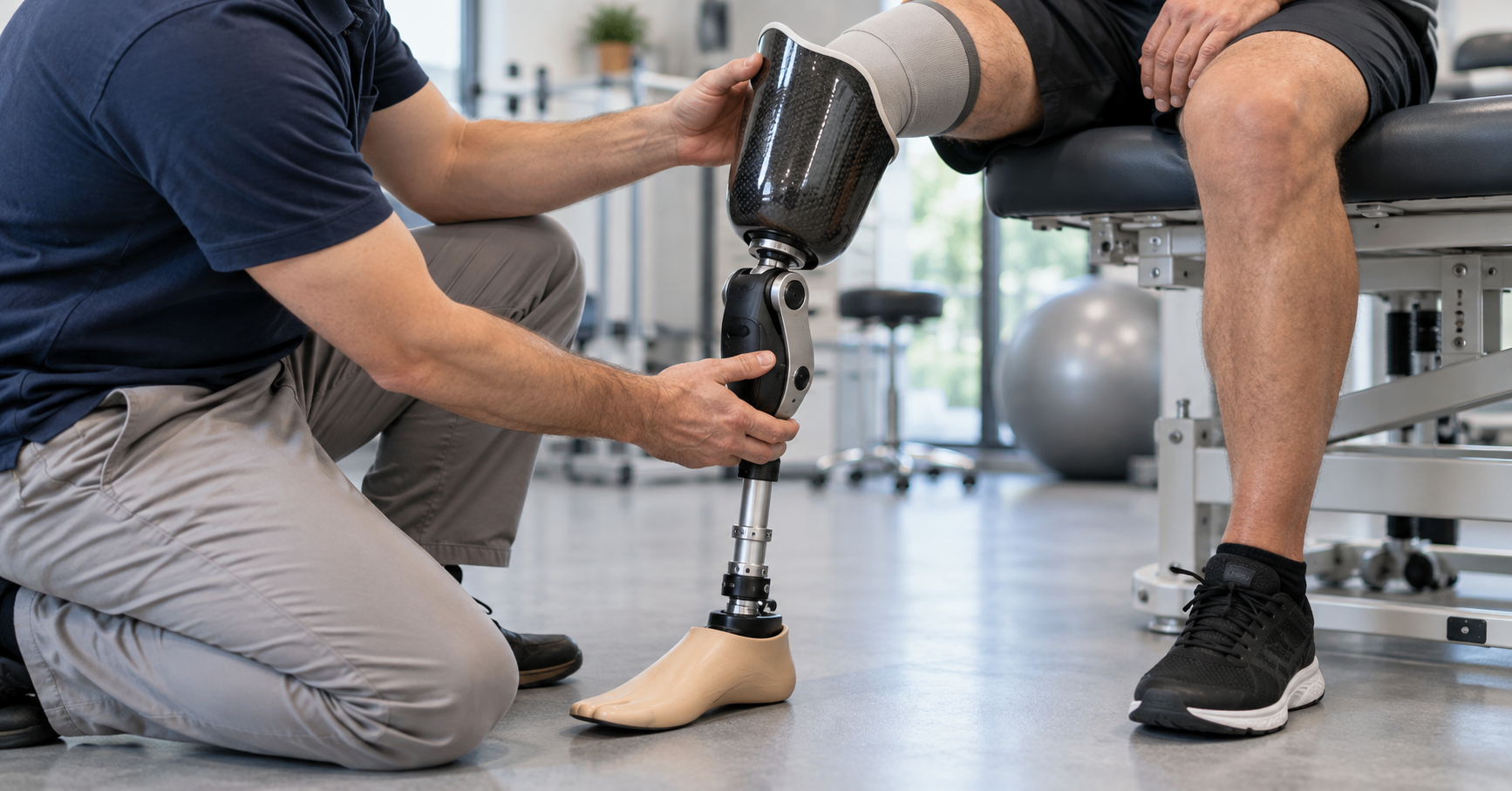
For example, a person with a transtibial, or below-knee, amputation generally needs a socket, suspension system, structural components, adapters, and a prosthetic foot. A person with a transfemoral, or above-knee, amputation also requires a prosthetic knee. The prosthetist combines these parts and adjusts their alignment so the device supports the person’s body, walking pattern, activity level, and rehabilitation goals.
1. The Prosthetic Socket: The Main Connection to the Body
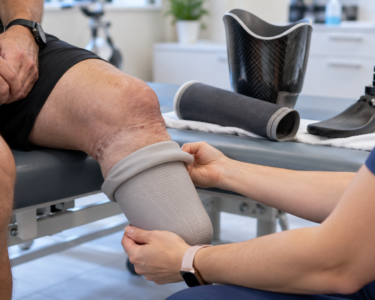
The socket is the custom-made part of the prosthesis that fits around the residual limb. It is one of the most important components because it transfers body weight and movement between the person and the rest of the prosthesis. A socket must be secure enough to provide control but comfortable enough for repeated daily use.
Socket shape is created around the individual. The prosthetist considers bone structure, soft tissue, sensitive areas, limb volume, skin condition, muscle control, and how the person loads the limb while standing and walking. A poor fit can cause pressure, rubbing, skin breakdown, pain, instability, or unwanted movement inside the socket.
Why Socket Fit Can Change Over Time
Residual limb volume can change during the day and across longer periods. Weight change, activity, fluid retention, muscle development, and tissue changes may all affect fit. Prosthetic socks, adjustable socket systems, or socket modifications may be used to manage smaller changes, while larger or persistent changes may require a new socket.
2. Prosthetic Liners: Cushioning and Skin Protection
A prosthetic liner is worn over the residual limb before the socket. Liners create a protective interface between the skin and the harder socket structure. They can help cushion pressure, reduce friction, improve comfort, and contribute to suspension.
Common liner materials include silicone, gel-type polymers, and other elastomeric materials. Different liners vary in softness, durability, thickness, stretch, heat retention, and how they attach to the socket. Some liners have a distal locking pin, while others are designed for suction or elevated-vacuum systems.
Liner Care Matters
Because a liner sits directly against the skin, regular cleaning and inspection are important. Sweat, dirt, or product residue can irritate the skin and affect grip. Users should follow the manufacturer’s cleaning instructions and report recurring redness, sores, blisters, or unusual discomfort to their prosthetist or healthcare team.
3. Suspension Systems: Keeping the Prosthesis Secure
Suspension is the method used to keep the prosthesis attached to the residual limb. Good suspension helps reduce unwanted up-and-down movement, often called pistoning, and improves control of the device.
Common suspension approaches include locking-pin systems, suction suspension, elevated vacuum, suspension sleeves, anatomical suspension, belts, and other auxiliary systems. The best option depends on factors such as limb shape, skin tolerance, hand strength, dexterity, activity level, and the level of amputation.
Why Suspension Affects Confidence
When suspension is consistent, the prosthesis tends to feel more connected to the body. This can improve confidence during walking, turning, transfers, and changes in speed. If the suspension becomes loose, uncomfortable, or difficult to manage, the person may feel less secure and may compensate with altered movement.
4. Prosthetic Knee Joint: Controlling Stance and Swing
A prosthetic knee is required in many above-knee prostheses. Its job is more complex than simply bending. The knee must provide stability while the person places weight on the prosthesis and then allow controlled flexion and extension while the leg swings forward.
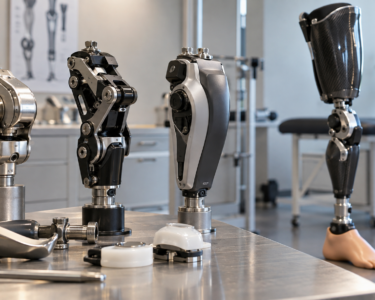
Mechanical knees may use friction, locks, springs, pneumatic systems, or hydraulic systems. Microprocessor-controlled knees use sensors, onboard software, and electronically managed resistance to adjust during the gait cycle. Different knee technologies suit different mobility levels, walking environments, safety needs, and activity goals.
Stance Phase and Swing Phase
During stance phase, the prosthetic foot is in contact with the ground and the knee must help support the user safely. During swing phase, the prosthetic leg moves forward and the knee needs to flex enough for toe clearance and then extend in preparation for the next step. Knee design and alignment influence both phases.
5. The Pylon or Structural Frame
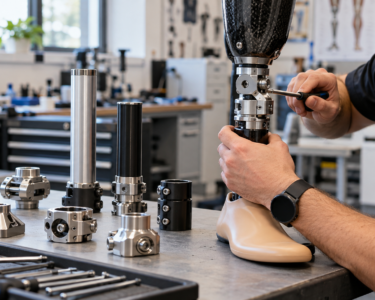
The pylon is the structural part that connects major components such as the socket, knee, and foot. In an endoskeletal prosthesis, it is usually a lightweight metal or composite tube that acts as the internal support structure. It carries load through the prosthesis and gives the prosthetist a platform for alignment adjustments.
The pylon may later be covered with a cosmetic foam cover, or it may remain visible depending on user preference. Although it can look simple compared with electronic components, its length, orientation, and connection points are critical to overall function.
6. Adapters and Connectors: Small Parts With a Big Job
Adapters connect the main prosthetic components to one another. Examples include pyramid adapters, tube clamps, rotation adapters, offset adapters, and specialized connectors. They allow components from a modular prosthetic system to be joined securely and aligned in three dimensions.
These parts are important because small alignment changes can influence balance, socket comfort, knee stability, foot placement, and the way forces travel through the prosthesis. Adjustable adapters also make it possible for a prosthetist to fine-tune alignment during fitting and follow-up visits.
7. The Prosthetic Foot and Ankle
The prosthetic foot provides a stable base for standing and walking. It also helps manage impact when the foot contacts the ground and supports forward progression during a step. Prosthetic feet vary greatly in design and may include basic cushioned-heel feet, single-axis or multi-axis feet, dynamic-response feet, and microprocessor-controlled ankle-foot systems.
A dynamic-response foot can store some energy as it is loaded and return part of that energy as the user moves forward. Multi-axis designs can adapt more easily to uneven ground. Some advanced ankle-foot systems automatically adjust resistance or ankle position based on terrain and movement.
Foot Selection Is Individual
The most advanced foot is not automatically the best foot for every person. Selection should reflect the user’s body weight, mobility level, balance, walking speed, occupation, recreational activities, terrain, footwear needs, and goals.
8. Cosmetic Covers and Finishing Options
Some users choose a cosmetic cover that gives the prosthesis a leg-like contour, while others prefer an uncovered technical appearance. Covers can provide cosmetic shaping and may protect some components, but they can also affect weight, access for adjustments, and maintenance.
Appearance is a personal choice. The functional setup of the prosthesis should come first, but aesthetics can still be important for confidence, clothing choices, or personal expression.
How All the Components Work Together
A prosthesis performs well only when the components are compatible and properly aligned. A high-performance foot cannot compensate for an uncomfortable socket, and an advanced knee cannot function at its best if suspension is poor or alignment is incorrect. The whole system has to work as one.
This is why prosthetic fitting involves assessment, trial fitting, alignment, gait training, and follow-up. The prosthetist may adjust socket fit, component position, knee settings, foot alignment, or suspension as the user gains experience or as the residual limb changes.
Choosing the Right Lower Limb Prosthetic System
The right lower limb prosthesis is not selected from a single checklist. It is built around the individual. Factors such as amputation level, strength, balance, skin health, mobility goals, home and work environment, daily walking distance, hobbies, and access to follow-up care all matter.
A well-designed system should support safe mobility while remaining manageable in daily life. Users should discuss comfort, instability, skin problems, unusual noises, difficulty with suspension, or changes in walking with their prosthetist rather than trying to solve component or alignment problems on their own.
A Complete Prosthesis Is More Than the Sum of Its Parts
Lower limb prostheses combine several specialized components to create a functional connection between the person and the ground. The socket provides the interface, the liner protects the skin, suspension keeps the device attached, structural parts transfer load, adapters support alignment, the knee controls motion when needed, and the foot manages stability and progression.
Understanding these parts can make prosthetic discussions easier and help users ask better questions during fitting and rehabilitation. Component choice should always be individualized by a qualified prosthetic care team.
Frequently Asked Questions
What are the main parts of a lower limb prosthesis?
Common parts include the socket, liner, suspension system, pylon or frame, adapters, prosthetic foot, and, for many above-knee users, a prosthetic knee joint.
Is the socket the most important part of a prosthesis?
The entire system matters, but the socket is especially important because it is the direct interface between the residual limb and the prosthesis.
What does a prosthetic liner do?
A liner cushions and protects the residual limb, reduces friction, and may also help suspend the prosthesis.
How is a prosthetic leg held on?
It may use pin locking, suction, elevated vacuum, sleeves, anatomical suspension, belts, or another system chosen for the individual.
Does every prosthetic leg have a knee joint?
No. A prosthetic knee is generally needed when the natural knee is absent, such as with many transfemoral amputations.
What is a pylon in a prosthetic leg?
A pylon is a structural component, often tubular, that connects parts of the prosthesis and carries load through the device.
What do prosthetic adapters do?
Adapters connect major components and allow the prosthetist to adjust alignment, rotation, height, and position.
Are all prosthetic feet the same?
No. Prosthetic feet vary in movement, energy return, terrain adaptation, weight, durability, and technology.
How often does a prosthesis need adjustment?
Adjustment frequency varies. Changes in residual limb volume, activity, wear, or comfort may require follow-up sooner.
Who should choose prosthetic components?
Component selection should be made with a qualified prosthetist and rehabilitation team based on the user’s needs, goals, and clinical assessment.
Medical Note
This article is for general educational purposes and does not replace individualized prosthetic or medical advice. Prosthetic components, fit, suspension, alignment, and maintenance should be assessed by qualified healthcare and prosthetic professionals.
Contact PROACTIVE Technical Orthopaedics Pvt. Ltd. today — because every step matters.