

| Summary: Adapters and connectors are the modular hardware that join sockets, knees, pylons, and feet into a complete prosthetic system. Although small, they play a major role in alignment, height, rotation, component compatibility, adjustability, and special functions such as shock absorption or rotation. |
Modern lower limb prosthetics combine clinical assessment, custom fitting, and engineering. The information below explains common prosthetic concepts in plain language, but component selection and adjustment should always be individualized by a qualified prosthetist and rehabilitation team.
Why Small Prosthetic Components Matter
The most visible parts of a lower limb prosthesis are usually the socket, knee, and foot. Between these larger components are adapters and connectors that make the system work as one unit. They may look simple, but they are essential for safe assembly and precise alignment.
Modern endoskeletal prostheses are often modular. That means major components can be connected through standardized interfaces and adjusted during fitting. Adapters give the prosthetist the ability to position components in three dimensions so the prosthesis works with the user’s body and gait.
What Is a Prosthetic Adapter?
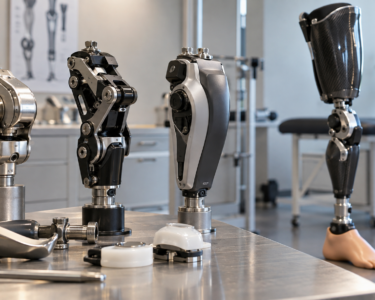
A prosthetic adapter is a structural component that connects one part of the prosthesis to another or changes the position, angle, orientation, or function of a connection. Common examples include pyramid adapters, tube clamps, socket adapters, knee adapters, rotation adapters, offset adapters, and specialty shock-absorbing or torsion components.
The specific connector system depends on the manufacturer and component family. Compatibility, body-weight rating, build height, material, corrosion resistance, and environmental rating all have to be considered.
Pyramid Adapters and Pyramid Receivers
The pyramid connector is one of the most common modular interfaces in lower limb prosthetics. A pyramid-shaped attachment fits into a matching receiver that is secured with adjustment screws.
This design allows the prosthetist to make small angular changes in several directions. By adjusting the relationship between the socket, knee, pylon, and foot, the prosthetist can influence stability, weight transfer, toe clearance, and how the foot meets the ground.
Why Fine Adjustment Matters
A small alignment change can have a noticeable effect on gait. Moving a component slightly forward, backward, inward, outward, or changing its angle can alter the forces that reach the socket and joints. The ability to fine-tune alignment is one of the main advantages of modular adapter systems.
Tube Clamps and Pylon Connectors
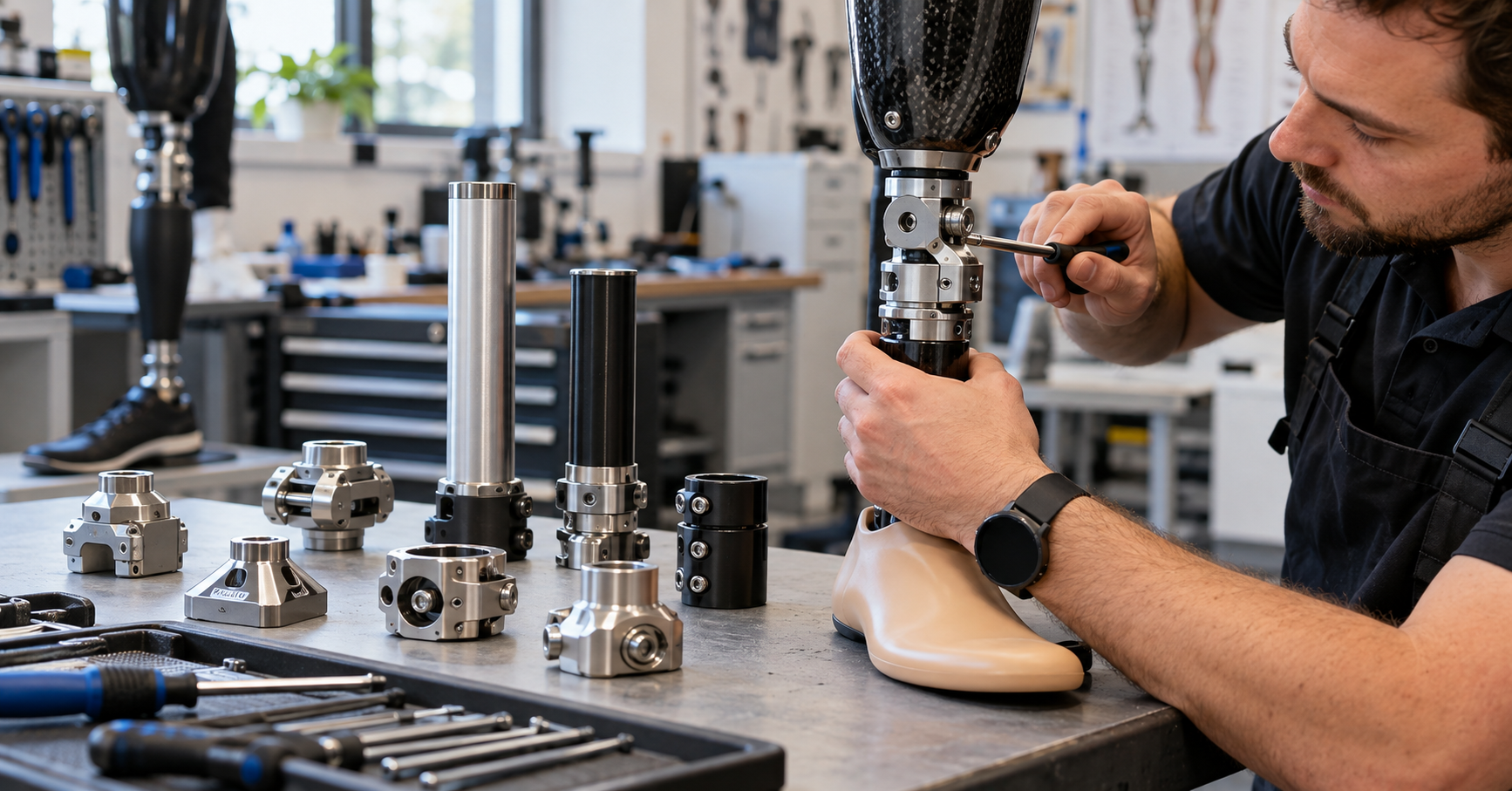
Tube clamps connect a structural pylon tube to other prosthetic components. They secure the tube while still allowing height and rotational adjustments during fitting.
The prosthetist can cut or select the pylon length to achieve the correct overall prosthetic height and then rotate components so the foot and knee are properly oriented. Once alignment is finalized, clamps are tightened to the required specification.
Socket Adapters
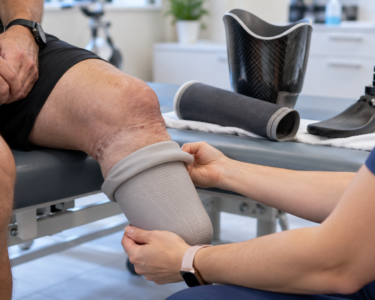
Socket adapters create the connection between the custom socket and the modular component system below it. They may be laminated into the socket or attached through another structural method depending on socket construction.
Because the socket establishes the user’s relationship to the entire prosthesis, this connection has to be strong, accurately positioned, and compatible with the loads the user will place on the device.
Knee Adapters and Connection Hardware
Above-knee prostheses need secure connections above and below the prosthetic knee. Depending on the knee model, the proximal and distal connections may use pyramid interfaces, tube clamps, threaded connections, or manufacturer-specific adapters.
Build height becomes especially important here. The socket, knee, adapters, and foot all have physical dimensions, and the prosthetist must fit them into the available space while preserving correct limb length and alignment.
Offset Adapters
An offset adapter shifts one component relative to another. This can be useful when the prosthetist needs to move the pylon or component centerline without changing the socket itself.
Offsets can help solve alignment challenges, accommodate anatomy, manage build-space limitations, or position components to improve function. Because they change the mechanical relationship between parts, they must be selected and installed carefully.
Rotation Adapters
A rotation adapter allows controlled rotation of part of the prosthesis. In some above-knee systems, for example, a rotation unit can help the user turn the lower leg for tasks such as putting on shoes, crossing the legs, or sitting in certain positions.
A rotation adapter is not intended to remain freely mobile during walking. It is a specialized function that is locked or controlled according to the design. The user should be trained in how and when to use it.
Torsion and Shock-Absorbing Adapters
Torsion adapters allow limited rotational compliance in the prosthesis. Shock-absorbing pylons or adapters allow controlled vertical compression. These components can reduce the transfer of certain impact and twisting forces during activities such as walking on uneven ground, sports, golf, or jobs that involve frequent turning.
They can improve comfort for some users, but they also add weight, build height, and mechanical complexity. They are selected based on goals rather than added automatically.
Height and Build-Space Management
Every component occupies physical space. In a person with a long residual limb, there may be limited room between the socket and the ground for a knee, adapters, pylon, and foot. Low-profile adapters can help preserve space.
In other situations, extension adapters or different connector arrangements may be used to reach the correct prosthetic length. Accurate height is important because an excessively short or long prosthesis can contribute to gait asymmetry and discomfort.
Adapters Help Create Proper Prosthetic Alignment
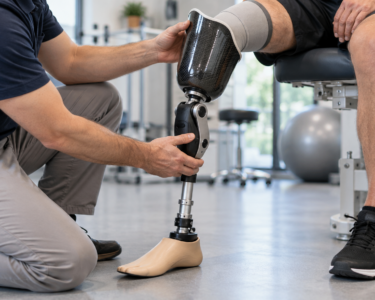
Prosthetic alignment describes the spatial relationship between the socket and the components below it. Static alignment is assessed while the user stands. Dynamic alignment is refined while the user walks and performs functional tasks.
Adapters allow the prosthetist to make the small corrections needed during this process. For example, changes may affect socket pressure, knee stability, foot progression angle, rollover, or how quickly the user can move over the prosthetic foot.
Component Compatibility Is Essential
Adapters must match the connection type, weight limit, structural requirements, and approved use of the prosthetic components. A connector should never be chosen only because the physical shape appears to fit.
Manufacturers specify compatible interfaces, tightening torque, environmental restrictions, maintenance intervals, and maximum user weight. Mixing incompatible components can reduce safety or void device approvals.
Materials Used in Prosthetic Connectors
Adapters are commonly made from materials such as titanium, stainless steel, aluminum alloys, or high-strength composite structures. Material choice affects weight, strength, corrosion resistance, and cost.
Titanium is valued for its strength-to-weight ratio and corrosion resistance. Stainless steel can provide high strength, while aluminum is lightweight and used in many component designs. The right choice depends on the product specification and expected load.
Why Users Should Not Adjust Adapters Themselves
Pyramid screws, tube clamps, and other fasteners may look straightforward, but changing them can alter alignment or reduce structural security. Fasteners often require specific torque values and inspection procedures.
Users should not loosen, rotate, shorten, or reassemble prosthetic structural components unless specifically instructed by their prosthetist. If the foot appears rotated, height feels different, a connection becomes loose, or new clicking develops, the device should be checked professionally.
Maintenance and Safety Checks
During routine prosthetic follow-up, the prosthetist may inspect screws, clamps, tubes, adapters, corrosion, wear, alignment, and component movement. High-activity users or people exposed to water, sand, dust, or demanding work conditions may need more frequent inspection depending on the system.
Any sudden change in alignment, visible damage, looseness, creaking, or instability should be treated as a reason to stop and seek professional assessment.
Adapters Turn Individual Components Into a Functional System
Adapters and connectors are the engineering links that allow a socket, knee, pylon, and foot to function as one prosthesis. Their value lies not only in holding components together but also in enabling precise alignment, modularity, height adjustment, rotation control, and specialized functions.
Because these parts carry structural loads and directly influence prosthetic alignment, they should always be selected, installed, and adjusted by qualified prosthetic professionals using compatible components and manufacturer specifications.
Frequently Asked Questions
What is a prosthetic adapter?
It is a component that connects major prosthetic parts or changes their position, alignment, height, rotation, or function.
What is a pyramid adapter?
A pyramid adapter is a common modular connection that allows small angular alignment adjustments in several directions.
What does a tube clamp do?
It secures a prosthetic pylon tube and can allow adjustment of height and rotation during fitting.
Why are offset adapters used?
They shift one component relative to another to help solve alignment or space problems.
What is a rotation adapter?
It allows controlled rotation of part of the prosthesis for certain seated or functional tasks, depending on the design.
What is a torsion adapter?
A torsion adapter permits limited rotational movement to reduce twisting forces transmitted through the prosthesis.
Do adapters affect walking?
Yes. Their position affects prosthetic alignment, which can influence stability, socket loading, foot position, and gait.
Can prosthetic adapters be mixed between brands?
Only when the components and interfaces are specifically compatible and approved for that use.
Can a user tighten a loose prosthetic adapter at home?
Structural fasteners often require specific torque and alignment checks, so a prosthetist should assess looseness unless the user has been given explicit instructions.
How often should adapters and connectors be inspected?
Inspection frequency depends on the device and activity level, but they are typically checked during routine prosthetic follow-up and whenever looseness, noise, damage, or alignment change is noticed.
Medical Note
This article is for general educational purposes and does not replace individualized prosthetic or medical advice. Prosthetic components, fit, suspension, alignment, and maintenance should be assessed by qualified healthcare and prosthetic professionals.
At Proactive Technical Orthopaedics, we specialize in selecting and fitting waterproof prosthetics tailored to your lifestyle. As the best prosthetics manufacturer in India, our experts understand water activities and provide solutions that let you swim, shower, and enjoy aquatic recreation confidently. Contact our team today for a consultation—let’s get you back to the activities you love.