

Summary:
Explore the specialized features that make running prosthetics different from everyday prosthetics. Learn about energy return, blade designs, and performance characteristics essential for active athletes.
Running with a prosthetic represents an incredible achievement in modern prosthetic technology. Specialized running prosthetics, also called running blades or track prosthetics, transform the experience for active amputees seeking to maintain athletic performance. These engineered devices differ significantly from everyday prosthetics in their construction, materials, and functional capabilities. Understanding key features helps you select the right running prosthetic for your athletic goals.
What Features Should You Consider When Choosing Running Prosthetics?
Energy Return Technology in Running Prosthetics
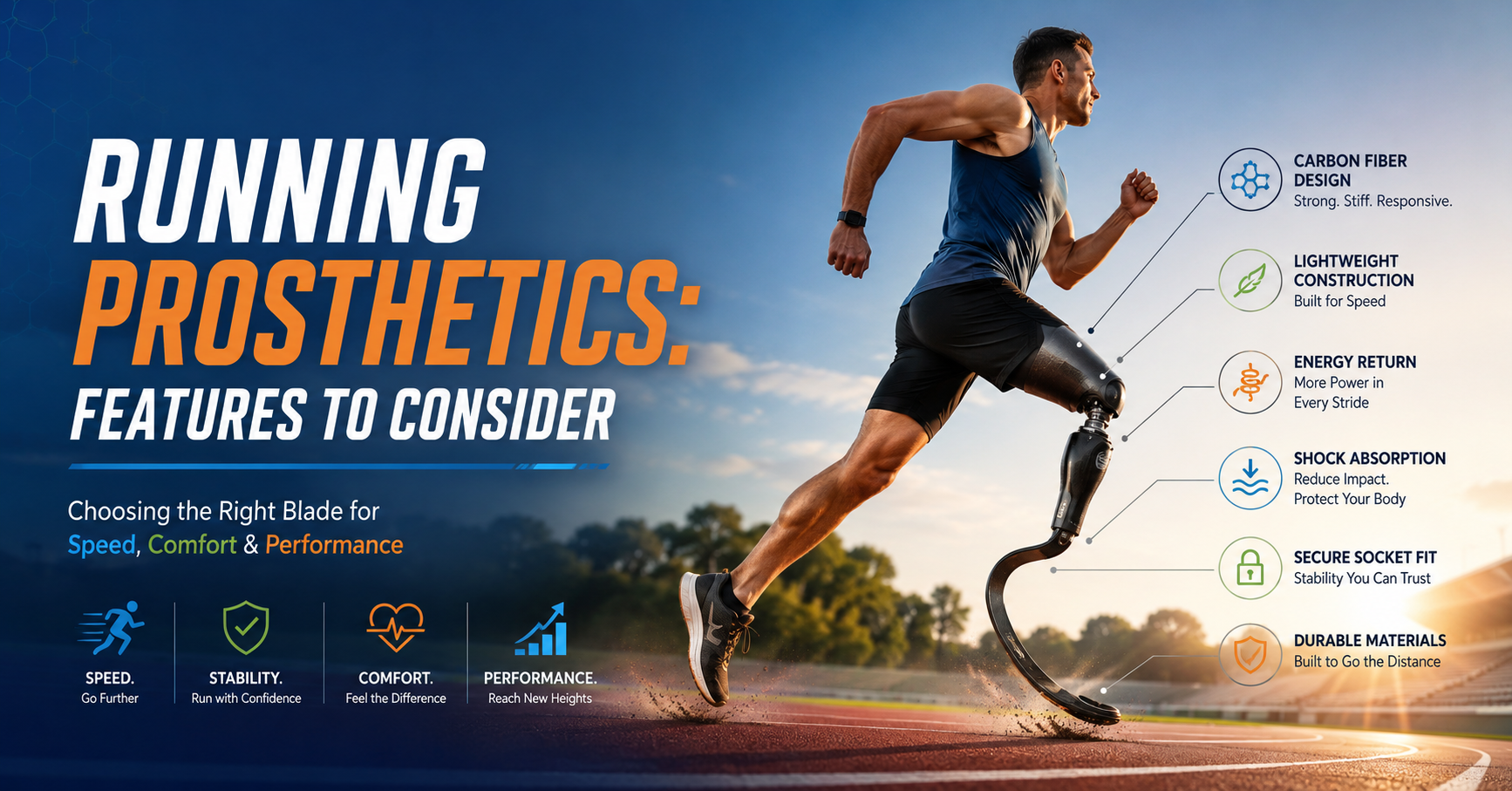
The most crucial feature of running prosthetics is their ability to store and return energy during each stride. Unlike everyday prosthetics that primarily absorb impact, running prosthetics feature specially designed materials that compress during footfall and release that energy during push-off. This energy return mimics the natural spring action of human muscle and tendon, enabling efficient running mechanics. Carbon fiber composite construction provides superior energy return compared to conventional materials, allowing runners to achieve speeds competitive with their pre-amputation athletic performance.
Blade Design and Flexibility
Running prosthetics typically feature curved blade designs rather than traditional foot shapes. These J-shaped or S-shaped blades provide optimal flexibility for running gaits, which demand greater ankle flexibility and faster leg rotation than walking. The blade’s curvature determines its stiffness and energy return characteristics. Stiffer blades suit faster runners and longer distances, while more flexible designs benefit sprinters requiring maximum acceleration. Your running prosthetic should match your running style, speed preferences, and the distances you typically run.
Weight Considerations for Athletes
Prosthetic weight significantly impacts running performance. Running prosthetics must be lightweight to minimize energy expenditure during extended running sessions. Carbon fiber construction achieves this while maintaining durability necessary for high-impact activities. Every ounce of prosthetic weight requires additional muscular effort, particularly in the residual limb and hip musculature. High-quality running prosthetics weigh considerably less than everyday prosthetics, enabling natural running cadence and reducing compensatory injuries in the intact limb.
Socket Design for Athletic Performance
Running prosthetics require different socket designs than everyday prosthetics due to the dynamic forces involved in running. High-activity sockets provide superior suspension and stability during rapid weight shifts and directional changes. Some runners prefer suction sockets with vacuum assistance for maximum security without restrictive straps. The socket material must withstand significant forces while remaining comfortable for extended training sessions. Look for sockets specifically designed for high-impact activities with enhanced structural support.
Durability and Maintenance Requirements
Running prosthetics endure tremendous forces during athletic training and competition. Quality construction using medical-grade carbon fiber and composite materials ensures longevity despite intense use. Regular maintenance becomes more critical for running prosthetics than everyday devices. Professional servicing every 6-12 months maintains optimal performance and identifies wear patterns before failure occurs. Many athletes maintain multiple running prosthetics—one optimized for training and another for competition—to extend overall equipment lifespan while maintaining peak performance.
Customization Options for Different Running Distances
Different running distances demand different prosthetic characteristics. Sprint-focused runners need responsive, flexible blades for maximum acceleration and leg turnover. Marathon runners require prosthetics optimized for endurance with superior energy return to reduce fatigue over extended distances. Middle-distance runners benefit from balanced designs offering both speed and endurance capabilities. Discuss your specific running goals with your prosthetist—for specialized athletic prosthetics, consult with manufacturers specializing in sports prosthetics like those recommended in our guide to trusted prosthetic manufacturers in India.
Maximizing Athletic Performance with Running Prosthetics
Discover specialized running prosthetics engineered for athletic excellence. Contact PROACTIVE Technical Orthopaedics, recognized as the best prosthetics manufacturer in India, to explore high-performance options designed for runners of all competitive levels.
Frequently Asked Questions
Can I run a marathon with a prosthetic?
Yes, many amputee athletes successfully complete marathons with properly fitted running prosthetics. Training gradually and selecting appropriate equipment is essential.
How does a running prosthetic differ from an everyday prosthetic?
Running prosthetics feature energy-storing blades, lightweight carbon fiber construction, and specialized sockets designed to handle high-impact forces during running.
What speed can I achieve with a running prosthetic?
Depending on your training and prosthetic quality, many runners achieve speeds comparable to pre-amputation performance. Some competitive athletes run sub-6-minute miles.
How long does a running prosthetic typically last?
With regular maintenance, running prosthetics last 2-3 years depending on training intensity. High-mileage runners may require more frequent replacement.
Can I use the same prosthetic for running and everyday activities?
While possible, most athletes prefer separate devices. Running prosthetics optimize for athletic performance while everyday prosthetics prioritize comfort and durability.
What’s the cost range for quality running prosthetics?
Running prosthetics typically cost $15,000-$30,000+ depending on technology and customization. Many insurance plans partially cover athletic prosthetics.
Do I need to train differently with a running prosthetic?
Yes, a gradual adaptation period (4-8 weeks) allows your body to adjust to the prosthetic’s different mechanics. Professional coaching helps optimize your technique.
What terrain is best for running with a prosthetic?
Smooth, even surfaces like track or paved roads are ideal for beginning. As you adapt, you can gradually introduce trails and varied terrain.
How do running prosthetics handle different weather conditions?
Quality running prosthetics handle rain and moisture well. However, extreme cold affects material flexibility, and extreme heat may degrade carbon fiber components.
Are there competitions specifically for athletes using prosthetics?
Yes, Paralympics events, local amputee sports organizations, and adaptive running races provide competitive opportunities for prosthetic athletes.