

Summary
Compare below-knee (BK) and above-knee (AK) prosthetics across functionality, cost, rehabilitation, and lifestyle impact. Understand which type suits different amputation levels and activity goals.
The level of amputation determines the complexity and capability of your prosthetic. Below-knee (BK) and above-knee (AK) prosthetics differ fundamentally in function, cost, and the rehabilitation journey required to use them effectively. This comprehensive comparison helps you understand what to expect and how each option impacts daily life, work capacity, and recreational activities.
Understanding Amputation Levels
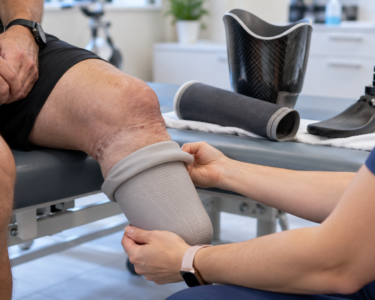
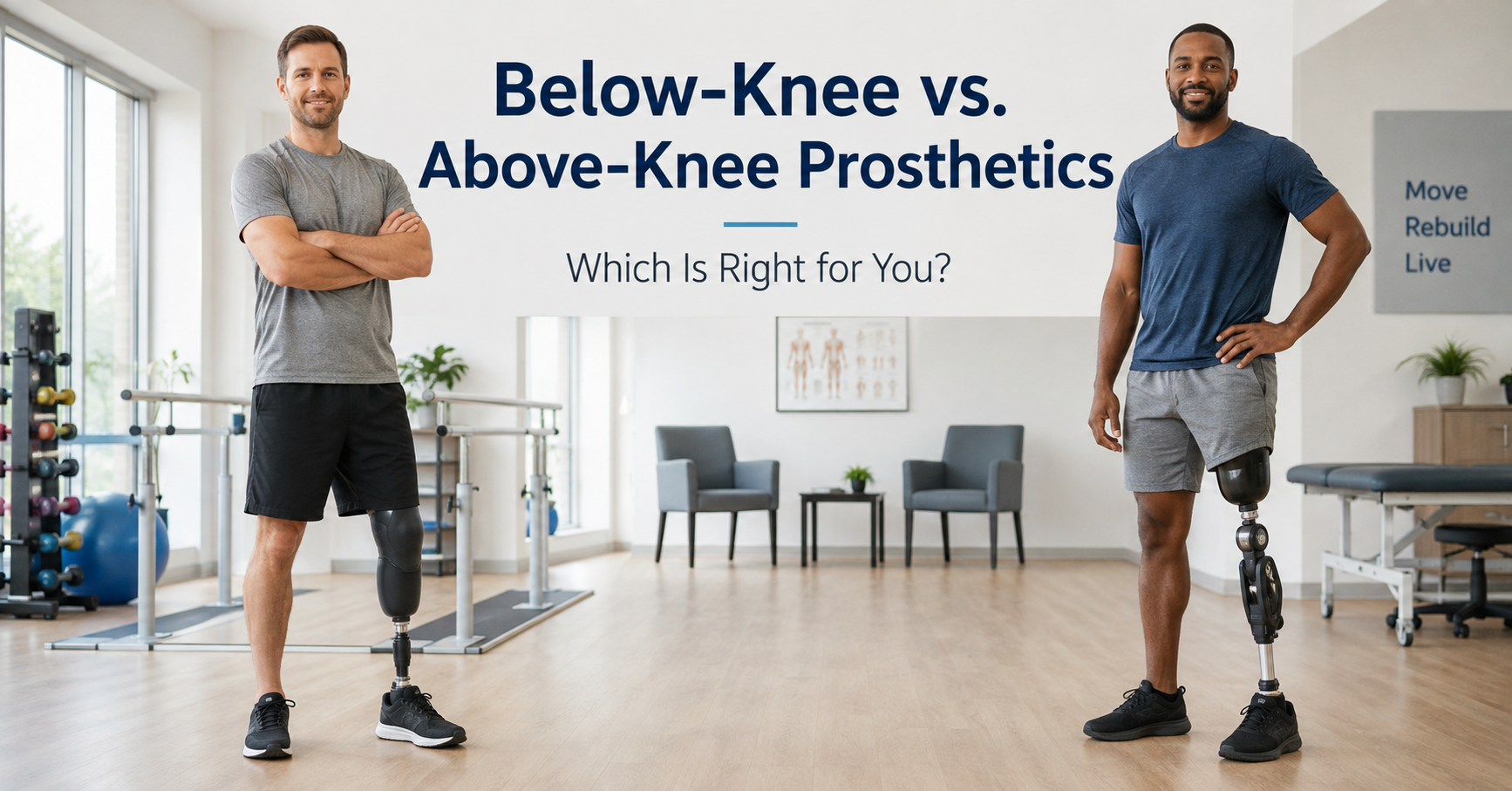
Below-knee amputations preserve the knee joint, which is the primary advantage of this level. Your natural knee retains its full range of motion and strength. Above-knee amputations involve loss of the knee joint entirely, requiring a prosthetic knee component. This distinction fundamentally affects everything from the prosthetic’s weight and complexity to the energy expenditure required to walk. Some people have ankle disarticulation or Syme’s amputation (removal of foot but preservation of heel bone), which sit between standard BK and AK classifications in terms of functional recovery.
Below-Knee Prosthetics: Functionality and Advantages
BK prosthetics are generally considered the most functional amputation level. Because your natural knee remains, you control dorsiflexion (foot lift) through intact muscles and neural pathways. This translates to a more natural gait that requires less conscious effort and energy. Walking up stairs, inclines, and uneven terrain feels more natural with a BK prosthetic. You maintain better balance because the knee joint remains under your control. Most BK prosthetics weigh between 3-8 pounds, significantly lighter than AK options. Cost is lower—basic BK prosthetics start around $5,000-$10,000, while advanced versions with microprocessor components range from $15,000-$25,000. Rehabilitation typically takes 2-6 months, and most users achieve excellent functional outcomes for daily activities and even sports.
Above-Knee Prosthetics: Complexity and Considerations
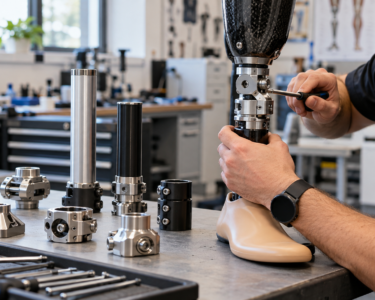
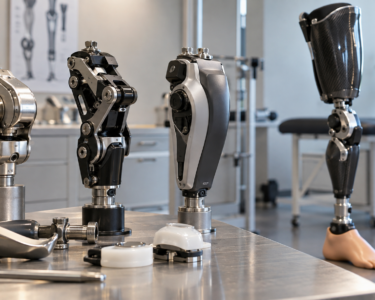
AK prosthetics must replace both ankle and knee function, making them significantly more complex. Without a natural knee, you must learn to control a prosthetic knee component, which requires different muscle groups and conscious effort. Modern microprocessor knees help tremendously by adjusting resistance in real time, but they cannot replicate the natural knee’s intuitive control. Walking stairs requires either the step-over-step method (more natural but more tiring) or the step-together method (easier but less typical). Energy expenditure is substantially higher—studies show AK users expend 50-100% more energy walking the same distance compared to non-amputees. Weight is greater, typically 8-15 pounds or more. Costs reflect this complexity: basic AK prosthetics range $8,000-$15,000, while advanced microprocessor models exceed $30,000-$50,000. Rehabilitation typically requires 6-12 months or longer. However, modern AK prosthetics have advanced dramatically, enabling excellent functional outcomes for motivated users.
Gait Patterns and Balance
BK users typically achieve a more normal gait pattern that closely resembles non-amputee walking. The preserved knee joint allows for natural knee flexion during the swing phase. AK users develop recognizable gait patterns, but they differ noticeably from non-amputee walking. Modern microprocessor knees minimize these differences significantly. Balance is generally better preserved in BK amputees because the knee remains under active control. AK users must learn new balancing strategies, though training and practice make this manageable. Level of comfort in standing and walking relates directly to prosthetic quality—better prosthetics enable better outcomes regardless of amputation level.
Sports and Activity Capabilities
BK prosthetics generally offer superior capabilities for sports and high-intensity activities. Many BK users participate in running, jumping, and competitive sports with specialized athletic prosthetics. AK users can participate in most activities but typically with more effort and slower speeds. Running is possible with AK prosthetics but requires training and specialized componentry. Both groups use different prosthetics for different activities—a high-performance running blade for athletics versus an everyday prosthetic for work. Activity level depends more on user motivation, training, and prosthetic quality than on amputation level itself.
Phantom Limb Sensation and Pain
Phantom sensations (feeling the limb is still there) and phantom pain occur more frequently with higher amputations. BK amputees experience phantom foot sensation more commonly than AK amputees experience phantom leg sensation. This isn’t well understood, but it may relate to the amount of limb lost or the specific nerves affected. Good prosthetic fit and rehabilitation can reduce phantom pain in many cases. Techniques like mirror therapy, visualization, and gradual prosthetic use have shown benefits. Consult your rehabilitation team about strategies to manage phantom symptoms.
Cost-Benefit Analysis for Your Decision
BK amputations generally result in lower costs, faster rehabilitation, better functional outcomes, and superior activity capabilities. AK amputations require higher investment, longer rehabilitation, but many users achieve excellent outcomes with modern prosthetics and proper training. The decision between accepting an amputation level versus pursuing limb-salvage surgery is complex and individual. If you’re facing this choice, discuss the long-term functional and quality-of-life implications with your surgical team and rehabilitation specialists. If you’ve already had an amputation, focus on optimizing your prosthetic and rehabilitation to achieve your personal functional goals.
Conclusion
Modern prosthetic technology has transformed what’s possible for amputees and individuals with limb differences. Whether your priority is functionality, appearance, or a combination of both, options exist to meet your needs. The journey to optimal prosthetic use requires patience, proper training, and collaboration with experienced professionals. As technology continues advancing, returning to your prosthetist periodically ensures you benefit from innovations that could enhance your mobility and quality of life.
Take Your Next Step With Proactive Technical Orthopaedics
Choosing between below-knee and above-knee prosthetics is a major decision. Proactive Technical Orthopaedics offers comprehensive evaluations to help you understand your options and their long-term implications. Our experienced team guides you through rehabilitation and optimization. Schedule your consultation to explore which option best fits your goals.
Frequently Asked Questions
1. What Is The Difference Between Below-Knee And Above-Knee Prosthetics?
A below-knee prosthesis is designed for people who have an amputation below the knee and can typically use the remaining knee joint for movement. An above-knee prosthesis replaces the leg from above the knee and includes an artificial knee joint.
2. Is A Below-Knee Prosthesis Easier To Use Than An Above-Knee Prosthesis?
Generally, below-knee prostheses can be easier to use because the natural knee joint remains intact. Above-knee prostheses require the user to learn how to control an artificial knee, which may require additional training and rehabilitation.
3. Which Is Better, Below-Knee Or Above-Knee Prosthetics?
Neither option is universally better. The right prosthesis depends on the amputation level, residual limb condition, mobility goals, lifestyle, overall strength, and individual needs. A prosthetist can recommend the most suitable option after an assessment.
4. Can You Walk Normally With A Below-Knee Prosthesis?
Many people with below-knee amputations can achieve a comfortable and natural walking pattern with proper rehabilitation and a well-fitted prosthesis. Results can vary depending on factors such as balance, muscle strength, residual limb condition, and prosthetic design.
5. Can You Walk Normally With An Above-Knee Prosthesis?
People with above-knee amputations can learn to walk effectively with a prosthesis, although it generally requires more energy and training than walking with a below-knee prosthesis. Proper fitting, rehabilitation, and an appropriate prosthetic knee can improve mobility.
6. Which Prosthesis Requires More Energy To Walk With?
Above-knee prostheses generally require more energy during walking because the natural knee joint has been replaced by a prosthetic knee. Below-knee prostheses usually require less energy because the user’s natural knee remains available to assist with movement.
7. How Long Does It Take To Get Used To A Prosthetic Leg?
The adjustment period varies from person to person. Some individuals become comfortable within weeks, while others may need several months of rehabilitation and practice. Factors such as amputation level, physical condition, prosthetic fit, and daily activity can affect the timeline.
8. Can Above-Knee And Below-Knee Prostheses Be Used For Sports?
Yes. People with both above-knee and below-knee amputations can participate in various sports and physical activities with appropriately designed prosthetic systems. The type of prosthesis and components may differ depending on the activity and user’s mobility goals.
9. How Do I Choose The Right Prosthetic Leg After Amputation?
Choosing a prosthetic leg involves considering the amputation level, residual limb health, walking ability, occupation, lifestyle, activity level, comfort, and personal goals. A qualified prosthetist and rehabilitation team can assess these factors and help determine the appropriate prosthetic solution.
10. Does An Above-Knee Prosthesis Cost More Than A Below-Knee Prosthesis?
The cost can vary significantly depending on the prosthetic components, technology, materials, customization, and rehabilitation requirements. Above-knee systems may cost more because they require an artificial knee joint, but the final cost depends on the individual’s specific prosthetic needs.