


Summary
Explore finger and hand prosthetics for partial hand loss. Learn when they’re right for you, their types, costs, and how they restore functionality and appearance.
Finger and hand loss impacts your ability to work, perform daily tasks, and engage in hobbies. Modern hand prosthetics range from purely cosmetic options that restore appearance to sophisticated myoelectric hands with individual finger control. Unlike full hand amputation, partial finger loss often offers multiple prosthetic solutions with varying costs and functionality levels. This guide helps you understand your options and decide what investment makes sense for your situation.
Understanding Finger and Hand Amputation Levels
Finger amputation can be partial (losing just the tip) or complete (losing the entire digit). Hand amputation might involve losing multiple fingers, the thumb, or the entire hand. Each level requires different prosthetic approaches. Losing a single finger presents different challenges than losing all fingers. Thumb loss is particularly significant because the thumb provides about 50% of hand function—precision grip depends entirely on thumb opposition. The specific fingers lost matter too—losing the index and middle fingers impacts precision grip differently than losing the ring and little fingers. Metacarpal hand (losing all fingers but preserving the palm) offers certain prosthetic advantages. Your prosthetist will assess your specific anatomy to recommend appropriate options.
Passive vs. Active Prosthetic Hands
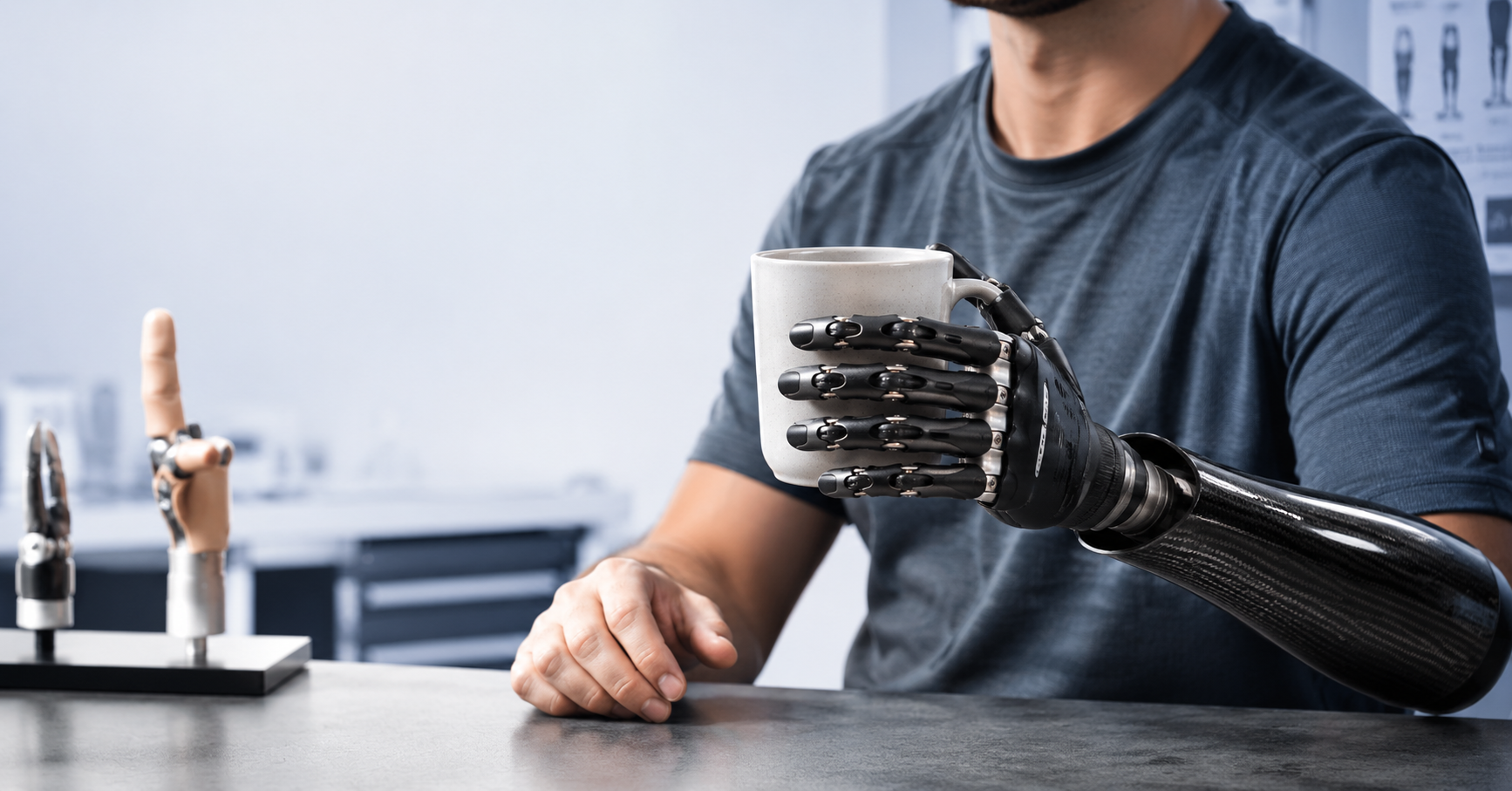
Passive prosthetic hands maintain whatever position they’re positioned in—they don’t actively move. Despite lacking active function, passive hands excel at certain tasks and provide significant psychological benefit through restored appearance. Many people use passive hands as their primary prosthetic for work and social situations. Passive hands accommodate most objects—you can hold a coffee cup, shake someone’s hand, or carry items by positioning the hand manually. Active prosthetics use motors controlled by myoelectric signals (muscle impulses) from your residual limb. Myoelectric hands allow individual finger movement and grasp patterns without manual repositioning. Advanced versions offer multiple grip patterns—power grip, pinch grip, precision grip—controlled by specific muscle signals. Active hands require more training, cost significantly more, and have battery limitations, but provide superior functional control.
Cosmetic Hand Prosthetics
Pure cosmetic prosthetics prioritize appearance over function. Silicone hands can match your skin tone, skin texture, and fingernails with remarkable accuracy—many people cannot distinguish a cosmetic prosthetic from a real hand at conversational distance. These hands cannot move or grasp but are ideal if you primarily want to restore appearance for social confidence. Cosmetic hands cost $3,000-$10,000 depending on customization level. They require careful maintenance—silicone can stain, tear, and degrade from sun exposure. Many people maintain multiple prosthetics—a cosmetic hand for social situations and work, and a functional prosthetic for home where appearance matters less. Cosmetic hands are often covered by insurance more readily than functional prosthetics because they address the psychological impact of amputation.
Functional Hand Prosthetics and Myoelectric Technology
Functional prosthetics enable actual grasping and manipulation. Body-powered hands use cables running to the shoulder or waist—you move your shoulder to operate thumb and finger mechanisms. These hands provide reliable function without batteries or electronics, but require significant strength and control. They’re more affordable ($2,000-$5,000) than myoelectric options but less refined in appearance. Myoelectric hands detect electrical signals from arm muscles, translating them into finger movement. Modern myoelectric hands offer sophisticated control—bionic hands can provide individual finger movement, different grip patterns, and even sensory feedback in some cases. Costs are substantial: basic myoelectric hands range $15,000-$30,000, while advanced bionic hands exceed $100,000. Most insurance doesn’t cover advanced bionic hands, though some policies cover standard myoelectric prosthetics. Battery life typically ranges 12-20 hours depending on usage intensity.
Training and Learning Curve
Passive hands require minimal training—you learn to position them manually as needed. Most users adapt within days. Active hands require significant training. You must learn to consciously control specific muscles to generate myoelectric signals that the prosthetic interprets. Initial training typically involves 4-8 weeks of dedicated practice with your prosthetist. Learning which muscle contractions correspond to which movements requires concentration and practice. However, with training, many users achieve intuitive control—they stop consciously thinking about the signals and simply ‘think’ about the movement they want, and the prosthetic responds. This learning curve is steeper than lower-limb prosthetic training, so commitment to rehabilitation is essential. Working with a prosthetist experienced in hand prosthetics makes the difference between successful adoption and frustration.
Cost Analysis and Insurance Coverage
Hand prosthetic costs vary dramatically based on type and sophistication. Cosmetic hands: $3,000-$10,000. Body-powered hands: $2,000-$5,000. Basic myoelectric hands: $15,000-$30,000. Advanced bionic hands: $100,000-$200,000+. Maintenance adds costs—replacement parts, repairs, battery replacements, and updates. Insurance coverage is variable. Medicare may cover one prosthetic hand, often a basic myoelectric model. Medicaid coverage varies by state. Private insurance varies widely. For expensive prosthetics, you may need to document medical necessity and exhaust conservative treatment options. Some manufacturers offer payment plans or grants for patients needing advanced prosthetics. Discussing costs and coverage options with your prosthetist early in the process prevents surprises.
Daily Life Applications and Work Considerations
Many people maintain multiple prosthetics for different scenarios. Office workers often prefer cosmetic hands that look professional. Manual workers might prefer body-powered hands that tolerate dirt and rough conditions better. Artists and craftspeople might invest in advanced prosthetics for precision work. Athletes might use sport-specific designs. At home, many users prefer comfort and go without a prosthetic or wear older, less formal options. Assess your lifestyle honestly—how much time do you spend in social situations versus work versus home? This determines which prosthetics offer the best return on investment. Some people find that one good prosthetic serves multiple roles, while others benefit from different options for different contexts.
Psychological and Social Impact
Hand loss affects body image and confidence significantly because hands are visible and frequently interact with others. Many amputees report anxiety about social situations—handshakes, being stared at, questions about their amputation. A prosthetic hand, even if purely cosmetic, often restores confidence and comfort in social situations. Some people are satisfied with this psychological benefit and don’t need functional capability. Others need functional hands for work and personal fulfillment. Your prosthetist should discuss psychological aspects alongside technical options. Support groups with other hand amputees provide valuable perspective on adaptation. Many people find that their initial fears about hand loss diminish with time and adaptation, changing their priorities for prosthetic investment.
Modern prosthetic technology has transformed what’s possible for amputees and individuals with limb differences. Whether your priority is functionality, appearance, or a combination of both, options exist to meet your needs. The journey to optimal prosthetic use requires patience, proper training, and collaboration with experienced professionals. As technology continues advancing, returning to your prosthetist periodically ensures you benefit from innovations that could enhance your mobility and quality of life.
Take Your Next Step With Proactive Technical Orthopaedics
Hand and finger loss doesn’t mean losing functionality or confidence. Proactive Technical Orthopaedics specializes in hand prosthetics, from basic cosmetic solutions to advanced myoelectric hands. As the best prosthetics supplier in India, our prosthetists work closely with you to select and train you on the prosthetic that matches your priorities. Schedule a consultation to explore your options.
Frequently Asked Questions
1. What Are Finger And Hand Prosthetics?
Finger and hand prosthetics are artificial devices designed to replace a missing finger, part of the hand, or the entire hand. They can help improve appearance, grip, movement, and everyday functionality depending on the type selected.
2. When Should You Consider Getting A Finger Or Hand Prosthetic?
A finger or hand prosthetic may be considered after an amputation, congenital limb difference, or severe injury that affects hand function. The right time depends on healing, rehabilitation progress, individual needs, and recommendations from a prosthetic specialist.
3. Why Should I Invest In A Hand Prosthetic?
A hand prosthetic can help with daily activities, improve functional independence, support confidence, and restore a more natural appearance. The benefits depend on the prosthetic design and the individual’s specific requirements.
4. What Is The Difference Between Cosmetic And Functional Finger Prosthetics?
Cosmetic prosthetics primarily focus on restoring the appearance of the missing finger or hand. Functional prosthetics are designed to provide practical capabilities such as grasping, holding, or assisting with specific hand movements.
5. How Much Do Finger And Hand Prosthetics Cost?
The cost of a finger or hand prosthetic varies based on the type, materials, technology, customization, and level of functionality required. A consultation with a prosthetic specialist can provide a more accurate estimate based on individual needs.
6. Can A Prosthetic Finger Help With Daily Activities?
Yes, depending on its design, a prosthetic finger can assist with certain everyday activities. Functional benefits may include supporting grip, stabilizing objects, and making specific hand movements easier.
7. Are Hand Prosthetics Comfortable To Wear?
Modern hand prosthetics can be designed for improved comfort and fit. Proper measurements, socket design, alignment, and adjustments are important because an incorrectly fitted prosthetic can cause discomfort or difficulty during use.
8. How Long Do Finger And Hand Prosthetics Last?
The lifespan of a prosthetic depends on its materials, construction, frequency of use, maintenance, and changes in the user’s body. Regular inspections and timely adjustments can help maintain its performance and comfort.
9. Can You Get A Waterproof Or Durable Hand Prosthetic?
Some prosthetic devices are designed with water-resistant or durable components, while others may need to be protected from moisture. The appropriate option depends on the intended activities and the manufacturer’s specifications.
10. How Do I Choose The Right Finger Or Hand Prosthetic?
Choosing the right prosthetic depends on the level of limb loss, desired function, lifestyle, comfort, appearance, budget, and rehabilitation goals. A qualified prosthetist can assess these factors and recommend a suitable option.

1 Comment