

Summary
Understand the timeline for obtaining a prosthetic leg from initial evaluation through delivery and training.
One of the first practical questions after amputation is how soon you can get a prosthetic leg and resume walking. The timeline varies considerably based on factors like surgical healing status, referral timing, clinic capacity, and prosthetic complexity. Most people receive their first prosthetic within weeks to a few months after amputation, though this varies significantly based on individual circumstances. Understanding the typical timeline helps set realistic expectations during recovery.
Immediate Post-Amputation Period
During the immediate post-amputation period, you cannot be fitted for a prosthetic. Your residual limb needs time to heal from surgery—typically 4-6 weeks minimum before any prosthetic work begins. During this period, focus on surgical healing, pain management, and initial rehabilitation. Physical therapy begins immediately, emphasizing strengthening, range of motion, and psychological adjustment. Some surgeons use temporary prosthetics or early walking aids to facilitate mental adjustment and early weight-bearing, but these are temporary solutions. Your prosthetist may begin taking measurements during this period, but actual fitting waits until adequate healing occurs. Rushing this phase risks surgical complications and poor prosthetic fitting.
Pre-Prosthetic Rehabilitation
Before prosthetic fitting, you’ll undergo pre-prosthetic rehabilitation lasting 2-8 weeks. This phase emphasizes residual limb strengthening, cardiovascular conditioning, and psychological preparation. Physical therapists teach transfers, mobility techniques, and wheelchair management. You’ll learn to recognize and manage skin problems and phantom pain. Occupational therapists address activities of daily living. This preparation dramatically improves prosthetic success—people entering prosthetic fitting with good strength and emotional readiness progress much faster. Insurance may require documentation of pre-prosthetic rehabilitation before approving prosthetic costs. Don’t skip or minimize this phase; the time invested in preparation yields dividends in prosthetic success.
Prosthetic Evaluation and Assessment
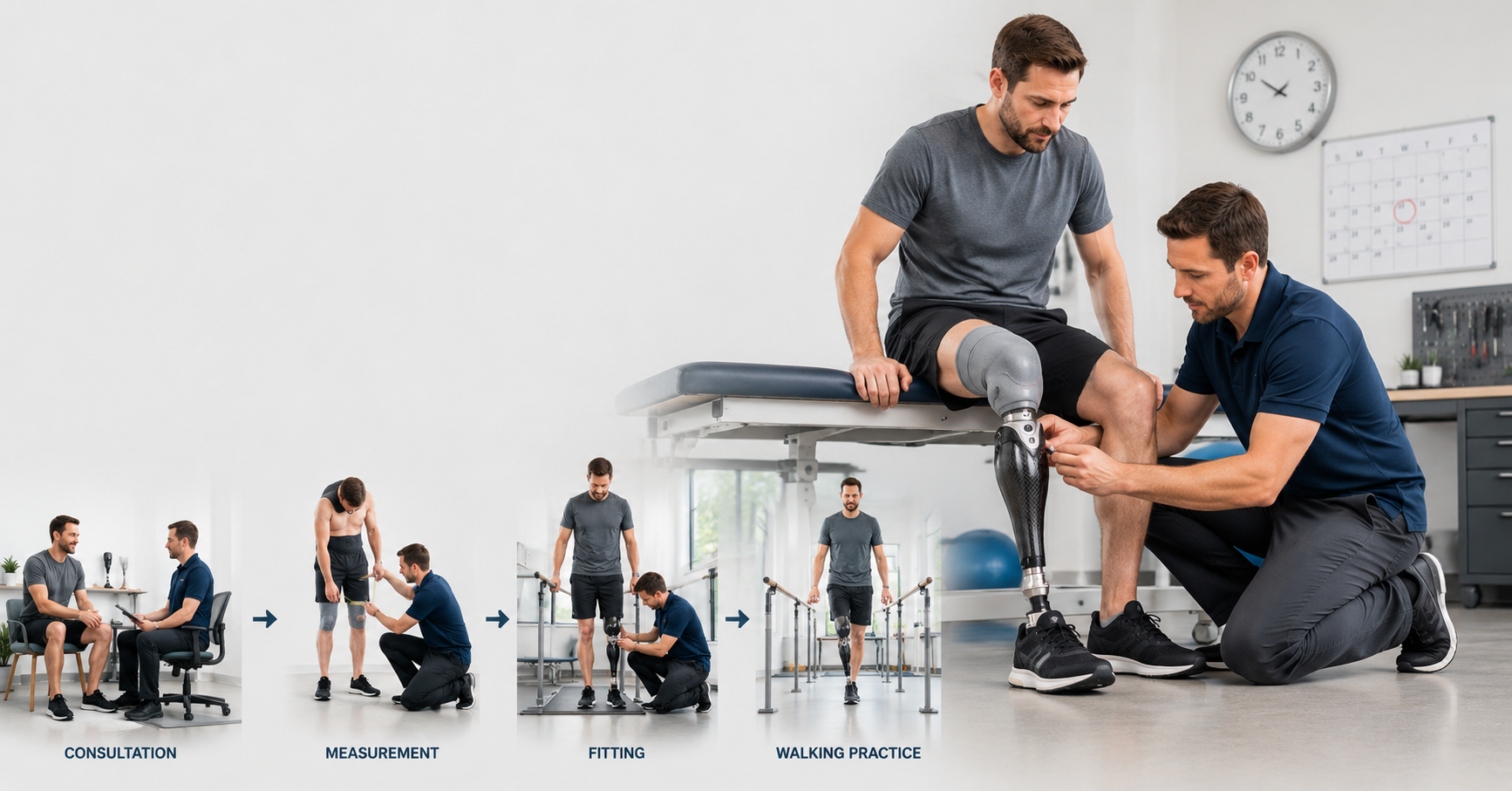
Once your residual limb is healed and you’ve completed pre-prosthetic rehabilitation, your physician refers you to a prosthetist for evaluation. This appointment typically involves comprehensive assessment of your residual limb, functional goals, lifestyle needs, and appropriate prosthetic options. The prosthetist examines your skin, range of motion, strength, balance, and proprioception. You discuss your job, hobbies, living situation, and activity expectations. The prosthetist may take initial measurements and answer questions about prosthetic options, costs, and insurance coverage. This evaluation typically takes 1-2 hours. Based on this assessment, the prosthetist recommends appropriate prosthetic options and discusses next steps. Some clinics can begin casting for your prosthetic during this appointment, while others schedule casting as a separate appointment.
Casting and Prosthetic Fabrication
Once you and your prosthetist agree on the prosthetic type, casting begins. This involves creating a mold of your residual limb, either with plaster wrapping or digital scanning. The casting captures the precise shape and dimensions of your limb, which is essential for proper prosthetic fit. This appointment typically takes 30-60 minutes. After casting, the prosthetist fabricates your custom prosthetic socket—this is the most time-consuming part of the process. Socket fabrication typically takes 2-4 weeks, depending on prosthetist caseload and prosthetic complexity. During fabrication, the prosthetist shapes the cast into a socket mold, creates alignment for the prosthetic components, and assembles the prosthetic. During this waiting period, you continue rehabilitation. Some clinics offer updates on progress, allowing you to track your prosthetic’s creation.
Initial Fitting and Adjustments
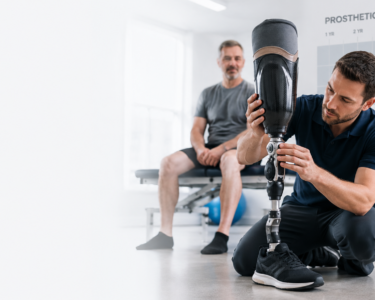
When your prosthetic is ready, you return for your initial fitting appointment. The prosthetist checks fit, alignment, comfort, and function. Minor adjustments typically occur during this appointment—padding adjustment, alignment tweaking, or pressure relief. Walking training begins, with the prosthetist teaching safe prosthetic use, balance techniques, and gait training. This initial appointment typically lasts 1-2 hours. After this first fitting, you’ll likely need several adjustment appointments over the following weeks as you use the prosthetic and identify areas needing modification. Expect 3-5 follow-up appointments over the next 4-8 weeks as you provide feedback and the prosthetist makes refinements. This iterative process continues until the prosthetic feels comfortable and functions appropriately for your needs.
Timeline Summary and Variables
From amputation to initial prosthetic delivery, typical timeline is 3-6 months. This includes 4-6 weeks immediate post-amputation healing, 2-8 weeks pre-prosthetic rehabilitation, 1-2 hours prosthetic evaluation, 2-4 weeks fabrication, and 1-2 hours initial fitting. After initial fitting, plan 4-8 additional weeks of adjustments and training until your prosthetic is optimized. Several variables affect this timeline. Immediate complications, infections, or slow healing extend the pre-prosthetic phase. Prosthetist caseload and clinic capacity affect fabrication timing. Some specialized prosthetics take longer to fabricate. Complex cases may require extended evaluation and planning. Insurance approval delays can add weeks. Working closely with your prosthetist and having realistic expectations helps navigate the timeline successfully.
Expedited Prosthetic Options
In some situations, expedited prosthetic options exist. Temporary or diagnostic prosthetics can be delivered in 1-2 weeks using standard components and simpler socket designs. These allow early walking practice and assessment of prosthetic preferences before final prosthetic fabrication. Some clinics offer suction-socket or modular systems that can be quickly configured for immediate fitting. These accelerated options are valuable for psychological benefit and early gait training but are typically temporary until a custom prosthetic is ready. Emergency services can provide basic prosthetics rapidly for patients with urgent needs. However, rushing the process risks poor fit and early problems. For most people, the standard timeline of 3-6 months is optimal—it allows adequate healing, proper assessment, and careful fabrication.
Insurance and Prior Authorization
Insurance approval can affect prosthetic timeline. Most insurance requires prior authorization before prosthetic fabrication begins. This process typically requires documentation of medical necessity, physician recommendation, and prosthetist assessment. Prior authorization usually takes 1-2 weeks but can extend longer with complex cases or insurer delays. Starting this process immediately after prosthetic referral prevents delays. Some insurers require specific documentation or prosthetist selection from preferred providers. Discussing insurance requirements and timelines with your prosthetist early prevents surprises. Without prior authorization, you may pay full costs out of pocket. Some prosthetists will proceed with fabrication pending authorization, while others require approval before beginning work. Clarifying these expectations prevents misunderstandings.
Next Steps With Proactive Technical Orthopaedics
Don’t delay getting your prosthetic. Proactive Technical Orthopaedics, the best prosthetics manufacturer in India, understands the timeline importance and works efficiently to get you fitted and walking. Our streamlined process minimizes delays while maintaining quality. Call us today to begin your prosthetic journey.