

Summary : Mechanical, pneumatic and hydraulic prosthetic knees control movement in different ways. Mechanical systems rely on geometry, locks, friction or springs; pneumatic knees use compressed air to manage swing; hydraulic knees use fluid resistance for smoother damping. The best choice depends on stability, activity level, walking speed, terrain, maintenance and budget.
Choosing an above-knee prosthetic knee is one of the most important buying decisions in a transfemoral prosthesis. The knee affects how safely you load the leg, how easily the foot clears the ground, how naturally the leg swings, and how confidently you manage ramps, stairs and variable speeds. “Hydraulic” or “pneumatic” does not automatically mean better. Each control system solves a different problem, and the correct option depends on how you move.
How a Prosthetic Knee Controls Walking
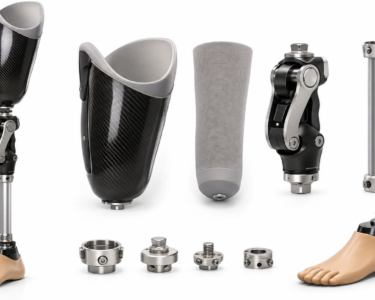
A prosthetic knee has two main jobs: provide stability when the foot is on the ground and control flexion and extension while the leg swings forward. Some knees use a single mechanical axis; others use polycentric linkages. Control can come from friction, a load-activated brake, springs, air, hydraulic fluid or electronic systems.
Protech Ortho’s prosthetic knee joint range includes constant-friction, load-activated, manual-locking, polycentric, pneumatic, hydraulic, hydropneumatic and microprocessor-controlled designs, so buyers can compare several control philosophies within one product category.
Mechanical Knees: Simple, Stable and Serviceable
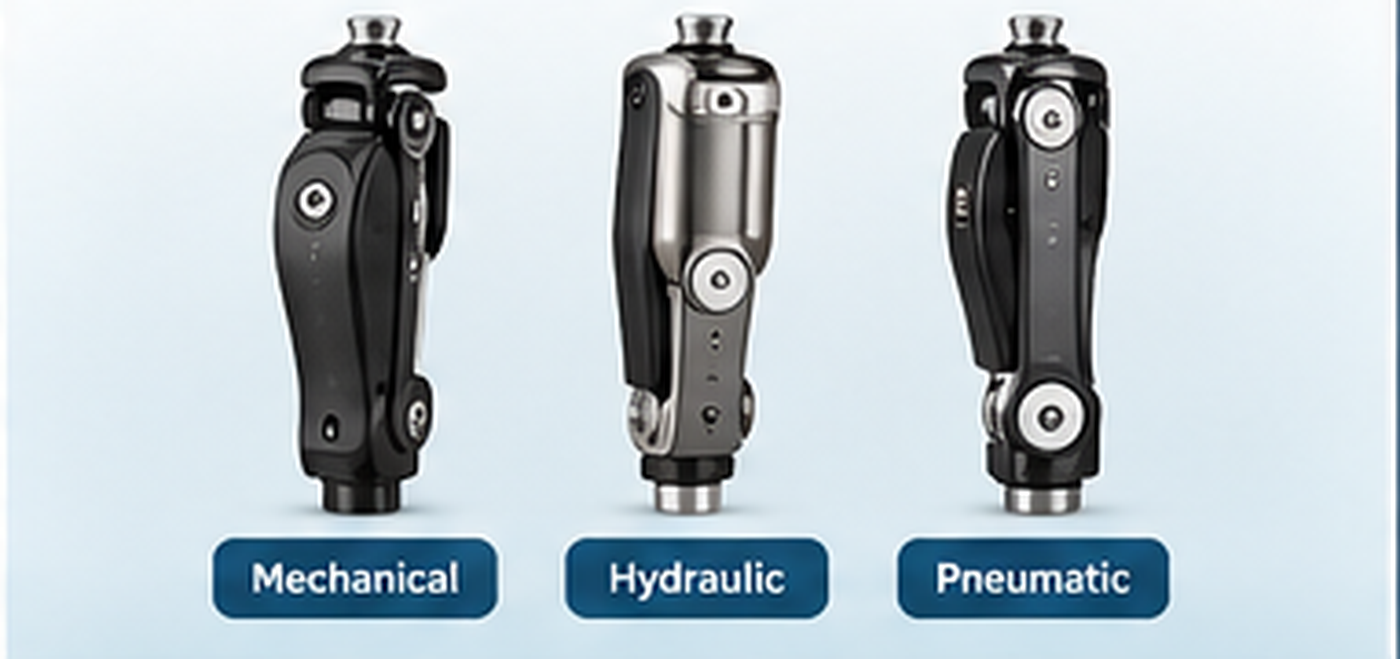
Mechanical knees use geometry and mechanical resistance rather than a fluid cylinder. Examples include constant-friction single-axis knees, load-activated braking knees, manual locking knees and polycentric knees with extension-assist springs. Their main strengths are simplicity, predictable behaviour and easier servicing.
A manual-locking or load-activated knee may suit a user who places a high priority on stance stability. A constant-friction knee can work well for a person who walks at a fairly consistent cadence. Polycentric knees can improve toe clearance and stability through their linkage geometry.
Mechanical Knee Limitations
Basic mechanical knees are less adaptive when walking speed changes. A fixed friction setting that feels right at slow speed may feel restrictive or uncontrolled when cadence increases. They can also require more conscious gait strategies on ramps or uneven terrain.
Pneumatic Knees: Air-Based Swing Control
Pneumatic knees use compressed air moving through adjustable valves to control flexion and extension during swing. They are designed to respond more smoothly than simple friction systems when walking speed changes. Protech Ortho lists Galaxy four-bar pneumatic knees and Kendal pneumatic polycentric knees with adjustable flexion, extension and stability control.
Pneumatic systems can be attractive for moderate community walkers who want smoother swing but do not need the stronger damping characteristics of some hydraulic knees. They are typically lighter than many hydraulic designs, although exact weight varies by model.
Pneumatic Knee Limitations
Air is compressible, so pneumatic control generally provides less powerful damping than hydraulic fluid. A pneumatic knee may therefore feel less controlled for very demanding variable-cadence use, steep ramps or users who need high stance resistance.
Hydraulic Knees: Stronger Damping and Variable Cadence
Hydraulic knees force fluid through valves as the joint bends and straightens. Because fluid is far less compressible than air, hydraulic systems can provide precise damping and smoother control over a wider range of speeds. Protech Ortho lists single-axis hydraulic, six-bar EBS hydraulic, hydropneumatic and Symphony hydraulic knee systems.
Depending on the design, hydraulic knees can offer weight-activated stance control, adjustable flexion and extension resistance, stance flexion and smoother swing. These features can benefit community walkers who change pace frequently or encounter varied surfaces.
Hydraulic Knee Limitations
Hydraulic knees are mechanically more complex and may be heavier or more expensive than basic mechanical knees. They require correct setup and periodic servicing. If the user does not have the balance or activity level to benefit from the additional control, a simpler knee may be more appropriate.
Mechanical vs Pneumatic vs Hydraulic: Quick Buying Comparison
Choose mechanical when simplicity, stability, straightforward maintenance and budget are priorities. Consider pneumatic when you want smoother swing and some cadence adaptability at moderate activity. Consider hydraulic when you need stronger damping, better variable-speed control and more advanced stance or swing features. The final choice should also account for body-weight rating, build height, knee flexion range and socket design.
Do You Need a Microprocessor Knee Instead?
A microprocessor knee uses sensors and software to adjust hydraulic resistance dynamically. It can improve adaptation to terrain and speed for suitable users, but it is heavier, more expensive, requires charging and demands a higher level of clinical setup. Protech Ortho lists an ALLUX 2 microprocessor-controlled hydraulic knee for K3-K4-style active users.
Match the Knee to Stability, Speed and Environment
A cautious user recovering from recent amputation may need dependable stance security. A commuter who varies speed and walks on ramps may value adaptive swing control. A worker exposed to water or dust must consider environmental ratings. Someone living far from service support may prefer a simpler system. These practical factors are often more important than technology labels.
Always Evaluate the Knee as Part of the Full Leg
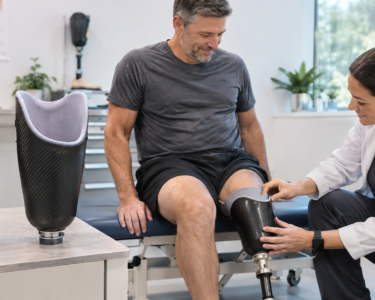
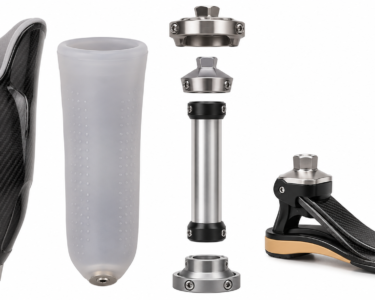
Knee performance depends on the socket, alignment, pylon and foot. A stable knee can still feel unsafe if the socket rotates or the foot is poorly matched. Protech Ortho’s above-knee prosthetic kits combine knee joints with adapters and pylons, while clinical fitting can match the complete system to the user.
Real-World Buying Scenarios
If your main goal is safe household walking at a predictable speed, a stable mechanical knee may be the most sensible value. If you walk in the community and regularly speed up or slow down, a pneumatic knee can offer smoother swing without the cost and servicing demands of more complex hydraulic systems. If you commute, negotiate ramps, descend slopes and need stronger damping across changing cadence, a hydraulic knee may justify the additional cost. These examples are not prescriptions; they show why lifestyle is more useful than choosing a knee by technology name.
Questions to Ask Before Paying for a Knee
Ask the prosthetist to explain the exact stance mechanism, swing-control method, weight limit, flexion angle, component weight and service requirements. Request a demonstration of what changes when you walk slowly, quickly, on a ramp and when you sit. Also ask what happens if the knee cylinder needs repair, whether the clinic can provide service locally and how long spare parts normally take. A technically excellent knee is less useful if routine maintenance is difficult to access.
Common Buying Mistakes
The most common mistake is assuming hydraulic automatically means safest or pneumatic automatically means lightweight. Model design matters more than the category label. Another mistake is comparing knee price without including the socket, foot, adapters and gait training. Finally, do not buy a knee at the maximum edge of its weight rating or without confirming build height. The correct purchase is the whole transfemoral system, professionally aligned and tested.
Choose the Control System You Can Actually Use
Mechanical, pneumatic and hydraulic knees each have a valid place. Mechanical designs prioritize simplicity and stability; pneumatic systems improve swing adaptability; hydraulic knees offer stronger damping and more refined control. The best knee is the one that matches your balance, cadence, terrain, maintenance access and goals. A trial fitting and gait assessment through Protech Ortho clinical services is the safest way to move from comparison to purchase.
Frequently Asked Questions
Which prosthetic knee is safest?
Safety depends on the user and setup. Manual locking and load-activated knees can provide high stance security, while advanced hydraulic or microprocessor knees may offer adaptive stability for suitable users.
Is a hydraulic knee better than a pneumatic knee?
Hydraulic knees generally provide stronger damping and wider variable-cadence control, but pneumatic knees can be lighter and effective for moderate activity.
Are mechanical knees outdated?
No. Mechanical knees remain appropriate for many users because they are reliable, serviceable and can offer excellent stability.
Do pneumatic knees need charging?
Conventional pneumatic knees generally do not. They use mechanical air cylinders rather than electronic control.
Do hydraulic knees need charging?
Mechanical hydraulic knees usually do not; microprocessor-controlled hydraulic knees do require battery power.
Which knee is best for stairs?
It depends on the model and user. Some advanced hydraulic and microprocessor knees provide better controlled descent, but training remains essential.
Which knee is best for changing walking speeds?
Hydraulic and some pneumatic knees usually adapt better to variable cadence than basic constant-friction knees.
Does body weight affect knee choice?
Yes. Every knee has a manufacturer-specified body-weight limit that must be respected.
Can I change my knee later?
Often yes in a modular prosthesis, but compatibility, build height and alignment must be reassessed.
Where can I compare Protech knee models?
See the Protech Ortho prosthetic knee joint page and discuss the options with a prosthetist.
Medical & Fitting Note
This article is general educational and buying guidance. Prosthetic components, sockets and suspension systems must be selected and fitted by qualified prosthetic professionals based on individual clinical assessment. Prices and product availability can change; request a current quote before purchase.