
Summary
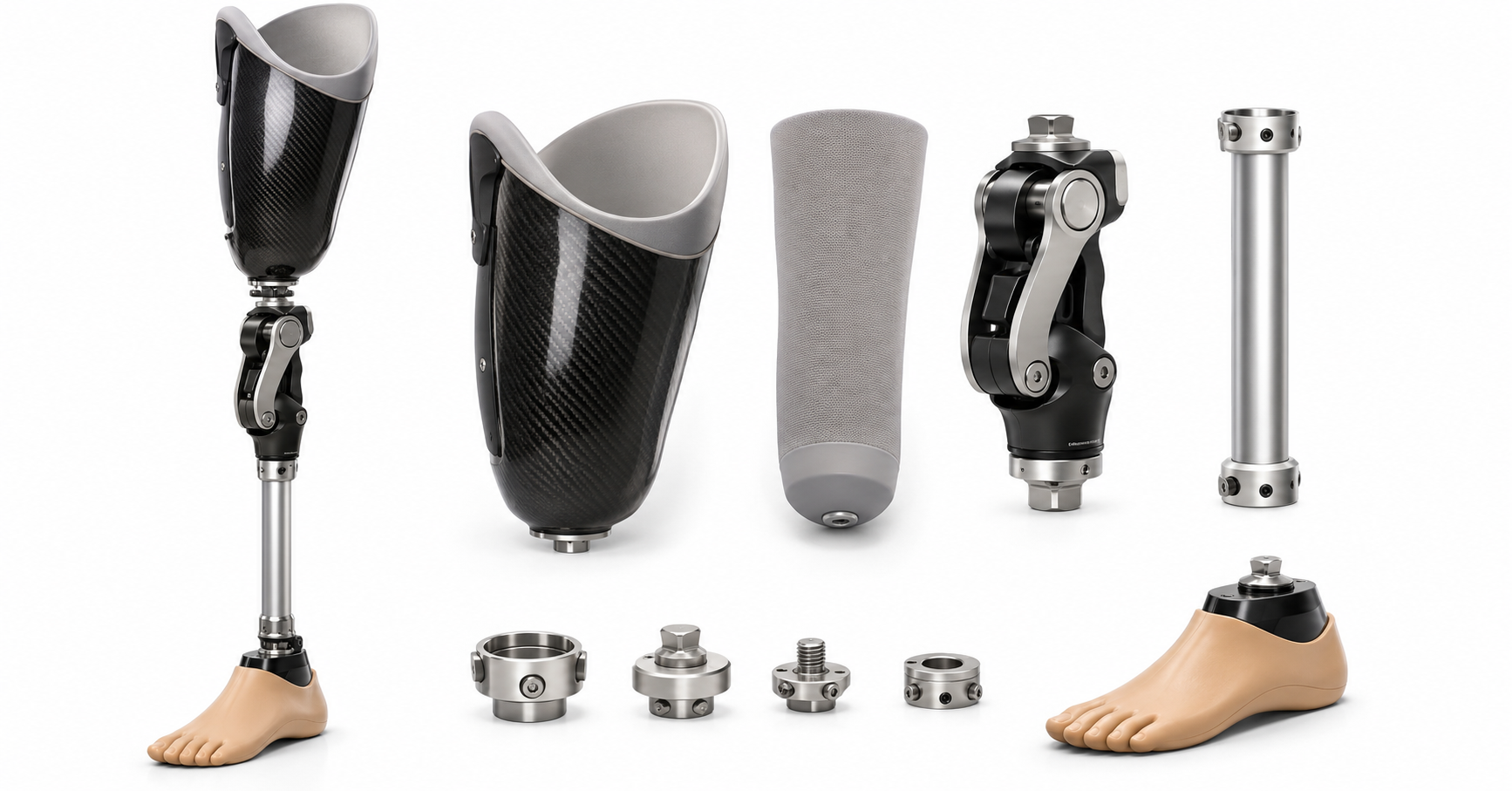
| An above-knee prosthetic kit must be chosen as a complete system. The knee controls stance and swing, the foot manages ground contact, the pylon and adapters transfer load, and the socket and liner connect the entire device to the body. Buying by one component alone can create compatibility, comfort and alignment problems. |
Above-knee prostheses have more variables than below-knee systems because the natural knee is absent. That means the prosthetic knee, foot, socket and alignment all influence stability and energy use. Protech Ortho’s modular above-knee kit range combines different knee joints with socket adapters, pylons and foot adapters, while the socket, liner and selected foot complete the system. This guide explains what buyers should compare before choosing a kit.
The Socket: Where the Prosthesis Starts
The socket surrounds the residual limb and transfers forces into the prosthesis. It must provide comfort, rotational control and weight-bearing support without causing harmful pressure. A good kit cannot compensate for a poor socket.
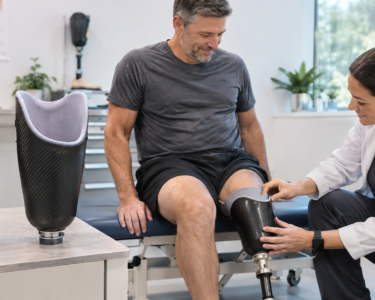
Protech Ortho offers custom lower-limb socket fitting with diagnostic test sockets and alignment. Ask whether your quote includes trial fitting and follow-up adjustments as residual-limb volume changes.
The Liner and Suspension System
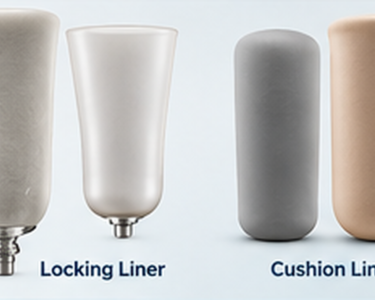
Many transfemoral users wear a silicone or gel liner, but suspension can also use suction, seal-in systems, vacuum or other designs. The correct choice depends on residual-limb length, tissue, skin, dexterity and activity.
Protech Ortho’s locking and cushion liner range includes options for above-knee use, but the liner must be selected together with the socket suspension strategy.
The Prosthetic Knee: The Biggest Functional Decision
The knee determines how the leg supports weight and moves through swing. Protech Ortho’s range includes constant-friction, load-activated, manual-locking, polycentric, pneumatic, hydraulic, hydropneumatic and microprocessor designs.
A stable mechanical knee may suit a lower-activity or new user. Pneumatic control can provide smoother swing for moderate activity. Hydraulic systems can offer more refined damping and variable-cadence performance. Microprocessor knees add adaptive electronic control for suitable active users.
The Pylon and Adapters
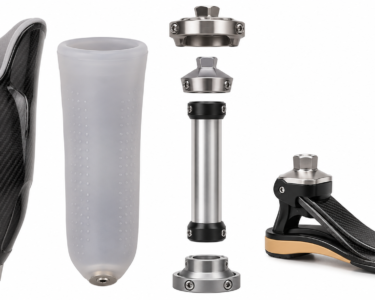
The pylon is the structural link between knee and foot. Tube clamps, socket adapters and foot adapters let the prosthetist adjust height, rotation and alignment. Their material affects weight and strength.
Protech Ortho’s above-knee kit configurations combine casting steel, stainless steel and aluminium components in economic and export-quality versions, with different knee mechanisms and body-weight limits.
The Prosthetic Foot
A SACH foot may be appropriate for simple, predictable walking. A single-axis foot can add controlled ankle motion. Carbon feet can provide more dynamic rollover and energy return for active users. The knee and foot must be matched so their behaviour supports the same activity level.
Compare options on the Protech Ortho prosthetic feet page and ask how each foot will affect knee stability, cadence and alignment.
Understand What an Above-Knee “Kit” Includes
Protech Ortho’s modular above-knee kits list combinations such as a knee joint, three-prong socket adapter, tube clamp adapter, long pylon and foot adapter. The foot, custom socket and liner may be separate. Always ask for a written component list before comparing two quotes.
Mechanical Knee Kit Options
Mechanical kits can use constant-friction, load-activated braking, manual-locking or polycentric knees. They are often cost-effective and easier to maintain. The best design depends on how much stance security and swing adaptability the user needs.
Pneumatic, Hydraulic and Advanced Options
If variable cadence is important, ask whether a pneumatic or hydraulic knee should be built into the system. These may be quoted separately from basic kit packages. Advanced knees also change the required build height, weight and service plan.
Body-Weight Limit Is a System Requirement
The knee, adapters, pylon and foot all have ratings. The complete prosthesis is effectively limited by the lowest-rated component. Do not assume a 120 kg knee makes the whole leg suitable for 120 kg if another part is rated lower.
Build Height and Residual-Limb Length
The available distance between the socket and ground determines which knee and adapter combination can physically fit. Long residual limbs may need low-profile components. Knee disarticulation requires specialized geometry. This is why buying individual components online without a prosthetist can create expensive compatibility problems.
Budget for Fitting, Training and Maintenance
The complete cost includes fabrication, alignment, liner or suspension, foot, knee, follow-up, gait training and future maintenance. A sophisticated knee can underperform if settings are not tuned during gait training.
How to Compare Complete Above-Knee Quotes
Two quotes can use the same word “above-knee kit” while offering very different levels of function. Ask for the knee model, stance and swing-control method, foot type, adapter material, pylon material, liner and suspension, socket construction, total component weight, body-weight limits and service plan. Make sure gait training and follow-up are included, because knee settings often need refinement after real-world use.
Choose the Knee and Foot as a Pair
A highly adaptive knee paired with a very rigid basic foot may not give the balanced performance the buyer expects. Likewise, a dynamic carbon foot cannot compensate for a knee that does not provide the required stance security. The prosthetist should choose knee and foot categories that support the same activity goals and then tune alignment so the components work together.
Above-Knee Kit Buyer Checklist
Confirm socket type, liner and suspension, knee control system, foot category, total weight, build height, flexion range, water rating, charging requirements if electronic, maximum user weight, spare-part availability and warranty. Ask how long servicing usually takes and whether the clinic supports the exact model. For active users, also discuss stairs, ramps, uneven ground and variable cadence before finalizing the configuration.
Do Not Overbuy Technology
An expensive knee or carbon foot may be justified for an active community walker, but it can add unnecessary cost and complexity for someone whose priority is safe fixed-cadence walking. Conversely, choosing the cheapest kit for a highly active user can lead to frustration and early replacement. The best value is the system that delivers the features the user can actually exploit.
How Activity Level Changes the Whole Kit
A lower-activity above-knee user may prioritize a secure knee, simple foot and robust components. A moderate community walker may benefit from pneumatic or hydraulic swing control and a foot with smoother rollover. A highly active user may consider advanced hydraulic or microprocessor knees with dynamic feet. As activity increases, the socket and suspension must also provide stronger rotational control; simply adding a premium knee to a basic unstable socket is unlikely to deliver the expected result.
Serviceability Should Be Part of the Purchase
Above-knee systems contain more parts that can require maintenance. Ask who will service the knee, whether cylinders or electronic parts are available, what routine inspection is recommended and how the clinic handles a breakdown. If the user lives far from the fitting centre, service access can influence which knee technology makes sense. Reliability includes both component quality and the ability to get support when something needs attention.
Buy the Above-Knee Prosthesis as One Integrated System
The knee may be the most visible technology, but the socket, liner, adapters, pylon and foot determine whether it works well. Start with a clinical assessment, then select a compatible kit around your activity and body measurements. Protech Ortho’s products and fitting services provide a useful framework for comparing complete configurations rather than isolated parts.
Frequently Asked Questions
Does an above-knee kit include the foot?
Not always. Confirm the exact kit contents and selected foot in the quote.
Does the kit include the custom socket?
Usually the socket is custom fabricated separately even when structural kit components are bundled.
Which knee is best in an above-knee kit?
The right knee depends on stability, activity, balance, speed, environment and budget.
Can I choose a carbon foot with a mechanical knee?
Yes in many modular systems, provided the foot and knee are clinically compatible.
Are lightweight kits always better?
Lower weight can help comfort, but strength, control, body-weight rating and cost also matter.
What is build height?
It is the physical vertical space required for the knee, adapters, pylon and foot within the prosthesis.
Can I upgrade the knee later?
Often yes, but build height, adapters, alignment and foot compatibility must be reviewed.
Do above-knee users need a liner?
Many do, but suspension design is individual and not every socket uses the same interface.
How do I compare two kit quotes?
Compare exact component codes, materials, weight limits, knee technology, foot, socket, liner, fitting and service.
Where can I see Protech above-knee kits?
See the Protech Ortho above-knee kit range.
Medical & Fitting Note
This article is general educational and buying guidance. Prosthetic components, sockets and suspension systems must be selected and fitted by qualified prosthetic professionals based on individual clinical assessment. Prices and product availability can change; request a current quote before purchase.