

Summary : Prosthetic silicone liner prices in India vary widely by material, brand, thickness, suspension type, size and whether the liner is Indian-made or imported. Current Indian listings reviewed in 2026 commonly range from roughly ₹14,000 to ₹60,000 or more per liner, with some premium imported and seal-in systems costing higher. Locking and cushion liners serve different suspension strategies, so price should never be the only deciding factor.
A prosthetic liner sits directly against the residual limb, so it has a major influence on comfort, skin protection, suspension and control. Buyers often search for “silicone liner price” as if all liners were interchangeable. They are not. A locking liner includes a distal attachment for a pin or lock, while a cushion liner is designed to work with another suspension method such as suction, sleeve or vacuum. The better purchase is the liner that works with your socket and skin, even if another model is cheaper.
What Is a Prosthetic Silicone Liner?
A liner is a flexible interface worn over the residual limb before it enters the socket. Silicone is popular because it can provide secure skin contact, durability and controlled stretch. The liner helps distribute pressure and reduce friction between skin and socket.
Protech Ortho offers several silicone and gel liner options, including locking and cushion versions in 3 mm and 6 mm thicknesses, with different material formulations and size ranges for below-knee and above-knee users.
Indicative Silicone Liner Price in India in 2026
Indian market listings reviewed for this guide show a wide spread. Common silicone liner offers appear around ₹14,000-₹30,000, while premium imported, locking or specialized liners can reach ₹40,000-₹60,000 or more. Other clinical cost guides place silicone and locking liners in an even wider band depending on brand and technology.
These are market indications, not a Protech Ortho price list. Exact pricing depends on size, material, suspension, supplier, taxes and whether fitting or locking hardware is included. Request a current Protech Ortho quote for the exact model you need.
Locking Liner: How It Works
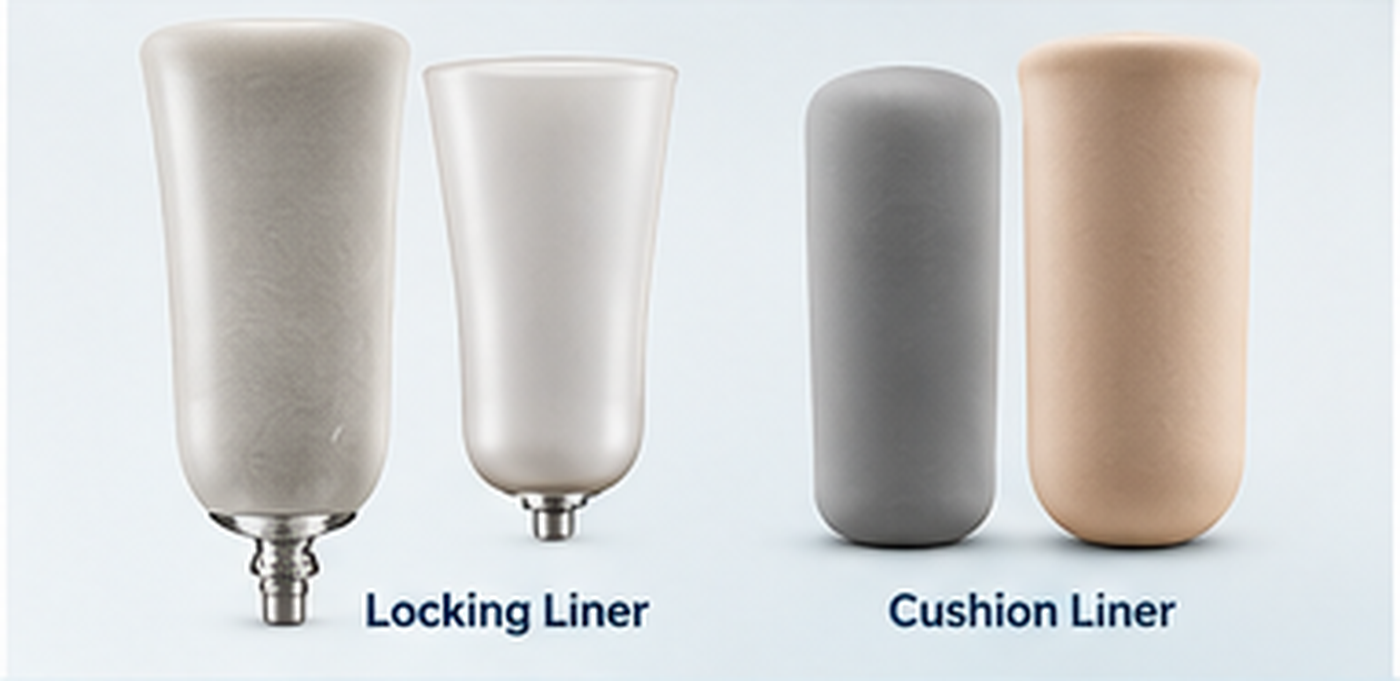
A locking liner has a distal connection—commonly a pin—that engages with a shuttle lock or similar mechanism in the socket. The mechanical connection gives the user clear feedback that the prosthesis is attached and can make donning straightforward once the technique is learned.
Locking liners are commonly used in transtibial prostheses and can also be used in selected transfemoral systems. Protech Ortho’s silicone line includes locking variants designed for compatibility with common locking devices.
Advantages of a Locking Liner
Advantages can include a secure mechanical connection, easy confirmation that the prosthesis is locked, and relatively simple day-to-day use. For many users it is a practical suspension system with widely available components.
Possible Limitations
Some users experience distal traction or pistoning if socket fit and suspension are not well controlled. The pin must align with the lock during donning, and users with limited hand function may need to evaluate ease of use.
Cushion Liner: How It Works
A cushion liner has no distal locking pin. It provides cushioning and skin interface while the prosthesis is suspended using another method, such as a suspension sleeve, suction, elevated vacuum or anatomical suspension. This can reduce distal pulling and distribute forces differently.
Advantages of a Cushion Liner
Cushion liners can work well with suction and vacuum systems and may provide a smooth interface for users who do not want a pin-lock connection. They can also be useful when socket design requires a different suspension strategy.
Possible Limitations
Because the liner itself does not mechanically lock to the socket, the complete suspension system must be correctly designed and sealed. Sleeves and seals are additional wear items, and vacuum systems can add cost and maintenance.
Thickness: 3 mm vs 6 mm
A thicker liner usually provides more cushioning, but it also occupies more socket space and changes how forces are transferred. A thinner liner can provide more direct control. Protech Ortho lists 3 mm and 6 mm options; the correct thickness depends on bony prominences, soft tissue, socket design and activity.
What Makes One Liner More Expensive?
Price can rise with premium silicone formulations, fabric reinforcement, advanced sealing features, imported brands, locking hardware, specialty skin-care additives, longer warranties or clinical fitting support. Size may also affect cost. The most expensive liner is not automatically the most comfortable.
How Long Does a Silicone Liner Last?
Liner lifespan varies with wear time, sweat, cleaning, activity and material. Replace it when it becomes stretched, thin, torn, cracked, permanently loose or no longer supports suspension. A liner that visually looks acceptable can still be functionally worn out.
Budget for the Whole Suspension System
When comparing prices, include the liner, shuttle lock or sleeve, socket modifications and future replacement. Protech Ortho’s prosthetic components range includes locking hardware and adapters that may be part of the complete system.
Get Sized Correctly Before Buying
Protech Ortho describes measuring the residual-limb circumference about 4 cm above the distal end for its silicone liner sizing. Do not order from a price chart without confirming the measurement method for that exact brand. An incorrect size can cause poor suspension, skin problems and premature wear.
Locking vs Cushion Liner: Typical Buyer Profiles
A locking liner can suit someone who wants a simple mechanical connection and can reliably align the pin with the lock. A cushion liner may suit a user whose socket uses suction or vacuum, or someone who wants to avoid distal traction associated with a pin system. Residual-limb shape, soft-tissue movement, scars and hand dexterity can change the recommendation, so the “cheaper” suspension is not always the cheaper long-term solution.
What to Check When Comparing Liner Quotes
Ask whether the price is per liner or per pair, whether the distal pin is included, the exact thickness, size, material and warranty, and whether fitting or socket modification is extra. Also ask whether the liner is stocked locally. A user who depends on one specific imported liner should know how quickly a replacement can be obtained if the current liner tears.
How to Protect the Value of a New Liner
Roll the liner on rather than pulling it like a sock, keep the skin and liner clean, dry it according to manufacturer instructions and inspect the distal end and fabric cover regularly. Avoid oils or products that are not approved for the material. Proper care cannot prevent all wear, but it can reduce premature damage and help you notice problems before suspension suddenly fails.
Choose the Liner for Fit and Suspension First, Price Second
A liner is a consumable, but it is also one of the most important comfort and suspension components in the prosthesis. Compare locking and cushion systems by skin health, suspension, dexterity, thickness and socket compatibility. Use current market prices only as a budgeting guide, then get a model-specific quote and fitting through Protech Ortho.
Frequently Asked Questions
What is the price of a silicone prosthetic liner in India?
Current 2026 market listings vary widely, commonly from around ₹14,000 to ₹60,000+ depending on brand and technology.
Is a locking liner more expensive than a cushion liner?
Not always. Price depends on material, brand, thickness and features, although locking systems may also require lock hardware.
Which is better: locking or cushion liner?
Neither is universally better. The choice depends on socket design, skin, suspension needs and dexterity.
Is 6 mm silicone better than 3 mm?
It provides more cushioning, but thicker is not automatically better. The socket must be designed for the selected thickness.
Can I buy a liner online by size?
You can, but professional sizing is strongly recommended because brands use different measurements and the liner affects socket fit.
How often should a liner be replaced?
Replace it based on wear, fit and suspension performance rather than a fixed calendar date.
Can a worn liner cause pain?
Yes. Loss of cushioning or fit can increase friction, pistoning and pressure.
Can cushion liners work with vacuum suspension?
Yes, many vacuum systems use cushion or seal-in style liners depending on the socket design.
Does Protech Ortho have locking and cushion liners?
Yes. Its current liner range lists both locking and cushion variants in multiple materials and thicknesses.
How can I get an exact liner price?
Contact Protech Ortho with your size, amputation level and suspension type for a current quote.
Medical & Fitting Note
This article is general educational and buying guidance. Prosthetic components, sockets and suspension systems must be selected and fitted by qualified prosthetic professionals based on individual clinical assessment. Prices and product availability can change; request a current quote before purchase.