

Summary : SACH, single-axis and carbon prosthetic feet serve different mobility needs. SACH feet are simple and cost-effective, single-axis feet add ankle motion for certain stability needs, and carbon feet provide dynamic energy storage and return for more active walking. The best choice depends on activity level, terrain, body weight, footwear and budget.
The prosthetic foot is the part of the artificial leg that meets the ground at every step, so it influences stability, rollover, impact and how smoothly you move forward. Buyers often ask whether they should choose a SACH foot, a single-axis foot or a carbon foot. The answer depends less on which technology sounds advanced and more on how and where you walk.
How a Prosthetic Foot Affects Walking
A prosthetic foot replaces some functions of the biological foot and ankle: supporting body weight, absorbing impact, providing a stable base and allowing the body to progress over the foot. Different designs achieve these goals through foam, rubber, ankle joints or flexible carbon structures.
SACH Foot: Simple and Reliable
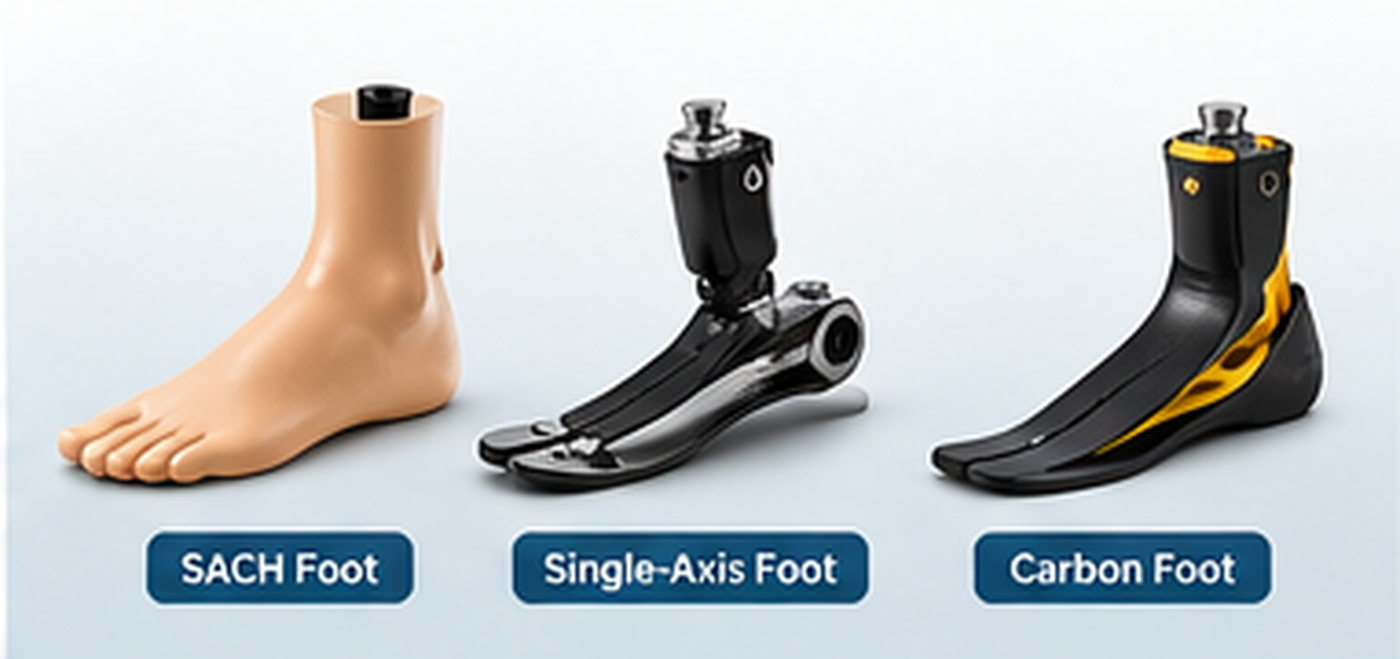
SACH means Solid Ankle Cushion Heel. The foot has no mechanical ankle joint. Instead, the heel compresses after initial contact to simulate plantar flexion and provide a smoother transition onto the foot. A rigid keel supplies structural support.
Protech Ortho’s Spandan PU SACH feet are described as lightweight, cost-effective and intended for entry-level or moderate functional ambulation. They are available in multiple sizes and weight ratings. See the current prosthetic feet range for specifications.
Who May Benefit From a SACH Foot?
SACH feet can suit users who value simplicity, durability and lower maintenance, including many first-time users and people who walk mainly on predictable surfaces. They can also be a practical choice when budget is a major consideration.
SACH Foot Limitations
Because there is no true ankle articulation and little dynamic energy return, a SACH foot may feel less responsive for fast walking, uneven ground or high-activity use. The heel stiffness also needs to match the user and footwear.
Single-Axis Foot: Mechanical Ankle Motion
A single-axis foot includes an ankle joint that allows plantar flexion and dorsiflexion around one axis. Bumpers or stops control the motion. This can help the foot reach a stable position quickly after heel strike and may improve knee stability for some users.
Protech Ortho offers SAM single-axis feet and versions with ankle joints. These are recommended for moderate functional levels and are designed as cost-effective modular options.
Who May Benefit From Single-Axis Motion?
Some above-knee users benefit from rapid plantar flexion because it can help stabilize the knee after heel contact. Users who need a more accommodating ankle than a SACH foot may also prefer this design.
Single-Axis Limitations
Mechanical joints add weight and moving parts. Motion is limited to one axis, so the foot is not automatically ideal for side slopes or highly uneven terrain. It also provides less energy return than dynamic carbon designs.
Carbon Foot: Dynamic Response and Energy Return
Carbon feet use flexible composite keels or blades that deform under load and return part of the stored energy as the user moves forward. This can create a smoother, more responsive rollover and support faster variable-cadence walking.
Protech Ortho lists carbon-keel options and higher-activity blade products in its foot range. Carbon feet are especially relevant for active community walkers, vocational users and people who need more dynamic performance.
Carbon Foot Limitations
Carbon feet cost more and must be selected by stiffness category, body weight and activity. A foot that is too stiff can feel harsh; one that is too soft may feel unstable or fail to provide appropriate support. Dynamic performance also depends on socket fit and alignment.
SACH vs Single-Axis vs Carbon: Which Fits Your Activity?
For low or predictable walking needs, a SACH foot can offer excellent value. For users who benefit from controlled ankle motion and early foot-flat stability, a single-axis foot may be appropriate. For active users who vary speed and want stronger rollover and energy return, a carbon foot is often worth considering.
Do Not Ignore Shoes and Heel Height
Footwear changes the way forces travel through the prosthesis. Use shoes with the heel height the prosthesis was aligned for unless the foot is designed for adjustable heel height. A new shoe can change knee stability and socket pressure even when the foot itself has not changed.
Body Weight, Foot Size and Stiffness Must Match
Manufacturers specify body-weight and size ranges. Carbon feet also require the correct stiffness category. Never choose a stronger category simply because it sounds more durable; the foot needs to flex appropriately under your weight and activity.
The Foot Is Only One Part of the System
Adapters, pylon length, alignment and socket comfort influence the way any foot performs. Protech Ortho’s prosthetic components and clinical fitting services allow the foot to be matched with the rest of the leg rather than installed as an isolated upgrade.
Which Foot Works Best in Common Daily Situations?
For a user who mainly walks inside the home and on smooth nearby roads, a SACH foot may provide all the function required with simple maintenance. A person who values rapid foot-flat stability, especially with an above-knee prosthesis, may benefit from a single-axis design. A commuter or active worker who changes speed and walks longer distances may notice a clearer benefit from a carbon dynamic-response foot. The correct answer depends on the whole gait pattern, not a single feature.
Common Prosthetic Foot Buying Mistakes
Do not choose a foot only because it is lighter or made from carbon. A carbon keel in the wrong stiffness category can feel worse than a simpler foot that is correctly matched. Do not ignore the shoe you wear most often, because heel height and sole stiffness affect alignment. And do not compare only purchase price: include foot shell replacement, maintenance, warranty and the cost of realignment if the foot is changed later.
Questions to Ask During a Foot Trial
Ask whether the foot feels stable at heel strike, whether rollover is smooth, whether you can comfortably increase cadence and how it behaves on a ramp or uneven floor. For an above-knee user, ask how the foot affects knee stability. For a below-knee user, pay attention to socket pressure as the body moves over the foot. A useful trial compares two options under the same shoes and alignment conditions.
Budget and Long-Term Value
SACH and single-axis feet are often more affordable and simpler to service, while carbon feet generally cost more because of composite materials and performance design. Compare expected wear, foot-shell replacement, warranty and how often you may need realignment. A higher-priced foot can be good value when it reduces fatigue and supports the user’s real activity, but a simpler foot may deliver better value for limited community walking. The decision should be based on cost per useful function, not prestige.
Choose the Foot That Matches the Ground You Actually Walk On
SACH, single-axis and carbon feet each solve a different mobility problem. Compare them by stability, terrain, cadence, maintenance and budget rather than by technology alone. A gait trial through Protech Ortho clinical services can show whether an upgrade produces a real improvement for you.
Frequently Asked Questions
Which prosthetic foot is cheapest?
SACH feet are generally among the most economical lower-limb foot options.
Which foot is best for an elderly user?
Many older users value stability and simplicity, but the right foot depends on actual mobility rather than age alone.
Is a carbon foot worth the price?
For active users who can benefit from energy return and variable-cadence walking, it may be. For limited walking, the extra cost may not add practical value.
Does a single-axis foot move like a natural ankle?
It provides controlled motion around one mechanical axis, not the full multi-directional movement of a biological ankle.
Can an above-knee user use a carbon foot?
Yes, when the foot is compatible with the knee, body weight and activity level.
Can a below-knee user use a SACH foot?
Yes. SACH feet are used with both transtibial and transfemoral prostheses.
Which foot is best for uneven ground?
More adaptive or dynamic designs may help, but terrain, balance and full prosthetic alignment determine performance.
How often should a prosthetic foot be replaced?
It depends on wear, activity, component lifespan and changes in mobility. Inspect it routinely and follow professional guidance.
Can I upgrade only my foot?
Often yes in a modular prosthesis if compatibility and alignment are confirmed.
Where can I compare Protech foot models?
See Protech Ortho’s prosthetic feet page for SACH, single-axis, carbon and other options.
Medical & Fitting Note
This article is general educational and buying guidance. Prosthetic components, sockets and suspension systems must be selected and fitted by qualified prosthetic professionals based on individual clinical assessment. Prices and product availability can change; request a current quote before purchase.