

Summary : Children do not stay the same for long, and that is exactly why prosthetic care for them has to stay one step ahead. A child’s prosthesis should be checked regularly, adjusted when needed, and replaced when growth, comfort, or function starts to change. This guide explains the usual replacement timeline, the signs parents should watch for, the factors that affect fit, and how to plan ahead so your child stays comfortable, active, and confident.
Unlike adult prosthetics, children’s devices must keep up with fast physical growth, changing body proportions, and higher activity levels. As children grow, the socket can become tight, the limb length can appear off, and the prosthesis may stop working as smoothly as it once did. Clinical sources consistently note that children need more frequent readjustments and replacements than adults because growth changes both fit and alignment.
There is also a practical side to childhood: running, climbing, sports, playground use, and daily school activities put more stress on the device. Over time, even a well-made prosthesis can show wear, especially at the socket, liner, joints, straps, and cosmetic cover. Pediatric prosthetic care is therefore less about “one device for years” and more about ongoing support as the child develops.
How Is A Child’s Prosthesis Implemented?
The first step in a child’s prosthetic journey is careful implementation. This means more than simply attaching a limb replacement. It involves assessment, planning, measurements, fitting, training, and regular observation to make sure the prosthesis supports the child safely and comfortably.
Every child is different. Their age, level of limb difference or amputation, activity level, body shape, and emotional readiness all affect how the prosthesis is introduced. A well-implemented prosthesis helps the child learn balance, improve movement, and gradually become comfortable using the device as part of daily life.
What Happens During Initial Prosthesis Implementation?
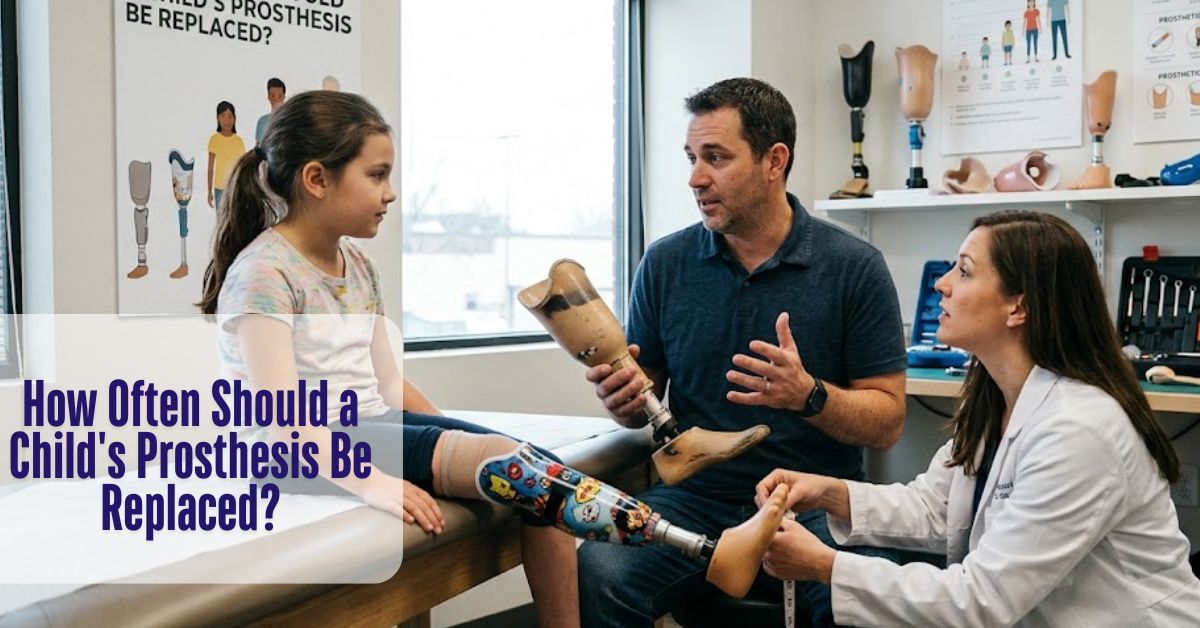
The first prosthesis is usually designed after a detailed evaluation. The prosthetic team studies the child’s residual limb, posture, mobility needs, skin condition, and lifestyle. In many cases, parents are also involved in the discussion because they understand the child’s daily routine, comfort level, and developmental needs.
The prosthesis is then measured and built to match the child as closely as possible. The socket must fit well, because it is the part that connects the body to the device. If the socket is too tight, too loose, or shaped incorrectly, the child may feel discomfort or have difficulty using the prosthesis properly.
After fitting, the child may need practice sessions. These sessions help the child learn how to stand, walk, or use the limb in a natural way. At this stage, the focus is usually on comfort, control, and confidence rather than perfection.
Why Early Adjustment Matters?
A child may need several small adjustments soon after the prosthesis is first implemented. That is normal. The body may respond differently once the child begins using the device in real life. Small pressure points, balance issues, or gait changes are often corrected early so that the child can continue adapting smoothly.
How Does A Child Adapt To A Prosthesis?
The adaptation stage is just as important as the fitting stage. A child may initially feel unsure, tired, or awkward while learning to use the prosthesis. This is normal and should be expected. With time, repetition, and support, most children begin using the device more naturally.
Adaptation also depends on age. Younger children usually accept change more quickly if they are encouraged gently and given a routine. Older children may ask more questions and may need more reassurance about appearance, comfort, or social situations.
Parents can support adaptation by watching for signs of discomfort, encouraging short but regular use, and staying in touch with the prosthetic team. Good support during this stage helps the child build trust in the device and in their own abilities.
When Should Parents Consider Replacing A Child’s Prosthesis?
There is no single replacement schedule that fits every child. Many pediatric prosthetic references suggest that replacements are commonly needed anywhere from about 1 to 3 years, while sockets and fit-related components may need attention sooner, sometimes around 1 year or less depending on growth spurts and activity level. In younger children, replacements may come more often because growth is faster and fit changes happen quickly.
A simple way to think about it is this: the younger the child, the more often the prosthesis usually needs review and possible replacement. Infants and toddlers may need frequent updates, school-age children often need periodic rebuilding or refitting, and teenagers may be able to use a device longer if growth has slowed. Even then, regular reassessment remains essential because fit can change before the device looks “old.”
Typical Replacement And Review Timeline
| Age Group | Typical Review Frequency | Possible Replacement Frequency |
| 0–2 Years | Every 3–6 Months | 6–12 Months |
| 3–5 Years | Every 6 Months | 12–18 Months |
| 6–12 Years | Every 6–12 Months | 1–2 Years |
| 13–18 Years | Every 12 Months | 2–5 Years |
These timelines are only general guides. A child who grows quickly, plays sports, or uses the prosthesis heavily may need changes sooner, while another child may need fewer major replacements but more minor adjustments. The safest approach is to let fit and function guide the decision, not the calendar alone.
Why Do Children Need Prosthesis Replacements More Often Than Adults?
Children grow in spurts, and those growth changes can alter the way a prosthesis fits very quickly. A socket that felt comfortable a few months ago may start causing pressure, rubbing, or instability after a growth period.
Children also tend to be more active than adults during certain stages of development. Running, climbing, jumping, sports, and playground activity place more stress on the prosthesis. Over time, this wear can affect both comfort and function.
Another reason is development. As children grow, they become stronger, more mobile, and more aware of how they move. A prosthesis that worked well at one stage may no longer support the child’s new physical abilities. Rapid child growth and development can significantly affect prosthetic fit, making periodic assessments essential throughout childhood.
What Are The Signs That A Child Needs A New Prosthesis?
Parents often notice the early signs before the child says anything clearly. A replacement may be needed if the prosthesis no longer feels secure or if the child begins avoiding it.
Frequent Complaints Of Discomfort
If the child keeps saying the prosthesis feels painful, tight, or irritating, it should not be ignored.
Redness Or Skin Irritation
Red marks, pressure spots, blisters, or repeated skin problems often indicate poor fit.
Loose Or Unstable Fit
If the prosthesis shifts around or feels too loose, the child may no longer fit properly inside the socket.
Changes In Walking Or Posture
A child may begin limping, leaning, or walking differently if the prosthesis is no longer aligned well.
Reduced Interest In Wearing It
If the child starts removing the prosthesis often or avoids using it, discomfort may be the reason.
Visible Damage
Cracks, worn straps, damaged liners, or broken parts are clear signs that the device needs attention.
Can A Prosthesis Be Adjusted Instead Of Replaced?
Yes, in many cases it can. Minor fit problems may be handled through socket modifications, liner changes, alignment adjustments, padding, or replacement of specific components. For children, this flexibility is especially useful because growth does not happen all at once; sometimes a prosthesis can be kept usable for longer through small, timely changes.
That said, adjustments are not a permanent fix for everything. If the socket no longer fits, the child’s body has changed too much, or the device has lost stability, a new prosthesis is usually the better choice. A well-timed replacement is often safer and more comfortable than trying to stretch an old device beyond what it can realistically do.
What Factors Affect How Long A Child’s Prosthesis Lasts?
Growth Of The Residual Limb
Growth is the biggest factor. As the child gets taller and the limb changes in shape or volume, the socket may become tight, loose, or uneven. Pediatric prosthetic literature consistently points to socket fit tightness and limb-length mismatch as two of the main growth-related problems.
Activity Level
A child who is highly active will put more strain on the device than a child with a quieter routine. Frequent walking, running, jumping, and sports use can increase wear and may also reveal fit issues earlier. Some children also need activity-specific prosthetic options for play or sports, which can change replacement planning.
Weight Changes
Children do not only grow in height; they also change in body composition. Weight gain or loss can affect how snug the socket feels and how the prosthesis balances during movement. Even small changes can influence comfort and gait.
Wear And Tear
Over time, liners thin out, straps loosen, screws shift, and materials begin to show fatigue. Routine inspection matters because a device may look fine from the outside while still causing problems during use. Regular checkups help catch these issues before they affect mobility or skin health.
Technology And Function Needs
Sometimes a replacement is not only about growth. A child may outgrow the function of an older device and need a more suitable design for walking, school, play, or personal comfort. Pediatric prosthetics are often designed to be customized, updated, and adapted so they match the child’s changing lifestyle.
Before selecting or replacing a prosthesis, it is helpful for parents to explore the various types of prosthetic solutions for children available to support different levels of activity, comfort, and functionality.
Why Are Regular Prosthetic Check-Ups Important?
Routine visits with a prosthetist are essential during childhood. These visits allow the specialist to track growth, check skin condition, inspect wear, test alignment, and confirm that the child is moving well. Pediatric guidance from family-health and prosthetic-care sources repeatedly emphasizes regular follow-ups because growth and function can change quickly.
Check-ups also help prevent bigger problems later. A small fit issue today can become a skin injury, gait change, or discomfort problem tomorrow. When a child is seen regularly, the prosthetist can make smaller corrections earlier, which often delays unnecessary complications and makes replacement decisions clearer. Proper skin care for prosthetic users can help prevent irritation, pressure sores, and discomfort that may interfere with daily activities.
How Parents Can Support A Child Between Replacements?
Parents play a major role in making prosthetic care successful. A few simple habits can make a big difference.
Watch For Changes Early
Do not wait until the child is in pain. Small signs usually appear first.
Keep Up With Scheduled Reviews
Regular check-ups help the team stay ahead of growth-related changes.
Encourage Honest Feedback
Children should feel comfortable saying when something hurts or feels unusual.
Follow Cleaning And Care Instructions
A clean, well-maintained prosthesis is more comfortable and usually lasts longer.
Stay Flexible
Sometimes a device that fit well last season may need a different setting or replacement after a growth spurt. That is part of normal pediatric prosthetic care.
Parents who understand the prosthetic fitting process are often better prepared to support their child through adjustments, follow-up appointments, and future prosthetic replacements.
Why Is Choosing The Right Child Prosthetics Provider Important?
Choosing the right child prosthetics specialist can significantly impact a child’s comfort, mobility, confidence, and overall development. Since children grow rapidly and have unique needs, it is important to work with a provider that understands pediatric prosthetic care and offers long-term support.
- Ensures a comfortable and secure prosthetic fit for growing children.
- Provides customized prosthetic solutions based on the child’s age, activity level, and lifestyle.
- Supports healthy physical development through proper alignment and mobility.
- Helps identify growth-related changes early through regular assessments.
- Reduces the risk of discomfort, skin irritation, and fitting issues.
- Offers timely adjustments and replacements as the child grows.
- Uses quality materials and advanced technology for improved durability and performance.
- Encourages greater independence in daily activities, school, and recreation.
- Provides expert guidance and ongoing support for parents and caregivers.
- Helps children build confidence and adapt successfully to prosthetic use.
- Ensures access to professional care throughout every stage of the child’s prosthetic journey.
- Contributes to better long-term mobility, posture, and overall quality of life.
Choosing an experienced pediatric prosthetics provider can make a meaningful difference in helping children stay active, comfortable, and confident as they grow.
Why Choose Proactive Technical Orthopaedics Pvt. Ltd.?
As a best child prosthetics supplier, Proactive Technical Orthopaedics Pvt. Ltd. is committed to delivering high-quality pediatric prosthetic solutions that support comfort, mobility, and confidence throughout a child’s growth journey.
Customized Child Prosthetic Solutions
- Prosthetic devices designed to match each child’s unique needs, growth patterns, and mobility goals.
- Focus on achieving a comfortable fit that supports everyday activities and development.
Expertise In Pediatric Prosthetic Care
- Experienced pediatric prosthetic professional who understand the unique mobility, comfort, and developmental needs of growing children.
- Committed to supporting children and families with expert care, regular follow-ups, and long-term prosthetic solutions.
High-Quality Materials And Advanced Technology
- Use of durable, lightweight materials to enhance comfort, functionality, and long-term performance.
- Modern manufacturing techniques that help ensure precision and reliability.
Comprehensive Support And Follow-Up Care
- Ongoing assessments, adjustments, and guidance to accommodate growth-related changes.
- Commitment to helping children maintain optimal comfort and mobility over time.
Focus On Mobility, Independence, And Confidence
- Solutions designed to help children participate in daily activities, education, sports, and recreation.
- Emphasis on improving quality of life and encouraging greater independence at every stage of development.
Trusted Pediatric Prosthetic Solutions For Growing Children!
Ready to find the right prosthetic solution for your child? At Proactive Technical Orthopaedics Pvt. Ltd., we understand that every child deserves the opportunity to move comfortably, explore confidently, and achieve their full potential. As a trusted Child prosthetics manufacturer in India, we provide customized pediatric prosthetic solutions designed to support growing children through every stage of development.
Whether your child needs their first prosthesis, ongoing adjustments, or a replacement due to growth, our experienced team is here to help. Contact us today to discuss your child’s needs and discover how our personalized prosthetic solutions can support greater mobility, independence, and confidence for the future.
Frequently Asked Questions
How Often Should A Child’s Prosthesis Be Checked?
A child’s prosthesis should be checked regularly, often every few months for younger children and at least once a year for older children, depending on growth and usage.
Can A Prosthesis Be Adjusted Instead Of Replaced?
Yes. Minor fit or alignment problems can often be corrected with adjustments, but major growth or damage may require a new prosthesis.
What Are The First Signs That A Prosthesis No Longer Fits Properly?
Redness, pain, looseness, rubbing, instability, and changes in walking are common signs that the prosthesis may no longer fit well.
Why Do Children Outgrow Prostheses So Quickly?
Children grow rapidly, especially in the early years and during growth spurts, which changes the fit and alignment of the device.
Is It Normal For A Child To Need Several Prosthetic Changes Over Time?
Yes. Multiple adjustments and replacements are a normal part of pediatric prosthetic care because the child’s body, needs, and activity levels change over time.
How Long Does A Child Prosthesis Usually Last?
The lifespan of a child prosthesis depends on the child’s growth, activity level, and how well the device is maintained, but many children need changes more often than adults.
Can Children Play Sports With A Prosthesis?
Yes. Many children can participate in sports and physical activities with the right prosthetic design and proper guidance from their care team.
How Do You Take Care Of A Child’s Prosthesis?
A child’s prosthesis should be cleaned regularly, checked for wear and tear, and kept dry and safe from damage. Parents should also follow the care instructions provided by the prosthetist.
Does Wearing A Prosthesis Hurt A Child?
A properly fitted prosthesis should not cause pain. If a child feels discomfort, pressure, or irritation, the device may need adjustment.
At What Age Can A Child Start Using A Prosthesis?
The right age depends on the child’s condition and medical advice. Some children begin using a prosthesis at a very young age, while others may start later based on their individual needs.