

Summary : Sports injuries often start with small biomechanical issues that go unnoticed until they turn into pain, strain, or repeated setbacks. This blog explains how orthotics help prevent sports injuries by improving foot alignment, reducing shock, supporting balance, and easing stress on the lower body. It also covers which injuries orthotics may help reduce, how they support performance, and why quality orthotic components matter for athletes, clinics, and active individuals.
Sports are demanding on the body. Whether someone is running, jumping, sprinting, cutting, landing, or training for long hours, the feet are taking a major share of the load. When foot mechanics are not working well, the stress does not stay in the feet alone. It can travel upward and affect the ankles, knees, hips, and even the lower back. That is why orthotic support has become an important part of injury prevention for athletes and active people. Indian healthcare and orthotic resources commonly highlight the same core ideas: alignment, shock absorption, stability, and reduced overuse stress are central to prevention.
Orthotics are designed to improve how the foot meets the ground and how force moves through the body. For sports users, that can mean better comfort, better control, and less wear and tear over time. For orthotic components suppliers, this topic matters because the right materials and construction directly affect durability, support, and real-world performance.
What Is The Connection Between Foot Mechanics And Sports Injuries?
Why The Feet Are The Foundation Of Movement?
Every athletic movement starts from the ground up. The feet help absorb impact, transfer force, and keep the body stable during motion. If that foundation is unstable, the rest of the movement chain has to compensate. Over time, that extra compensation can create pain or injury.
How Poor Biomechanics Increase Injury Risk?
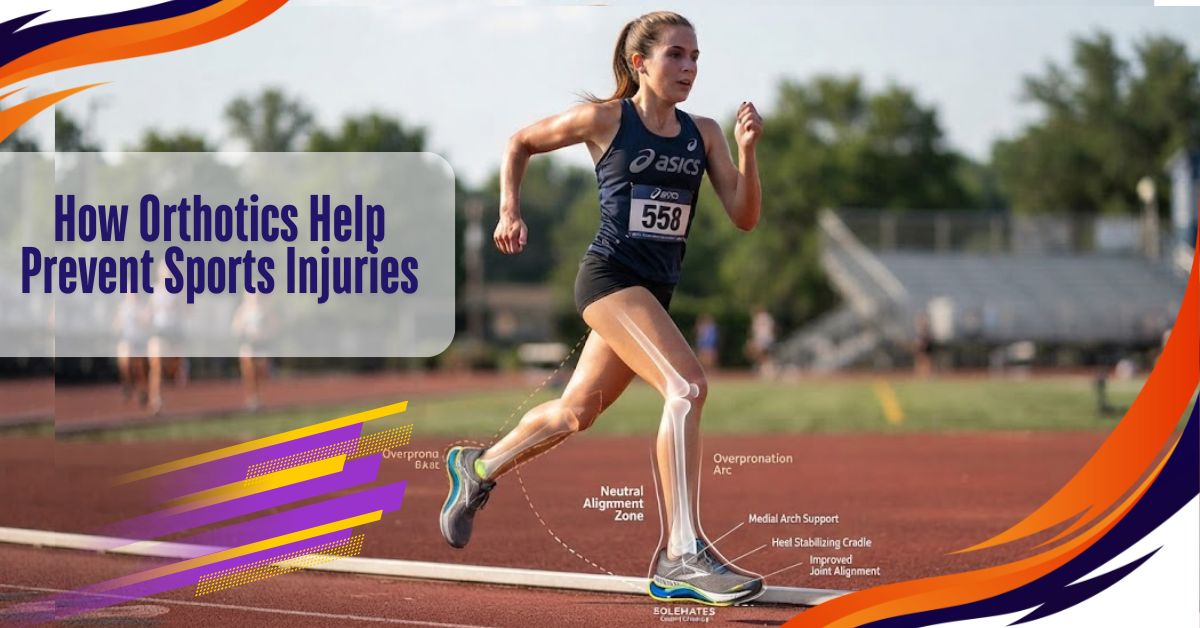
Small alignment problems can create repeated strain during training. Overpronation, supination, flat feet, high arches, and uneven loading can all change the way force travels through the body. This is one reason orthotic support is often used to manage lower-limb stress and improve balance.
Common Sports Injuries Linked To Foot Misalignment
Foot mechanics can contribute to several common sports injuries, including plantar fasciitis, shin splints, Achilles tendon irritation, runner’s knee, stress fractures, ankle instability, and IT band discomfort. Orthotic support is often discussed in relation to these conditions because it aims to reduce the mechanical triggers that keep repeating during activity.
What Are Orthotics And How Do They Work?
Orthotics In Simple Terms
Orthotics are specially designed devices placed inside footwear to support the foot, improve alignment, and influence movement patterns. In sports settings, they are used not just for comfort, but also for correction, control, and injury prevention.
Types Of Sports Orthotics
Sports orthotics usually fall into three broad groups. Custom orthotics are built around a person’s specific foot shape and biomechanical needs. Semi-custom options sit between standard and fully personalized support. Prefabricated orthotics offer general cushioning and alignment support, but they are less tailored. Orthotic suppliers often focus on material quality, fit precision, and performance characteristics because those details affect the final result.
How Orthotics Influence Movement?
Orthotics can help by supporting the arch, redistributing pressure, improving foot posture, and reducing unnecessary motion. In athletic use, that can translate into better stability and less strain on tissues that are already working hard. Indian foot-care and orthotic sources frequently describe similar benefits, especially around pronation control, pain reduction, and improved movement efficiency.
How Do Orthotics Help Prevent Sports Injuries?
Improving Foot And Ankle Alignment
When the foot is better aligned, the ankle is usually under less unnecessary stress. That matters in sports because unstable foot motion can lead to awkward landings, uneven force distribution, and repeated overload. Orthotics help create a more stable base so the body can move more efficiently.
Reducing Excessive Impact Forces
Running, jumping, and fast directional changes create repeated impact. Orthotics are used to soften and spread those forces more evenly across the foot and lower limb. That can help reduce stress on vulnerable areas such as the heel, arch, shin, knee, and lower back.
Supporting Better Stability During Play
A stable foot can improve balance, especially during sudden stops, pivots, and landings. Better stability can mean fewer slips, less rolling of the ankle, and better confidence in movement. This is one of the reasons orthotics are often recommended for athletes who feel unsteady or who keep re-injuring the same area.
Reducing Overuse Stress
Overuse injuries usually build slowly. The body can cope with a little extra load for a while, but repeated stress eventually starts to show up as pain. Orthotics help reduce the repeated mechanical irritation that can lead to flare-ups, especially in runners, court-sport players, and people who train often.
Encouraging More Efficient Movement
When the feet are supported properly, the whole movement pattern often becomes smoother. That can reduce wasted energy and help athletes move with less fatigue. For active individuals, that matters just as much as injury prevention because tired muscles often contribute to bad mechanics and sloppy form.
Beyond sports injury prevention, orthotics for diabetics help prevent foot complications by promoting better pressure distribution and reducing the risk of skin breakdown.
Which Sports Injuries Can Orthotics Help Reduce?
Sports injuries caused by poor foot alignment, repetitive stress, and excessive impact forces can often be reduced with the right orthotic support.
Plantar Fasciitis
Plantar fasciitis often comes from repeated strain on the bottom of the foot. Orthotics can help support the arch, reduce tension, and make walking or running feel less punishing.
Shin Splints
Shin splints are common in running and jumping sports. Orthotics may help by improving foot control and reducing the stress that travels into the lower leg during repeated impact.
Achilles Tendon Irritation
When the foot mechanics are off, the Achilles tendon may carry more load than it should. Orthotics can help bring more balance to the system and reduce that overload.
Runner’s Knee
Knee pain in runners is often linked to movement patterns lower down the chain. Better foot alignment can support better knee tracking and reduce unnecessary stress across repeated strides.
Stress Fractures
Stress fractures are frequently related to repetitive force and poor load distribution. Orthotics may help by improving shock absorption and spreading pressure more evenly across the foot.
Ankle Sprains And Instability
Athletes who repeatedly roll or twist their ankles may benefit from more stable foot support. Orthotics can help the foot sit more securely inside the shoe, which may improve control during movement.
What Are The Benefits Of Orthotics Beyond Injury Prevention?
Orthotics are not only about avoiding injuries. They can also improve comfort, make training feel smoother, and support better athletic confidence. Many Indian orthotic and sports-care resources also frame orthotics as tools for comfort, performance, and improved lower-limb function, not just symptom relief.
For athletes, better support can sometimes mean better endurance. For runners, it can mean fewer hot spots and less strain in long sessions. For court-sport players, it can mean more reliable footing when the game gets fast. For coaches, physiotherapists, and clinics, it means a practical way to address recurring biomechanical stress.
Many of the biomechanical principles used in paediatric orthotic rehabilitation are equally valuable in supporting stability and reducing stress during sports activities.
Which Sports Benefit Most From Orthotic Support?
Running And Endurance Sports
Running creates thousands of repetitive foot strikes. That makes the sport especially sensitive to alignment, pressure distribution, and shock control.
Football And Cricket
These sports involve acceleration, deceleration, turning, and sudden changes of direction. That combination can put a lot of strain on the lower limbs.
Basketball And Volleyball
Jumping and landing create a high impact. Athletes in these sports often benefit from improved cushioning and stability.
Tennis And Badminton
Quick lateral movement makes foot control important. Orthotics may help athletes feel more stable during fast rallies and pivots.
Hiking And Outdoor Activity
Long sessions on uneven surfaces can lead to fatigue and pressure points. Orthotics can improve comfort and support during extended use.
What Is The Difference Between Custom Orthotics And Prefabricated Orthotics?
| Feature | Custom Orthotics | Prefabricated Orthotics |
| Fit | Made for the individual | General fit |
| Biomechanical Correction | Highly targeted | Limited |
| Comfort | Strong long-term comfort | Good for basic use |
| Sports Adaptation | Sport-specific possible | Less specific |
| Durability | Usually higher | Usually moderate |
| Injury Prevention Value | Better for complex needs | Better for simple needs |
Custom orthotics are usually the better choice when an athlete has recurring pain, uneven loading, or a clear biomechanical issue. Prefabricated options can still help with cushioning and light support, especially for general use or early-stage comfort needs.
What Are The Signs That An Athlete May Need Orthotics?
Athletes and active individuals may benefit from orthotic support if they experience any of the following:
- Frequent or recurring sports injuries despite proper training and recovery.
- Persistent heel pain, arch pain, or discomfort during physical activity.
- Repeated episodes of shin splints, plantar fasciitis, or Achilles tendon pain.
- Knee pain that worsens during running, jumping, or other sports movements.
- Hip, lower back, or ankle discomfort linked to prolonged activity.
- Excessive foot fatigue after training sessions or competitions.
- Difficulty maintaining balance or stability during movement.
- Uneven shoe wear patterns, particularly on one side of the sole.
- Flat feet, high arches, or noticeable foot alignment issues.
- Discomfort when standing, walking, or exercising for extended periods.
- Reduced athletic performance due to foot or lower-limb discomfort.
- A history of ankle sprains or recurring ankle instability.
If any of these signs are present, a professional biomechanical assessment can help determine whether orthotics may improve comfort, support, and injury prevention.
How Do You Choose The Right Orthotic Solution For Sports Activities?
Individual Biomechanical Assessment
Every athlete has unique movement patterns and support requirements. A thorough assessment helps identify specific biomechanical concerns. A proper understanding of foot mechanics and the biomechanics of walking and running can help determine the most effective orthotic solution for different sports and activity levels.
Sport-Specific Requirements
Different sports place different demands on the body. Orthotic design should consider:
- Running mechanics
- Jumping frequency
- Directional changes
- Playing surfaces
Activity Level Considerations
Training intensity and frequency should influence orthotic selection. Competitive athletes often require more specialized support than recreational participants.
Professional Evaluation And Fitting
Working with qualified orthotic professionals ensures proper fit, function, and long-term effectiveness.
Understanding the differences between prosthetics and orthotics can help individuals choose the most appropriate mobility and support solution for their specific needs.
Why Choose Proactive Technical Orthopaedics Pvt. Ltd.?
High-performing orthotic solutions depend on more than just design—they require reliable, durable, and precisely engineered components. At Proactive Technical Orthopaedics, we are committed to supporting orthotists, rehabilitation professionals, healthcare providers, and medical institutions with quality orthotic components designed to meet the demands of modern mobility and sports support applications.
What Sets Us Apart?
- Extensive range of orthotic components for diverse clinical and mobility needs.
- Focus on quality, durability, and long-term performance.
- Components designed to support effective biomechanical alignment and user comfort.
- Reliable solutions for orthotists, prosthetists, rehabilitation centres, and healthcare facilities.
- Commitment to innovation and continuous product improvement.
- Support for customized orthotic solutions across various activity levels and user requirements.
- Trusted partner for professionals seeking dependable orthotic component solutions.
- Dedicated to helping improve mobility, comfort, and overall patient outcomes.
Whether supporting athletes, active individuals, or rehabilitation patients, Proactive Technical Orthopaedics Pvt. Ltd. provides orthotic component solutions that help professionals deliver effective, long-lasting support with confidence.
Your Reliable Source For Advanced Orthotic Component Solutions
At Proactive Technical Orthopaedics Pvt. Ltd., we understand that effective orthotic solutions begin with dependable components. As a leading orthotic components supplier in India, we are committed to providing high-quality, durable, and performance-driven products that help orthotists, rehabilitation professionals, and healthcare providers deliver better support, comfort, and mobility outcomes for their users.
Whether you are looking for reliable orthotic components for clinical applications, sports support, or rehabilitation needs, our team is here to help. Contact us today to learn how Proactive Technical Orthopaedics Pvt. Ltd. can support your requirements with trusted solutions designed for long-term performance and confidence.
Frequently Asked Questions
How Do Orthotics Help Prevent Sports Injuries?
Orthotics help by improving alignment, distributing pressure more evenly, supporting the arch, and reducing repeated stress on the feet and lower limbs.
Can Orthotics Reduce The Risk Of Running Injuries?
Yes. Orthotics are often used in running to improve shock absorption, manage foot motion, and reduce strain that can build into overuse injuries.
Are Custom Orthotics Better For Sports Than Regular Insoles?
Custom orthotics are usually better for sports when the athlete has specific biomechanical needs because they are built for the individual rather than for general use.
Which Sports Benefit The Most From Orthotics?
Running, football, cricket, basketball, volleyball, tennis, badminton, and hiking often benefit because they place repeated stress on the lower body.
Can Orthotics Help With Shin Splints?
They may help by improving foot control, reducing excessive motion, and lowering repeated impact stress on the lower leg.
Do Orthotics Improve Athletic Performance?
They can support better stability, movement efficiency, and comfort, which may help athletes perform with more confidence and less fatigue.
How Do I Know Whether I Need Orthotics?
Recurring injuries, chronic foot pain, uneven shoe wear, instability, or lower-limb discomfort during sports may be signs that orthotic support could help.
Are Orthotics Only For People With Foot Pain?
No. Many athletes use orthotics to prevent pain and improve function before a problem becomes serious.
What Makes Good Orthotic Components Important?
Good components improve durability, support, comfort, and performance, which is especially important for sports use where repeated impact is common.
How Long Do Sports Orthotics Usually Last?
It depends on the materials, frequency of use, and the sport involved, but high-quality orthotic systems are designed to handle regular wear more effectively.