

Summary: Osseointegration recovery is not a one-step process. It moves through healing, rehabilitation, gradual weight-bearing, and long-term adaptation, with each stage playing an important role in how well the prosthetic system works. This guide walks through the recovery journey month by month so prosthetic users can understand what to expect, what usually happens at each stage, and how steady rehabilitation supports better results over time.
For many prosthetic users, osseointegration offers a more direct connection between the body and the prosthesis. Instead of relying on a socket, the implant is anchored into the bone, which can improve comfort, stability, and control for the right candidate. But while the technology is advanced, recovery still takes time.
A common question is simple: how long does osseointegration recovery take? The answer depends on the person, the surgery, the amputation level, overall health, and how consistently rehabilitation is followed. Some people may progress faster, while others need a slower pace to heal safely. What matters most is understanding the timeline and moving through each phase with patience and support.
What Is Osseointegration And How Does It Work?
Understanding Bone-Anchored Prosthetic Implants
Osseointegration is a process in which a titanium implant is surgically placed into the remaining bone. Over time, the bone grows around and bonds with the implant, creating a strong foundation for prosthetic attachment. This direct skeletal connection can help reduce many of the issues associated with socket-based systems, such as pressure points, skin irritation, and poor fit.
How Osseointegration Differs From Traditional Socket Prostheses
Traditional prostheses depend on a socket that fits around the residual limb. That fit can change with swelling, muscle loss, heat, and daily activity. Osseointegration removes the need for that socket connection and instead transfers load through the skeleton. For some users, that means better comfort and a more natural feel. For others, the idea of surgery and a longer recovery period requires careful consideration.
Why Recovery Takes Time
Even though the implant may be in place quickly during surgery, the body still needs time to heal and integrate. Bone healing, soft tissue recovery, gait training, and muscle rebuilding all happen gradually. Rushing the process can create setbacks, which is why recovery is usually planned in stages.
What Factors Affect Osseointegration Recovery Time?
Type And Level Of Amputation
Recovery may differ depending on whether the amputation is below-knee or above-knee, as well as whether it is unilateral or bilateral. Higher-level amputations often require more rehabilitation because balance, strength, and mobility demands are greater.
Overall Health And Bone Quality
Bone density, circulation, nutrition, and any existing medical conditions can all affect healing. A strong recovery depends on a body that can heal well and tolerate gradual load-bearing. Maintaining good bone health and healing capacity can positively influence implant integration and recovery outcomes.
Age And Physical Fitness
Younger or more physically conditioned patients may adapt more quickly, but age alone does not determine success. What matters more is overall function, healing capacity, and rehabilitation commitment.
Commitment To Rehabilitation
Recovery is not only about surgery. Physiotherapy, exercise, and regular follow-up are essential. Users who stay consistent with rehabilitation often make smoother progress.
Surgical Technique And Implant Type
Different implant systems and surgical approaches may affect recovery speed and progression. The treating team usually decides the timeline based on stability, healing, and safety.
How Long Does Osseointegration Recovery Usually Take?
| Recovery Stage | Typical Timeline | Main Focus |
| Initial Surgical Recovery | Week 1–4 | Healing, wound care, pain management |
| Early Rehabilitation | Month 1–3 | Strength, balance, gentle movement |
| Progressive Weight-Bearing | Month 3–6 | Implant loading and prosthetic adaptation |
| Advanced Rehabilitation | Month 6–12 | Mobility, endurance, daily function |
| Long-Term Integration | Beyond 12 Months | Full activity participation and maintenance |
Month 1 – Immediate Post-Surgery Recovery
Hospital Stay And Monitoring
The first few weeks are focused on healing. Many patients need close monitoring after surgery to make sure the incision is healing properly and that there are no signs of complications. During this period, rest is important, but so is gentle movement under medical guidance.
Pain Management And Wound Care
Some discomfort, swelling, and tenderness are normal after surgery. Pain management, wound care, and hygiene instructions should be followed exactly as directed. Keeping the surgical site clean and protected helps reduce the risk of infection.
Early Mobility Goals
At this stage, the goal is not full prosthetic use. The priority is protecting the surgical area while maintaining as much safe movement as possible. Patients may work on transfers, upper-body mobility, and basic conditioning.
Preventing Infection During Healing
Infection prevention is extremely important with osseointegration. Regular cleaning, follow-up visits, and reporting unusual symptoms early can make a major difference in recovery outcomes.
Month 2 – Beginning Rehabilitation And Conditioning
Gentle Strengthening Exercises
Once the surgeon and rehabilitation team give the green light, gentle exercises usually begin. These may focus on maintaining joint mobility, strengthening the core and surrounding muscles, and preventing stiffness.
Improving Balance And Stability
Balance training becomes more important as the body prepares for future load-bearing. Even before full prosthetic attachment, the user may start building coordination and confidence through supervised exercises.
Monitoring Implant Integration
The implant must continue to integrate with the bone. This healing stage is monitored carefully to make sure the body is responding as expected.
Building Confidence In Movement
Many users feel mentally ready before the body is fully ready. Rehabilitation at this stage helps bridge that gap by encouraging safe movement and gradual progress.
Month 3 – Introduction To Controlled Weight-Bearing
Gradual Loading Of The Implant
Around this stage, some patients may begin controlled loading, depending on healing progress. Weight-bearing is usually introduced slowly and under supervision so the implant can adapt safely.
Learning Proper Walking Techniques
If the prosthetic system is being introduced, the user will usually begin gait training. This may include learning how to stand, shift weight, step safely, and walk with better alignment.
Working With Rehabilitation Specialists
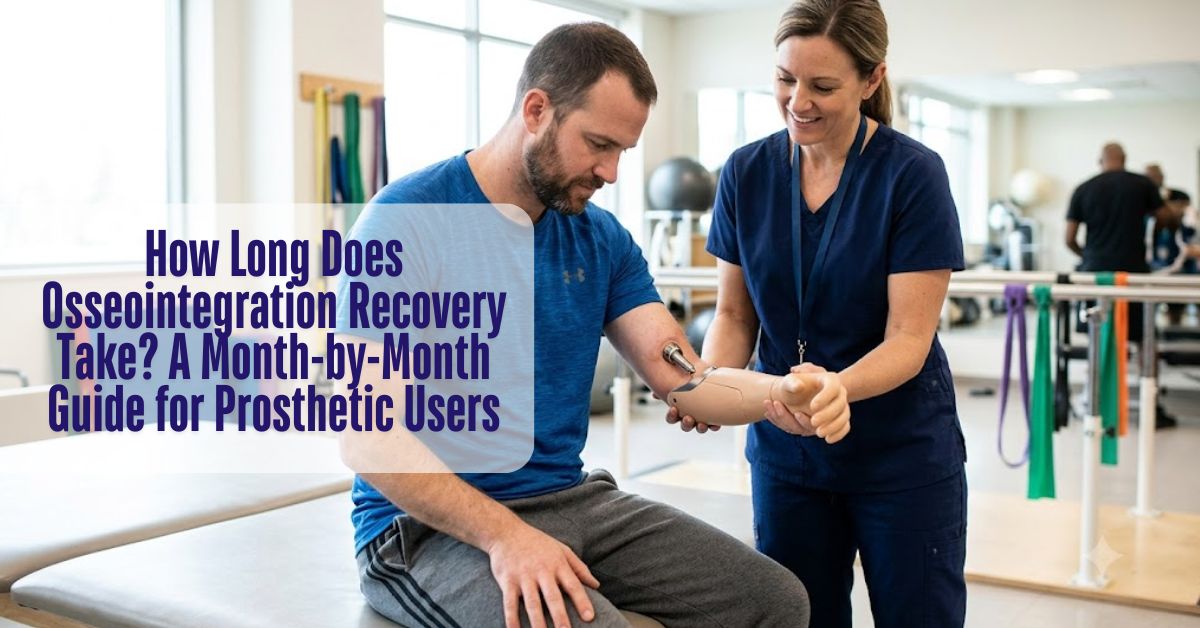
Physiotherapists and prosthetic specialists play a major role here. They help the user learn how to move efficiently, avoid strain, and build confidence with the new system.
Common Challenges During This Stage
This period can bring mild discomfort, fatigue, or frustration as the body adjusts. That is normal. Progress is usually gradual rather than dramatic.
Months 4 To 6 – Adapting To Everyday Activities
Increasing Walking Distances
As strength improves, users may be able to walk farther and for longer periods. This is often when the prosthesis starts to feel more like part of daily life instead of a temporary recovery tool.
Returning To Routine Daily Tasks
Tasks such as standing for longer periods, moving around the home, and handling light activity may become easier. The body continues to learn how to use the implant efficiently.
Improving Endurance And Strength
Rehabilitation during this phase usually focuses on endurance, stability, and functional movement. Users often continue working on core strength, hip strength, and gait quality.
Prosthetic Alignment And Adjustments
As the body changes, minor adjustments may be needed. Good alignment helps reduce strain and supports smoother walking.
Months 6 To 12 – Building Long-Term Mobility
Advancing Physical Activity Levels
This is often the phase where users start seeing the bigger benefits of osseointegration. Daily movement may feel more natural, and endurance often improves with time.
Returning To Work And Social Activities
Many patients begin to return to work, social life, and more active routines. The exact timing depends on the type of job, healing speed, and functional goals.
Participating In Recreational Sports
Some users may begin returning to recreational exercise or sport-related activities. However, this should always be done with medical guidance and realistic expectations.
Monitoring Long-Term Implant Health
Even after the initial recovery stage is complete, ongoing care remains important. Regular checkups help monitor implant health, skin condition, and prosthetic function.
During the later stages of recovery, the right prosthetic device can help improve walking efficiency, increase independence, and enhance overall quality of life.
When Can Prosthetic Users Return To Normal Activities?
Walking Independently
Independent walking often becomes more realistic as rehabilitation progresses, but the timeline varies. Some people may achieve this sooner, while others need more time to feel stable and confident.
Driving And Commuting
Driving depends on the amputation level, prosthetic control, and legal or medical clearance. Commuting may return earlier than full-time work for some users.
Returning To Work
Desk work may resume earlier than physically demanding jobs. People with active jobs usually need more recovery time and more physical conditioning.
Exercising And Sports Participation
Exercise should be introduced gradually. Low-impact activity may be possible before more demanding sports or fitness routines.
What Are The Common Challenges During Osseointegration Recovery?
Managing Discomfort During Weight-Bearing
Some discomfort is expected when loading begins, but pain should always be discussed with the care team. Proper pacing helps avoid unnecessary setbacks.
Addressing Mobility Frustrations
Recovery rarely moves in a straight line. Some days feel better than others. Staying focused on long-term progress instead of daily fluctuations makes the process easier to handle.
Preventing Infection And Skin Issues
Good hygiene, regular inspections, and early medical attention are key. Any redness, swelling, drainage, or unusual pain should be checked promptly.
Staying Consistent With Rehabilitation
Missing therapy sessions or home exercises can slow progress. Recovery tends to improve when patients stay active within safe limits and follow their rehab plan closely.
What Are The Signs Of A Successful Osseointegration Recovery?
Improved Mobility
Moving with less effort and more confidence is a positive sign. Walking and standing often become smoother over time.
Better Balance And Stability
As the body adapts, balance often improves. Users may feel more secure during transfers and movement.
Increased Confidence In Daily Activities
A strong sign of progress is not just physical improvement, but confidence. When users begin to trust the prosthesis during routine tasks, recovery is moving in the right direction.
Successful recovery depends on following appropriate rehabilitation techniques that focus on improving strength, balance, mobility, and confidence throughout each stage of the healing process.
When Should You Contact Your Healthcare Team During Recovery?
Persistent Pain
Pain that does not improve or becomes worse should never be ignored.
Signs Of Infection
Fever, redness, swelling, discharge, or warmth around the implant site require prompt evaluation.
Implant-Related Concerns
If the implant feels unstable, uncomfortable, or unusual in any way, a specialist should review it.
Unexpected Mobility Limitations
A sudden drop in function, balance, or walking ability may mean the rehab plan needs adjustment.
Tips For Achieving A Successful Osseointegration Recovery
Follow Rehabilitation Guidelines Carefully
Recovery works best when each stage is respected. Healing, strengthening, and loading should happen in the right order.
Maintain Good Nutrition
Protein, hydration, and overall nutrition support healing and energy levels.
Stay Physically Active Within Recommended Limits
Movement helps recovery, but only when it is appropriate for the stage of healing.
Attend Regular Follow-Up Visits
Follow-ups help catch issues early and keep recovery on track.
Focus On Long-Term Progress Rather Than Quick Results
Osseointegration is a long-term investment in mobility. The best results usually come from patience and steady effort.
As you progress through recovery, partnering with the right prosthetic clinic can help you achieve the best possible outcomes. Learn more in our detailed guide, How to find the best prosthetic clinic near you, which explains how to evaluate expertise, rehabilitation support, and prosthetic care services.
Why Choose Proactive Technical Orthopaedics Pvt. Ltd?
At Proactive Technical Orthopaedics Pvt. Ltd, we combine industry expertise, quality manufacturing, and customer-focused service to deliver dependable orthotic and prosthetic solutions. Our commitment to innovation and precision has made us a trusted choice for healthcare providers, distributors, and rehabilitation professionals across India.
- High-quality orthotic and prosthetic components manufactured to industry standards
- Extensive range of products designed for diverse patient needs
- Focus on durability, comfort, and functional performance
- Reliable supply chain and timely product delivery
- Advanced manufacturing processes for consistent quality
- Customized solutions to meet specific clinical requirements
- Dedicated technical support and product guidance
- Commitment to continuous innovation and product development
- Trusted by rehabilitation centers, clinics, and healthcare professionals
- Strong reputation as a leading Orthotic Components manufacturer and supplier in India
- Customer-centric approach with responsive service and support
- Cost-effective solutions without compromising on quality
Choose Excellence For Your Orthotic And Prosthetic Needs
At Proactive Technical Orthopaedics Pvt. Ltd, we are committed to delivering high-quality orthotic and prosthetic solutions that help healthcare professionals and patients achieve better mobility and comfort. As a trusted orthotic components manufacturer in India, we focus on precision, durability, and innovation to support diverse clinical requirements.
Whether you are looking for dependable components, expert guidance, or customized solutions, our team is ready to assist. Contact us today to learn how our advanced orthotic and prosthetic products can help you provide better outcomes and enhanced mobility for every patient.
Frequently Asked Questions
How Long Does It Take To Fully Recover From Osseointegration Surgery?
Most users need several months to regain strong mobility, and many continue improving for 12 months or longer. Full recovery depends on healing, rehabilitation, and overall health.
Is Osseointegration Recovery Faster Than Traditional Prosthetic Rehabilitation?
Not always. Osseointegration may eventually improve comfort and mobility for suitable candidates, but the recovery process still involves surgery, healing, and structured rehabilitation.
Can I Walk Immediately After Osseointegration Surgery?
No. Walking is introduced gradually after healing progresses and the medical team confirms it is safe to begin loading the implant.
What Can Slow Down Osseointegration Recovery?
Infection, poor bone health, smoking, inconsistent rehabilitation, and certain medical conditions can slow healing and delay progress.
Is Physiotherapy Necessary After Osseointegration Surgery?
Yes. Physiotherapy is a major part of recovery because it helps improve strength, balance, gait, and long-term function.
How Often Are Follow-Up Appointments Needed After Osseointegration?
Follow-up schedules vary, but patients typically attend regular appointments during the first year to monitor healing, implant stability, and rehabilitation progress.
Does Osseointegration Improve Walking Ability?
Many users report improved mobility, balance, and walking efficiency after successful osseointegration and rehabilitation. Individual outcomes depend on several personal and medical factors.
Can I Play Sports After Osseointegration Recovery?
Many patients return to recreational sports and physical activities after recovery. The timing depends on healing progress, fitness level, and guidance from healthcare professionals.
Is Osseointegration Better Than A Socket Prosthesis?
Osseointegration may offer advantages such as improved comfort and mobility for some patients, but the best option depends on individual needs, lifestyle, and medical suitability.
How Long Does The Osseointegration Implant Last?
Osseointegration implants are designed for long-term use. With proper care, regular monitoring, and good overall health, many patients can use their implants successfully for years.