

Summary:
Understand the complete timeline for custom prosthetic acquisition from initial evaluation through fitting and adaptation. Learn factors affecting timelines and how to expedite the process when necessary.
Patients awaiting prosthetic limbs often wonder how long the complete process requires—from initial evaluation through successful fitting and adaptation. Custom prosthetic timelines vary based on multiple factors including prosthetic complexity, your specific requirements, manufacturer lead times, and fitting adjustment needs. Understanding realistic timelines helps you plan accordingly and set appropriate expectations. This comprehensive guide explores the prosthetic acquisition process, typical timeframes for each phase, and factors that might accelerate or extend your timeline.
How Long Does It Take to Get a Custom Prosthetic Limb?
Initial Evaluation and Assessment Phase
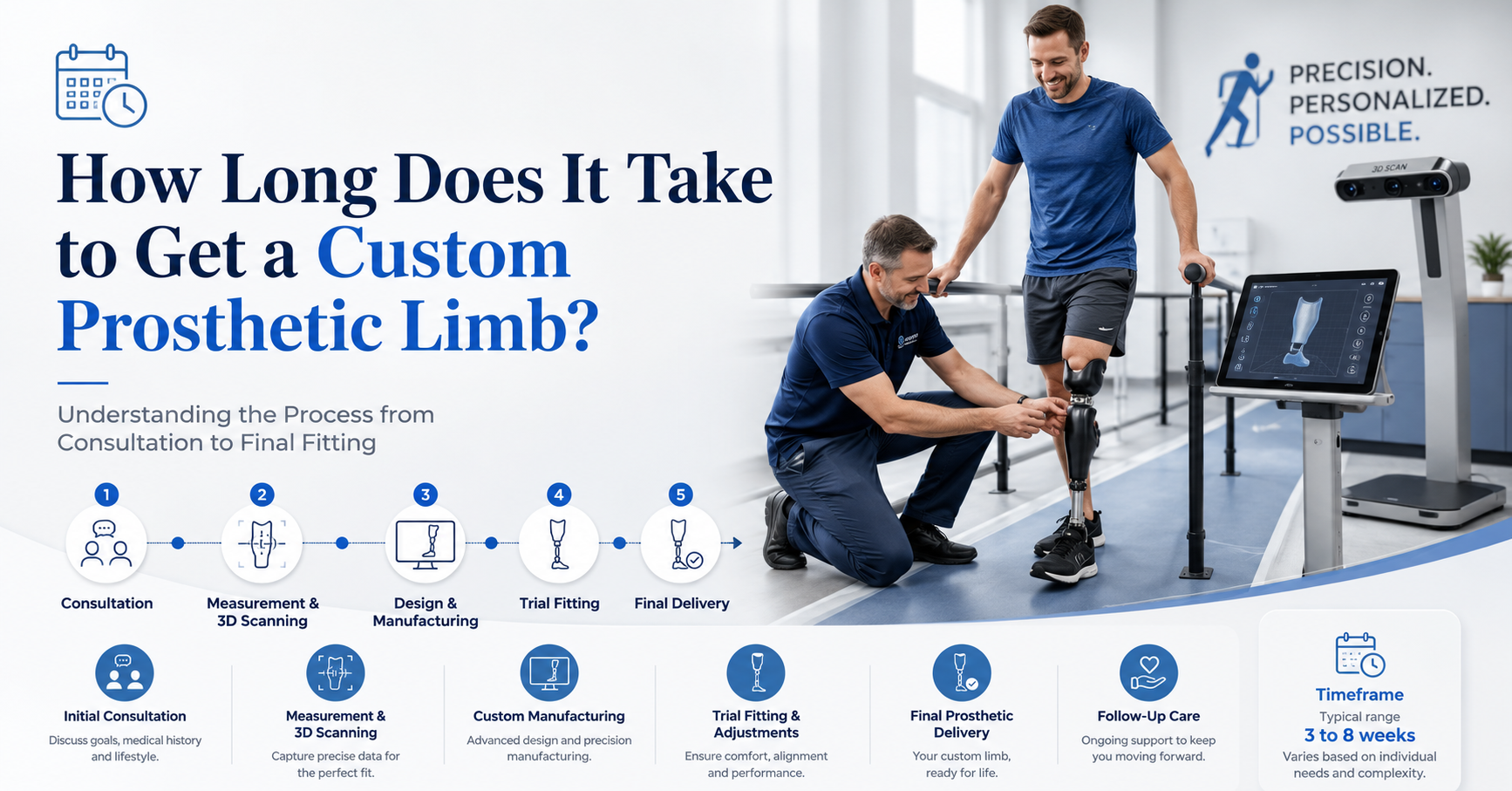
The custom prosthetic process begins with comprehensive evaluation lasting 1-2 hours. Your prosthetist assesses your residual limb condition, measures dimensions, evaluates your mobility and balance, discusses activity goals, and reviews lifestyle requirements. This assessment phase requires 1-2 appointments and typically concludes within 1 week. During this period, prosthetists photograph your residual limb, take detailed measurements, evaluate skin condition, and discuss prosthetic options matching your goals. This foundational phase is critical as incomplete assessments lead to poorly fitting prosthetics. Taking time for thorough evaluation actually saves time downstream by preventing fitting complications.
Component Selection and Design Phase
Following assessment, your prosthetist recommends prosthetic components and designs optimizing for your needs. This phase typically requires 1-2 weeks as prosthetists research options, consult with manufacturers, and present recommendations. You’ll learn about different feet (microprocessor versus passive), socket materials, suspension systems, and customization options. If you’re uncertain about selections, additional appointments might extend this phase to 3 weeks. Rushed component selection often leads to suboptimal choices requiring expensive modifications later. Allowing adequate time for this phase ensures well-informed decisions.
Manufacturing and Fabrication Timeline
Once components are selected and designs finalized, manufacturers begin fabrication. Custom prosthetic manufacturing typically requires 2-4 weeks depending on complexity and manufacturer workload. Standard designs might be completed within 10-14 days, while complex customizations might require 3-4 weeks. During manufacturing, prosthetists monitor progress, approve quality checkpoints, and coordinate delivery. Some manufacturers offer expedited production (1-2 weeks) for additional fees. Manufacturing represents the longest single component of the timeline. Factors like seasonal demand, component availability, and customization complexity affect manufacturing duration.
Initial Fitting and Adjustments
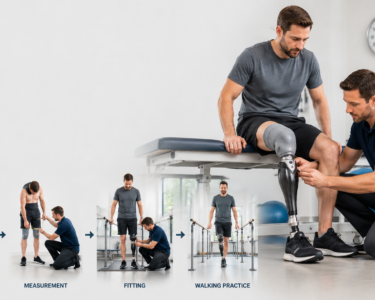
Upon prosthetic completion, your initial fitting appointment typically lasts 2-3 hours. Prosthetists apply prosthetics, evaluate comfort and function, and make necessary adjustments. The initial fitting might identify alignment issues, pressure points, or comfort concerns requiring modifications. Many prosthetics require 2-3 fitting appointments over 1-2 weeks as prosthetists refine adjustments. Minor adjustments might be completed during your appointment, while significant modifications might require 3-5 day turnarounds. Plan for 2 weeks minimum from prosthetic delivery through initial fitting and critical adjustments.
Adaptation and Training Period
Beyond mechanical fitting, successful prosthetics require adaptation—your body learning to use the prosthetic effectively. Initial adaptation typically spans 2-4 weeks as you gradually increase wearing duration and activity levels. Most prosthetists recommend starting with 2-4 hour wearing periods, gradually extending duration as comfort increases. During adaptation, you’ll notice discomfort decreasing, confidence increasing, and movement becoming more natural. While you can technically use your prosthetic immediately after fitting, optimal results require this gradual adaptation period. Some advanced prosthetics demand 4-8 weeks adaptation as your nervous system learns control mechanisms.
Total Timeline and Factors Affecting Duration
Combining all phases, custom prosthetic acquisition typically requires 8-14 weeks from initial evaluation to comfortable functionality. Simple prosthetics might be completed in 6-8 weeks, while complex customizations might extend to 16+ weeks. Timeline factors include prosthetic type (everyday, sports, specialty), manufacturer capacity, your medical status (wound healing for recent amputees), and your adaptation pace. Working directly with manufacturers can reduce timelines 1-2 weeks by avoiding retail intermediary delays. Establishing clear timelines at your initial evaluation helps set appropriate expectations and allows planning around prosthetic availability.
Planning Your Prosthetic Timeline Effectively
Ready to begin your custom prosthetic journey? Connect with PROACTIVE Technical Orthopaedics, the best prosthetics manufacturer in India, to discuss your timeline and learn how our streamlined processes deliver quality prosthetics efficiently while maintaining personalized customization matching your unique needs.
Frequently Asked Questions
What’s the fastest possible timeline for getting a prosthetic?
In urgent situations, expedited manufacturing can deliver basic prosthetics in 4-6 weeks total, though 8-10 weeks is typical even with expedited options.
Do all prosthetics require the same timeline?
No, simple everyday prosthetics might be completed in 6-8 weeks, while specialized prosthetics (sports, upper limb) might require 12-16 weeks.
Can I receive my prosthetic faster by purchasing from stock options?
Yes, choosing standardized designs from existing stock can reduce timelines to 4-6 weeks total, though customization typically requires 8-14 weeks.
How long can I wear my new prosthetic immediately after receiving it?
Most prosthetists recommend starting with 2-4 hours daily, gradually increasing duration over 2-4 weeks as your body adapts to the prosthetic.
What delays most commonly extend prosthetic timelines?
Component availability issues, incomplete initial assessments requiring rework, manufacturing complications, or unexpected fitting challenges most commonly extend timelines.
Can working directly with manufacturers reduce prosthetic timelines?
Yes, direct manufacturer relationships often reduce timelines by 1-2 weeks by eliminating retail intermediary coordination delays.
How many fitting appointments typically occur before prosthetic completion?
Plan for 3-5 fitting appointments from delivery through adaptation—initial fitting (2-3 hours), plus 2-3 adjustment appointments (1 hour each).
What happens if my prosthetic doesn’t fit properly at initial fitting?
Prosthetists make adjustments during fitting appointments. Significant complications might require returning to manufacturers for modifications, potentially adding 1-2 weeks.
Should I take time off work to receive my prosthetic?
Yes, allocate at least 1-2 weeks for initial fitting and adaptation. Multiple appointments and adjustment periods during this time are necessary.
How long before I can return to normal activities after receiving my prosthetic?
Most users resume normal activities within 2-4 weeks with a new prosthetic, though complete adaptation and confidence building might require 6-8 weeks.