
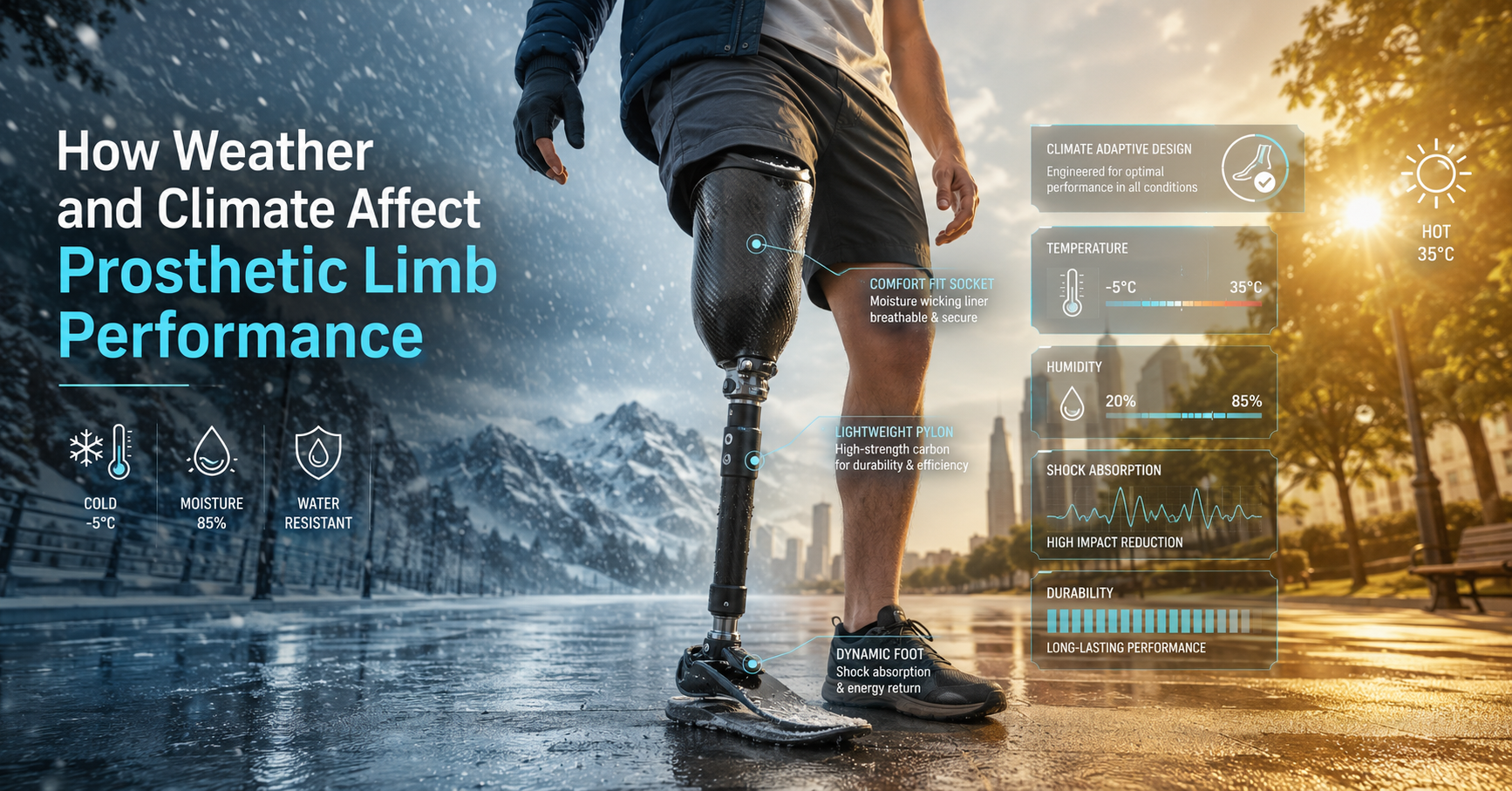

Summary: Heat, humidity, cold, rain, dust and rapid temperature changes can affect residual-limb volume, skin condition, socket comfort and some prosthetic components. The response varies by person and device. This guide explains common climate-related problems, seasonal care routines and safe ways to protect mechanical and electronic prostheses without making unapproved changes.
A prosthesis works at the point where the body meets a mechanical or electronic device. Weather can influence both sides of that connection. Heat and humidity may increase sweat and swelling. Cold or dry air may change skin condition and limb volume. Water, dust and salt can damage components that are not designed for those environments.
Climate does not affect every user in the same way. Medical conditions, circulation, activity, liner type, socket design and hydration all influence the response. Device protection also varies widely: one microprocessor knee may tolerate temporary freshwater exposure, while another must be kept dry.
The safest approach is to understand your own pattern and follow the instructions supplied with each component. General labels such as “weatherproof,” “water-resistant” and “waterproof” are not interchangeable.
Why Weather Changes Socket Fit?
The residual limb is living tissue. Its volume can change with circulation, fluid balance, activity, body temperature, medication, diet and time of day. The socket is comparatively rigid, so even a modest change in volume can alter contact and pressure.
In warm conditions, some users experience swelling and a tighter fit. Sweat may reduce suspension or allow movement, depending on the liner and suspension system. In colder conditions, some users notice reduced volume, a looser socket or dry skin. These are common patterns, not universal rules.
If you regularly struggle to judge fit, review How to Tell if Your Prosthetic Leg Fits Correctly.
Hot Weather and High Humidity
Sweat Builds Up Inside the Socket
Sockets and liners limit airflow. As temperature and humidity rise, sweat may collect against the skin instead of evaporating. This can:
- Soften the skin and make it more vulnerable to friction
- Reduce the grip of some suspension systems
- Allow the limb to move or rotate inside the socket
- Increase odour and bacterial growth
- Make the socket feel heavy, slippery or unstable
Moisture-management products must be compatible with the liner and the user’s skin. Do not place talcum powder, oils or unapproved creams inside the interface.
Swelling Can Create New Pressure Points
Heat, long periods of standing and activity can contribute to limb-volume changes. A socket that felt comfortable in the morning may become tight later. The user may notice pressure at bony areas, difficulty entering the socket or altered circulation.
Do not force the residual limb into a socket that has become painfully tight. Remove the prosthesis, inspect the skin and follow the volume-management plan provided by the prosthetist.
Heat Can Affect Electronics and Batteries
Microprocessor knees, powered ankles, myoelectric hands and chargers have manufacturer-defined operating and storage temperatures. Leaving a prosthesis in a closed car, beside a heater or in direct sun can expose it to temperatures beyond those limits.
Excessive heat may reduce battery performance, affect adhesives or damage electronic seals. Check the component manual for exact limits; do not rely on a general range for all devices.
Managing a Prosthesis in Hot Conditions
- Clean the residual limb and liner as instructed, often daily.
- Dry the skin and liner completely before donning.
- Carry a clean cloth, spare prosthetic socks or a spare liner if prescribed.
- Take planned breaks in a clean, private space to dry the interface.
- Wear breathable clothing that does not bunch at the socket edge.
- Drink fluids according to your medical team’s advice.
- Ask the prosthetist about suitable antiperspirants or moisture-wicking interfaces.
- Inspect the skin after activity and again at the end of the day.
Detailed cleaning guidance is available in How to Clean, Care and Maintain a Prosthetic Liner at Home.
Cold and Dry Weather
Limb Volume May Decrease
Some users experience a looser fit in cold weather or after moving from a warm room into cold outdoor conditions. Extra movement can increase friction, reduce control and create a feeling that the prosthesis is pulling away.
Use only the sock-ply or adjustable-socket method prescribed for you. Adding random padding can concentrate pressure and hide a fit problem.
Skin May Become Dry or Cracked
Low humidity, hot indoor air and repeated washing can dry the residual limb. Cracks provide a route for infection and may make liner contact painful. A clinician may recommend a suitable moisturiser at night, after the prosthesis has been removed, but products should not leave the skin slippery before donning.
Some Materials and Components Respond Differently
Very low temperatures can affect battery output, hydraulic behaviour, plastics and elastomers. Ordinary seasonal cold does not automatically damage a prosthesis, but extreme conditions may fall outside its approved range. Allow a cold device to return gradually to room temperature and follow the manufacturer’s instructions.
Do not place a prosthesis on a radiator, use a hair dryer on the liner or apply direct heat to speed warming. Excess heat can damage materials and adhesives.
Rain, Monsoon and Everyday Water Exposure
Water Resistance Depends on the Exact Device
A mechanical prosthesis is not automatically waterproof, and an electronic component with an IP rating is not automatically suitable for swimming. An ingress-protection rating describes tested protection against dust and water under defined conditions. It may not cover:
- Salt water
- Chlorinated pool water
- Soap, detergents or chemicals
- High-pressure water jets
- Repeated long-term immersion
- Corrosion of mechanical parts
Check the manual for every knee, foot, hand, rotator and charger. A waterproof foot does not make the knee, adapters or cosmetic cover waterproof.
For information about devices designed for wet environments, read Affordable Waterproof Prosthesis for Indian Amputees.
What to Do After Unexpected Rain
If the device is approved for incidental rain, wipe it with a clean cloth and dry it according to the manual. Remove and dry damp socks or covers. If a non-water-resistant electronic component becomes wet, switch it off only if the instructions say it is safe to do so and contact the prosthetist or authorised service centre.
Do not charge wet electronics. Do not dismantle sealed components or use compressed air unless the manufacturer specifically permits it.
Coastal Climate, Salt and Chlorine
Salt is more corrosive than freshwater and can remain on surfaces after the water evaporates. Pool chemicals can also affect metal, seals and cosmetic materials. Only components specifically approved for these environments should be exposed.
After approved saltwater or pool use, follow the rinsing and drying procedure in the device manual. A separate water-activity prosthesis may be safer and easier to maintain for frequent swimming, bathing or beach use.
Dust, Sand and Dry Environments
Fine particles can enter joints, damage cosmetic covers, contaminate liners and interfere with charging ports or moving parts. Sand can act as an abrasive at the skin interface or inside mechanical mechanisms.
In dusty conditions:
- Keep covers and port caps closed as instructed.
- Avoid placing the prosthesis directly on sand or loose soil.
- Clean the liner and skin before re-donning if particles enter the socket.
- Use only approved brushes or cleaning methods.
- Arrange inspection if a joint begins grinding, clicking or moving differently.
Never lubricate a prosthetic joint with household oil. It can attract dirt, damage seals or create unsafe movement.
Rapid Changes Between Air Conditioning and Outdoor Heat
Moving repeatedly between a cool, dry indoor space and hot, humid air may lead to changing skin moisture and limb volume. Condensation can also form on cold surfaces when they enter humid conditions.
Users who work in refrigerated areas, hot factories, commercial kitchens or outdoor environments may need a job-specific plan. This can include scheduled drying breaks, spare interfaces, protective covers and more frequent clinical checks.
How Climate Affects Different Prosthetic Systems
Mechanical Knees and Feet
These devices may tolerate wider conditions than electronics, but bearings, bushings, hydraulic units, fasteners and metal surfaces still require protection and maintenance. A change in resistance, noise or stability should be inspected.
Microprocessor and Powered Components
Electronic systems may contain sensors, motors, batteries and charging contacts. Temperature and water limits are product-specific. Battery runtime can change in extreme temperatures, so users should plan charging and carry the approved charger when travelling.
Myoelectric Upper-Limb Prostheses
Sweat can affect electrode contact and signal quality. Cold may reduce battery performance or make gloves and socket materials feel stiffer. Water can reach motors or electronics through a damaged glove, so cracks should be repaired promptly.
Liners, Sleeves and Suspension
Silicone, gel, urethane and textile interfaces behave differently with heat and moisture. Sweat may cause slipping, while salt deposits and unapproved cleaners can shorten material life. Follow the product-specific routine rather than assuming all liners can be washed or dried in the same way.
A Practical Seasonal Care Kit
Depending on the prosthetist’s advice, a useful kit may include:
- A clean drying cloth
- Approved skin and liner cleanser
- Spare socks, sheath or liner
- A small mirror for skin inspection
- Manufacturer-approved protective cover
- Charging equipment and safe power adapter
- Component instructions or a digital copy
- Contact details for the prosthetic clinic
When travelling, keep essential prosthetic supplies with you instead of placing every item in checked luggage. How to Handle Your Prosthetic During Long Bus or Train Rides offers additional planning advice.
Warning Signs That Need Professional Attention
Contact the prosthetic clinic if weather-related changes lead to:
- Redness that does not settle after removing the device
- Blisters, broken skin, discharge or signs of infection
- Persistent swelling, numbness or colour change
- Repeated loss of suspension or instability
- New clicking, grinding, corrosion or visible damage
- A battery that overheats, swells or loses runtime suddenly
- Electronic warnings or unresponsive controls
- A fit problem that cannot be managed with the approved method
An overheated or damaged battery should be treated according to manufacturer safety instructions and not charged until assessed.
Year-Round Performance Starts with the Right Routine
Weather affects the prosthesis through skin, limb volume, moisture, materials and electronics. The best protection is a routine based on the actual device and the user’s environment: keep the interface clean and dry, monitor skin, respect water and temperature ratings, and arrange early review when function changes.
Seasonal preparation is also part of maintenance. Review Caring for Your Prosthetic Limb for a broader day-to-day care plan.
Get Climate-Appropriate Prosthetic Guidance
For help selecting and maintaining components for Indian heat, monsoon, dust or other working conditions, contact PROACTIVE Technical Orthopaedics. Professional advice can help match component features and care requirements to your environment and daily activities.
Frequently Asked Questions
1. Does hot weather make a prosthetic socket tighter?
It can. Heat, activity and fluid changes may increase residual-limb volume for some users, creating a tighter fit. Others mainly notice sweat or suspension changes. Persistent tightness, pain or circulation concerns need professional assessment.
2. Why does my prosthetic leg slip when I sweat?
Moisture can reduce friction or interfere with the seal or liner-to-skin contact used by some suspension systems. Remove the prosthesis safely, dry the interface and follow the sweat-management plan recommended for your system.
3. Can I use deodorant or antiperspirant inside my prosthetic liner?
Do not use ordinary products without clinical approval. Fragrance, alcohol or residue may irritate skin or damage the liner. A prosthetist or dermatologist can recommend a compatible product and safe application method.
4. Can cold weather damage a prosthetic limb?
Normal cold may cause no damage, but extreme temperatures can affect batteries, hydraulic behaviour, plastics and other materials. Stay within the manufacturer’s operating and storage limits and avoid direct heating.
5. Is a microprocessor knee waterproof?
Some are rated for defined water exposure, while others must remain dry. Check the exact model manual. An IP rating does not necessarily include salt water, chlorine, soap or unlimited immersion.
6. What should I do if my prosthesis gets wet in rain?
Follow the component instructions. Dry approved surfaces, change damp socks or liners and do not charge wet electronics. If a non-water-resistant part was soaked or behaves differently, contact the service provider.
7. Can I swim with my everyday prosthetic leg?
Only if every exposed component is approved for the intended water and depth. Many users need a separate bathing or swimming prosthesis. Ask the prosthetist before entering a pool, sea, lake or shower.
8. Does humidity increase skin infection risk?
High humidity can keep the socket environment warm and damp, supporting bacterial or fungal growth and softening the skin. Daily cleaning, complete drying and early attention to irritation help reduce risk.
9. How can I protect a prosthesis from sand and dust?
Use approved covers, close charging-port caps, avoid placing the device on sand and clean it according to the manual. Seek inspection if particles enter a joint or cause unusual noise or resistance.
10. Should alignment be checked when seasons change?
Not solely because the calendar changes, but a review is sensible if seasonal volume changes alter comfort, stability or gait. The problem may involve fit, sock management, suspension or alignment and should be assessed as a complete system.