

Summary: A complete prosthesis is not replaced on one fixed schedule. Liners and socks may wear within months, while sockets, feet and knees may last several years. Fit changes, activity, growth, environment and manufacturer service requirements matter more than age alone. This guide provides practical planning ranges, warning signs and a maintenance routine for lower- and upper-limb prosthetic components.
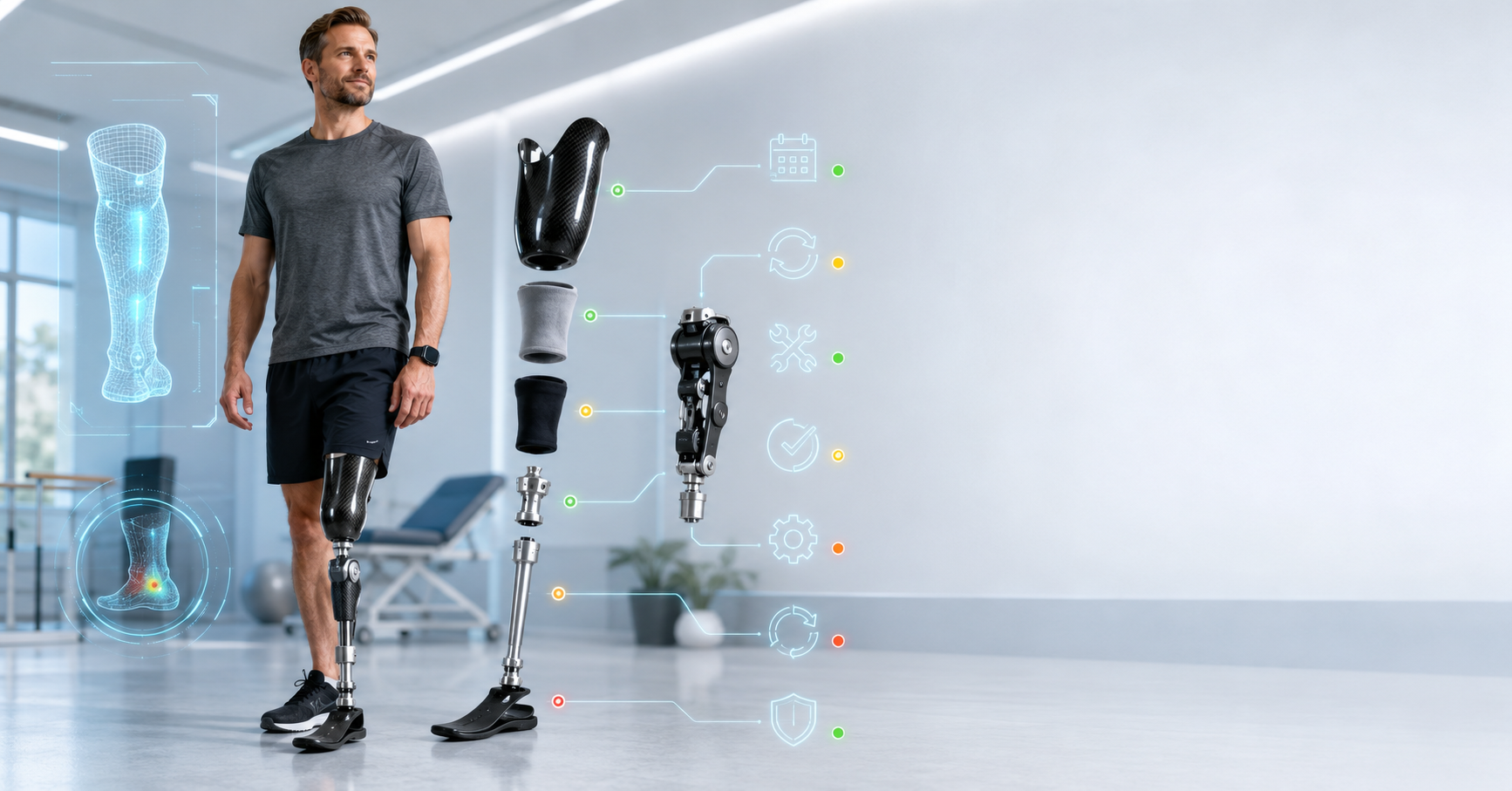
Asking how long a prosthetic limb lasts sounds simple, but a prosthesis is a system made from parts that age at different rates. A liner touches skin and flexes every day. A socket may remain structurally sound but stop fitting because the residual limb changes. A knee may continue working for years while still requiring scheduled service.
Replacement is usually based on one or more of four reasons:
- The component is worn, damaged or no longer safe.
- The socket or interface no longer fits.
- The user’s body, activity or functional goals have changed.
- The manufacturer requires inspection, service or replacement.
The ranges below are planning guides, not warranties or expiry dates. Follow the instructions for the exact product and ask the prosthetist before continuing to use a damaged or unreliable component.
Quick Replacement Planning Guide
| Component | Common planning range | Replace or review sooner when |
|---|---|---|
| Gel or silicone liner | About 4–12 months | Cracks, thinning, stretching, loss of cushioning, odour or slipping |
| Suspension sleeve | About 6–12 months | Holes, loss of elasticity, seal failure or repeated air leaks |
| Socks, sheaths and shrinkers | Often 3–6 months with regular use | Thinning, wrinkles, poor elasticity, odour or loss of fit control |
| Socket | Commonly 1–3 years | Limb-volume change, pain, movement, skin problems, growth or structural damage |
| Suspension hardware | Commonly 1–3 years, product dependent | Worn pin, lock, valve, strap, seal or unreliable attachment |
| Prosthetic foot | Often 2–5 years | Reduced rollover, cracks, noise, water damage or changed activity needs |
| Mechanical knee | Often 3–5 years | Instability, abnormal resistance, looseness, noise or failed service checks |
| Microprocessor knee | Often 4–6 years, with model-specific service | Warnings, battery decline, seal damage, control changes or service deadline |
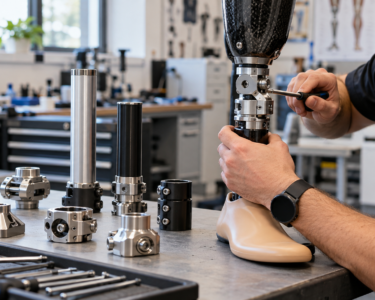
| Pylon and adapters | No universal routine interval | Corrosion, impact, looseness, cracks, deformation or alignment change |
| Upper-limb cable, glove or harness | Condition and use dependent | Fraying, cracks, stains, lost grip, poor control or uncomfortable pressure |
These broad ranges should not be used to delay care. A two-month-old liner with a tear may need immediate replacement, while a well-maintained component may remain serviceable beyond an average range after professional inspection.
Liners and Interfaces
Typical Replacement Pattern
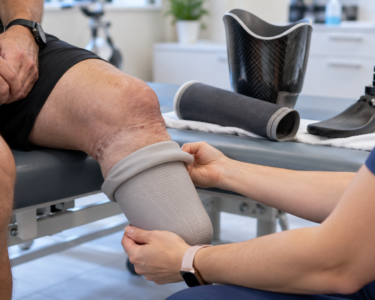
Gel, silicone and urethane liners are repeatedly stretched, compressed and exposed to sweat, skin oils and cleaning. Many daily users replace them around every six months, while some products and users may fall within a wider four-to-twelve-month range.
Very active users, people who perspire heavily and users who alternate only one liner may need earlier replacement. Rotating two prescribed liners can provide drying time and distribute wear, but both still need inspection.
Signs a Liner Needs Replacement
- Cracks, tears, pinholes or splitting
- A thinner or permanently stretched area
- Loss of cushioning
- A distal umbrella or pin that appears loose
- Repeated slipping or rotation
- Odour that remains after correct cleaning
- New skin irritation without another clear cause
Do not repair a liner with household glue or tape. These products may irritate skin, alter thickness and hide further damage.
For daily care, use How to Clean, Care and Maintain a Prosthetic Liner at Home.
Suspension Sleeves, Seals, Valves and Locks
Suspension keeps the prosthesis securely connected to the body. A sleeve or seal may lose elasticity, develop tiny holes or fail to maintain suction. Pin locks can collect debris or show wear. Valves and vacuum systems can develop leaks.
Replacement timing depends on the system, but unreliable suspension requires prompt review regardless of age. Warning signs include repeated loss of suction, clicking that is different from normal lock engagement, unexpected pistoning, a pin that does not release correctly or a sleeve that rolls and exposes the seal.
Never apply oil, glue or an unapproved sealant to a suspension mechanism.
Prosthetic Socks, Sheaths and Shrinkers
These textiles can stretch, thin and lose their ability to manage moisture or volume. Regular-use items often need replacement within several months, but rotation, fabric and washing routine make a large difference.
Replace them when they develop holes, permanent wrinkles, hardened areas, loss of elasticity or persistent odour. A stretched sock may no longer provide its labelled ply, making fit changes difficult to judge.
Use only the sock type and ply strategy recommended for the socket. Adding multiple old socks is not a safe substitute for correcting a major fit problem.
Prosthetic Sockets
Why a Structurally Good Socket May Still Need Replacement
Sockets are commonly replaced every one to three years, but the range is highly individual. The socket may not be worn out; the residual limb may have changed enough that safe contact can no longer be restored with socks, pads or adjustment.
Volume changes are often fastest during the first year after amputation. Weight change, muscle development, swelling, health conditions and activity can also alter fit later.
Signs the Socket Needs Major Adjustment or Replacement
- Persistent pain or pressure despite appropriate adjustment
- Recurrent redness, blisters or wounds
- Excessive sock ply or repeated padding to maintain contact
- Rotation or pistoning
- Loss of control or confidence
- Cracks, delamination, softening or damage
- A socket edge that no longer supports tissue correctly
- Major body-weight or residual-limb shape change
Small modifications can extend socket use when the structure and overall shape remain suitable. A replacement is more appropriate when changes are too large, widespread or unsafe.
How to Tell if Your Prosthetic Leg Fits Correctly can help users recognise fit concerns early.
Prosthetic Feet
Many prosthetic feet are used for approximately two to five years, but this is not a guaranteed lifespan. User weight, impact, step count, terrain, water exposure and foot category affect wear.
The outer foot shell may wear before the internal keel or hydraulic system. Sand or debris inside a torn shell can damage the foot. Signs requiring inspection include:
- A change in rollover or toe stiffness
- Cracking, splitting or exposed internal material
- New noise or movement
- A foot that no longer sits flat
- Reduced shock absorption
- Water entry into a non-waterproof design
Do not continue using a foot with suspected structural damage, even if the cosmetic shell hides most of it.
Mechanical Knees
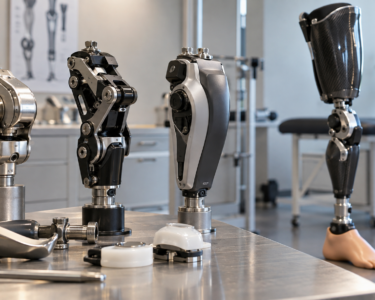
A mechanical knee may remain functional for several years, but bushings, bearings, hydraulic or pneumatic systems and stance-control mechanisms can wear. An often-quoted planning range is three to five years, with maintenance occurring sooner.
Arrange immediate review for unexpected buckling, delayed swing, excessive looseness, oil leakage, grinding or a sudden change in resistance. The clinic may service or replace an internal part without replacing the entire prosthesis.
Microprocessor Knees and Powered Components
Microprocessor knees, powered ankles and powered upper-limb devices have model-specific service intervals. Some manufacturers require inspection after a defined time or number of steps, even when the component appears normal. A four-to-six-year planning range sometimes used for microprocessor knees should never replace the official schedule.
Battery capacity, seals, sensors and charging equipment also require attention. Seek authorised service if you see warning lights, error messages, unusual heat, swelling, rapid battery loss or inconsistent control.
Software updates and scheduled maintenance can preserve function. Do not open sealed electronics or use a charger not approved for the device.
Pylons, Adapters, Fasteners and Structural Parts
These parts do not have one universal replacement interval. They may last for years when used within their weight and activity ratings, but impacts, corrosion and loose fasteners can make them unsafe.
Professional inspection should check structural integrity and alignment. The user should report:
- A recent fall, collision or heavy impact
- Visible bending, cracking or corrosion
- A component that rotates unexpectedly
- Clicking or movement at an adapter
- A change in prosthetic length or alignment
Users should not tighten structural screws at home unless the manufacturer and prosthetist have provided an approved user adjustment and exact instructions.
Cosmetic Covers and Foot Shells
Cosmetic foam covers, silicone skins, gloves and foot shells may wear faster than the structural device. Tears, stains and surface damage can be more than cosmetic if they allow water or dirt to reach internal parts.
Upper-limb gloves should be replaced when cracks expose mechanical or electronic components. A foot shell with a split should be inspected before sand, stones or water cause further damage.
Upper-Limb Cables, Harnesses and Terminal Devices
Body-powered systems rely on cables, housings, straps and harnesses. Frayed cable, rough operation, reduced opening distance or repeated cable breakage needs professional repair. Harnesses should be replaced or adjusted when webbing stretches, stitching fails or pressure causes skin problems.
Hooks, hands, wrists and elbows are replaced according to function, damage and serviceability rather than one calendar interval. Myoelectric electrodes may need cleaning, socket adjustment or replacement when signal control changes; the motorised hand is not always the cause.
Children and Adolescents
Children may outgrow a socket well before a component reaches its expected mechanical lifespan. Growth can change length, alignment, socket fit and joint position. Increased activity or a sudden growth spurt may require more frequent review.
Signs include visible shortness, skin pressure, reduced control, avoidance of the prosthesis or inability to perform tasks previously managed. Learn more in How Often Should a Child’s Prosthesis Be Replaced?.
How Often Should a Prosthesis Be Professionally Checked?
Many services use a six-month review as a practical baseline, with more frequent checks for new users, children, high-activity users and complex electronic components. The correct schedule should be personalised and include manufacturer instructions.
Do not wait for the next routine visit if function or comfort changes. Early repair is often smaller, safer and less expensive than continuing until another part is damaged.
How to Extend Component Life Safely
- Clean skin, liners and sockets according to instructions.
- Dry all approved washable items fully before use.
- Keep non-waterproof parts away from rain and immersion.
- Protect components from excessive heat, dust, sand and salt.
- Rotate liners and socks if prescribed.
- Charge electronics with the approved equipment.
- Attend scheduled service and software updates.
- Report changes in noise, fit or function early.
- Stay within the component’s user-weight and activity rating.
For a complete routine, see Caring for Your Prosthetic Limb.
Replace by Condition, Fit and Function
The calendar is useful for planning, but safe replacement decisions depend on condition, fit, function and manufacturer requirements. Soft interfaces usually need attention sooner than structural components, while a socket may need replacement because the body changes rather than because the material fails.
Keep a record of component models, delivery dates, warranties and service visits. Regular review and early reporting can reduce unexpected downtime and help the prosthesis remain comfortable, dependable and appropriate for current goals.
Plan Your Prosthetic Maintenance with PROACTIVE
For component inspection, replacement options and prosthetic support, contact PROACTIVE Technical Orthopaedics, the best prosthetics supplier in India. A professional assessment can determine whether your prosthesis requires cleaning, adjustment, repair, scheduled maintenance or complete component replacement to ensure safe, comfortable and reliable performance.
Frequently Asked Questions
1. How long does a complete prosthetic leg last?
A frequently used planning estimate is three to five years, but individual components and sockets may need replacement sooner or later. Fit, activity, growth, body changes, damage and manufacturer requirements determine the actual timing.
2. How often should a prosthetic liner be replaced?
Many users replace a liner around every six months, with a broader range of roughly four to twelve months. Replace it sooner if it cracks, stretches, thins, loses cushioning or causes suspension and skin problems.
3. How often does a prosthetic socket need replacement?
Sockets commonly last one to three years, but residual-limb change can make a newer socket unsuitable. Pain, excessive sock use, movement, skin breakdown and structural damage are stronger signals than age alone.
4. When should a prosthetic foot be replaced?
Many feet are used for two to five years. Earlier replacement or repair may be necessary after cracks, reduced rollover, noise, water damage, a major impact or a change in the user’s weight or activity needs.
5. How long does a prosthetic knee last?
Mechanical knees are often planned for roughly three to five years, while microprocessor units may be used around four to six years. Both require model-specific inspection and service, and unsafe function needs immediate review.
6. Do prosthetic socks expire?
They do not usually have a simple expiry date, but they lose thickness, shape and elasticity. Replace socks that are thin, stretched, wrinkled, damaged or no longer manage fit reliably.
7. Can a prosthetic component be repaired instead of replaced?
Often, yes. Locks, valves, covers, cables or other serviceable parts may be repaired or replaced individually. Structural and electronic repairs should be completed only by qualified or authorised personnel.
8. Does insurance or funding replace a prosthesis on a fixed schedule?
Policies vary. Many funders require evidence that replacement is medically or functionally necessary rather than approving it only because a certain number of years has passed. Keep clinical and service records.
9. What should I do if my prosthesis starts clicking?
Stop and determine whether the sound is normal for the lock or joint. New clicking, grinding or looseness should be assessed promptly. Do not tighten structural fasteners or lubricate joints yourself.
10. Should I keep a spare prosthetic liner or component?
A spare liner and essential consumables can reduce disruption if they are the correct model and fit. Spare major components are less common. Discuss a backup plan with the prosthetist, especially before travel or demanding work.