

Understanding Prosthetic Liners, Sockets, and Suspension Systems
Educational Guide
| SummaryThe liner, socket, and suspension system form the critical interface between the residual limb and a prosthesis. This guide explains how each part works, common material and design options, why fit changes over time, and how good interface management can improve comfort, control, and confidence. |
Modern lower limb prosthetics combine clinical assessment, custom fitting, and engineering. The information below explains common prosthetic concepts in plain language, but component selection and adjustment should always be individualized by a qualified prosthetist and rehabilitation team.
Why the Prosthetic Interface Matters
When people think about a prosthetic leg, they often focus on the foot, knee, or visible mechanical parts. In daily use, however, the components closest to the body are just as important. The liner, socket, and suspension system determine how the prosthesis contacts the residual limb, how forces are transferred, and how securely the device stays attached.
A prosthesis that has advanced componentry but an uncomfortable interface may still be difficult to use. Good interface design aims to balance support, pressure distribution, skin protection, control, and practical donning and doffing.
What Is a Prosthetic Liner?
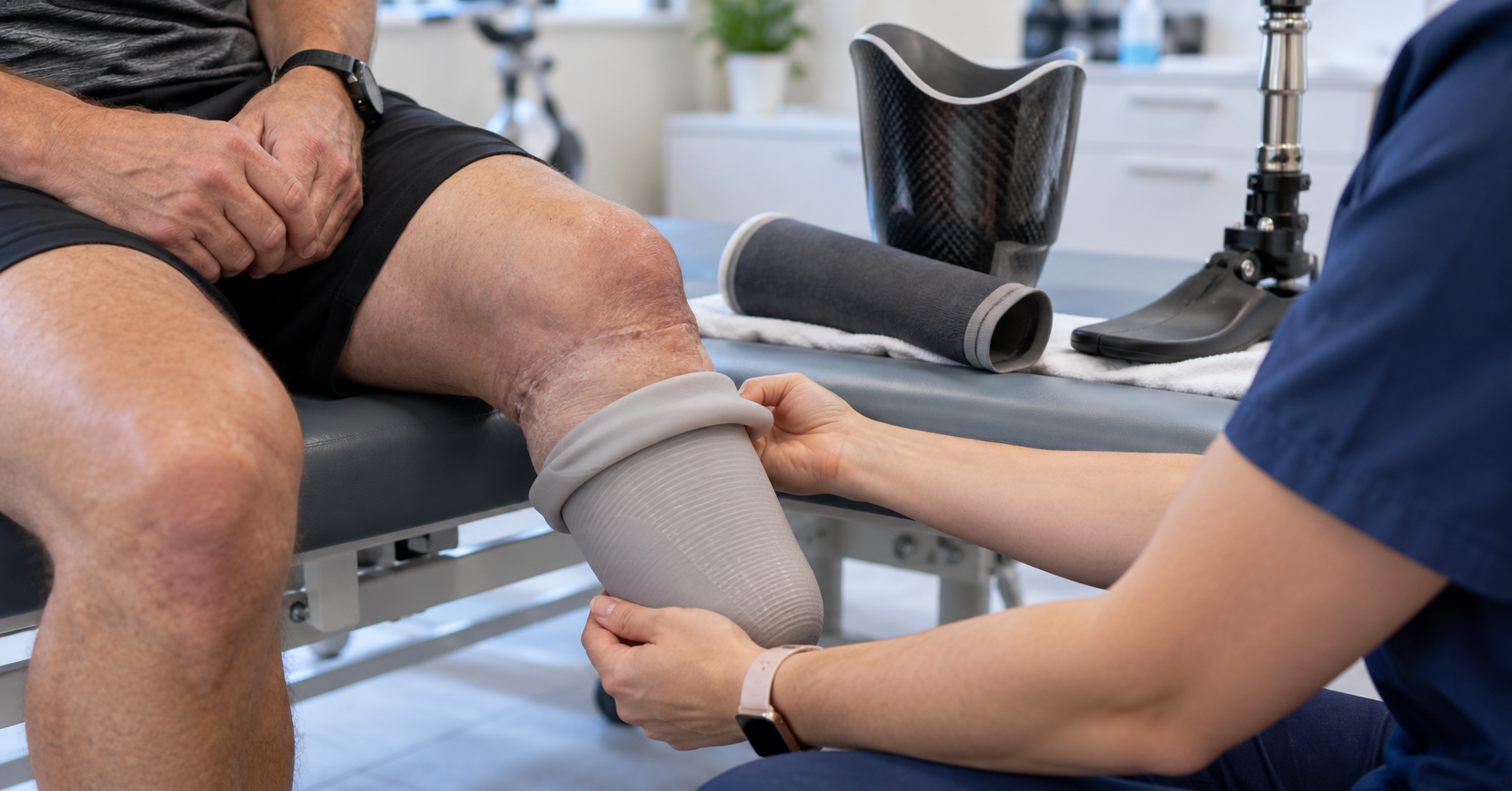
A prosthetic liner is a soft interface worn directly over the residual limb. It sits between the skin and the socket and helps cushion the limb. Depending on the design, the liner may also be part of the suspension system.
Liners are commonly made from silicone, gel-like polymers, urethane, or related elastomeric materials. Each material has different properties in terms of softness, stretch, durability, grip, heat retention, and pressure distribution.
Common Liner Functions
The liner can reduce friction against the socket, protect sensitive skin, improve comfort, and help maintain close contact between the limb and the prosthesis. In a locking system, the liner may include a distal pin that engages a lock in the socket. In suction or vacuum systems, the liner may help create an air-tight or near air-tight seal.
Liner Thickness and Fit
Liner thickness influences how the residual limb fits inside the socket. A thicker liner may offer more cushioning but also changes space inside the socket. A thinner liner may give more direct control but may not be appropriate for every limb. The prosthetist chooses liner type and thickness as part of the complete socket design.
What Is a Prosthetic Socket?
The socket is the custom-made structure that surrounds the residual limb and connects the person to the rest of the prosthesis. Its shape is not simply a copy of the limb. The prosthetist designs it to distribute pressure, relieve sensitive areas, provide stability, and allow effective control.
Sockets may be made from laminated composite materials, thermoplastics, carbon-fiber-reinforced materials, or combinations of different materials. During fitting, the prosthetist may first use a diagnostic or check socket to evaluate pressure, alignment, and comfort before fabricating the definitive socket.
Socket Fit Is Dynamic
The residual limb is living tissue, so its volume can change. Swelling, fluid shifts, activity, temperature, body weight, muscle change, and the passage of time can all alter fit. This means a socket that felt ideal several months ago may eventually feel too loose or too tight.
Small volume changes may be managed with prosthetic socks, pads, adjustable features, or other methods recommended by the prosthetist. Persistent pain, excessive movement, repeated skin problems, or major volume change may signal the need for a more significant socket adjustment or replacement.
How Suspension Systems Work
Suspension is the way the prosthesis is held onto the body. The goal is to keep the socket connected to the residual limb during standing, walking, sitting, and swing phase without causing harmful pressure or excessive motion.
A good suspension system reduces pistoning, or unwanted vertical movement of the residual limb inside the socket. It can also improve rotational control and make the prosthesis feel more secure.
Pin-Lock Suspension
In a pin-lock system, a pin is attached to the distal end of the liner. When the limb enters the socket, the pin engages a locking mechanism. The user typically presses a release button to remove the prosthesis.
Pin systems are widely used because they provide a clear mechanical connection and can be relatively easy to understand. However, they are not ideal for every residual limb, and some users may experience traction at the distal end or other fit concerns if the socket and liner are not appropriately designed.
Suction Suspension
Suction suspension uses close socket fit and a one-way valve or sealing system to create negative pressure as air is expelled from the socket. The resulting suction helps hold the prosthesis in place.
This approach can provide intimate contact and reduce pistoning, but it relies on appropriate limb shape, socket fit, and skin tolerance. Donning technique is important because air leakage can reduce suspension.
Elevated-Vacuum Suspension
Elevated-vacuum systems use a pump to create and maintain a lower pressure between the liner and socket environment. The aim is to improve connection, reduce movement, and help maintain a consistent socket interface during activity.
Vacuum systems can be mechanical or electronic. They require compatible liners, seals, and socket design, and may involve additional maintenance. They are not automatically appropriate for every user.
Sleeve Suspension
A suspension sleeve is an elastic sleeve that overlaps the top of the socket and extends onto the thigh or residual limb. It helps seal or secure the prosthesis and may be used alone or together with another suspension method.
Sleeves can be simple and effective, but they may restrict knee motion in some below-knee users, retain heat, or wear over time. Proper sizing and skin monitoring are important.
Anatomical and Auxiliary Suspension
Some prosthetic sockets use the shape of the body itself for suspension, gripping above a bony prominence or anatomical contour. Other systems use cuffs, belts, straps, or waist suspension to provide additional security.
These options can be useful when suction or locking systems are not suitable, or when extra rotational control or backup suspension is needed.
Managing Prosthetic Socks and Limb Volume
Prosthetic socks are available in different thicknesses, commonly described by ply. They are used to take up space when the residual limb becomes smaller during the day or over time. Adding or removing sock ply can help maintain socket contact.
A sudden need for much more or much less sock thickness, repeated pressure marks, or major changes in comfort should be discussed with a prosthetist. Socks can help manage modest volume fluctuations, but they should not be used to hide a significant fit problem.
Signs That the Interface Needs Attention
Some mild temporary skin redness can occur after prosthetic use, but redness that does not fade, blistering, open sores, unusual swelling, burning, numbness, or persistent pain should not be ignored. Repeated pistoning, difficulty getting the limb fully into the socket, or a feeling that the prosthesis has become loose are also reasons to seek review.
Users should also watch for liner tears, worn suspension sleeves, damaged seals, broken locking mechanisms, unusual odors, or changes in vacuum performance.
Daily Care for Liners and Skin
Routine hygiene helps protect the skin and maintain liner performance. Liners should be cleaned according to the manufacturer’s instructions, thoroughly rinsed when required, and allowed to dry appropriately. The skin should also be checked every day, especially in areas that experience high pressure.
Lotions, powders, or cleaning products can affect some liner materials, so users should avoid adding products unless they are compatible with the prosthetic system and recommended by the clinical team.
Fit, Suspension, and Comfort Must Work Together
A prosthetic socket should not be evaluated in isolation. The liner, socket, suspension system, socks, seals, and component alignment all interact. A change in one part can alter the performance of the others.
This is why prosthetic fitting is an ongoing clinical process rather than a one-time purchase. As the residual limb changes and the user’s goals develop, the prosthetist may adjust the interface to preserve comfort and control.
A Secure Interface Supports Better Prosthetic Use
The liner protects the residual limb, the socket transfers forces and gives control, and the suspension system keeps the prosthesis attached. When all three are well matched, the device can feel more stable and predictable during everyday movement.
Any persistent skin problem, discomfort, or loss of suspension should be discussed with a qualified prosthetist or healthcare professional so the cause can be identified and corrected safely.
Frequently Asked Questions
What is the difference between a prosthetic liner and a socket?
The liner is the soft layer worn against the residual limb; the socket is the rigid or semi-rigid custom structure that surrounds the limb and connects to the prosthesis.
Do all prosthetic users wear a liner?
No. Many do, but some socket and suspension designs use different interfaces based on the individual’s needs.
What materials are prosthetic liners made from?
Common materials include silicone, gel-type polymers, urethane, and related elastomeric materials.
What is prosthetic suspension?
Suspension is the method used to keep the prosthesis attached to the residual limb.
What is pistoning?
Pistoning is unwanted up-and-down movement of the residual limb inside the socket.
How does a pin-lock system work?
A pin on the liner locks into a mechanism at the bottom of the socket and is released when the user removes the prosthesis.
What is the difference between suction and elevated vacuum?
Suction uses negative pressure created by socket fit and valves or seals, while elevated vacuum uses a pump to maintain lower pressure more actively.
Why does socket fit change during the day?
Residual limb volume can change because of fluid shifts, activity, temperature, swelling, and other factors.
When should a prosthetic socket be checked?
It should be reviewed if there is persistent pain, repeated skin breakdown, excessive movement, difficulty donning, or major volume change.
How should a prosthetic liner be cleaned?
Cleaning methods vary by manufacturer, so users should follow the liner’s care instructions and guidance from their prosthetist.
Medical Note
This article is for general educational purposes and does not replace individualized prosthetic or medical advice. Prosthetic components, fit, suspension, alignment, and maintenance should be assessed by qualified healthcare and prosthetic professionals.
At Proactive Technical Orthopaedics, we specialize in selecting and fitting waterproof prosthetics tailored to your lifestyle. As the best prosthetics manufacturer in India, our experts understand water activities and provide solutions that let you swim, shower, and enjoy aquatic recreation confidently. Contact our team today for a consultation—let’s get you back to the activities you love.