

Summary: The best prosthetic leg is not the most expensive model or the one with the most technology. It is the system that matches your amputation level, residual-limb condition, balance, walking environment, activity level, work demands and budget. This guide explains how to compare artificial-leg options in India and what to discuss with a prosthetist before buying.
People searching for the “best prosthetic leg in India” are often given a list of brands or price ranges. That can be useful, but it misses the most important point: a lower-limb prosthesis is a complete system. The socket, suspension, liner, adapters, knee when required, pylon and foot must work together. A high-performance foot cannot compensate for a painful socket, and an advanced knee may be unnecessary if the user needs maximum stability at a slow fixed walking speed. A good buying decision therefore starts with your real daily activities, not a product brochure.
Start With Your Amputation Level: Below Knee or Above Knee?
A below-knee, or transtibial, prosthesis keeps your natural knee joint. That usually reduces the number of moving components and allows the prosthetist to focus on socket comfort, suspension, alignment and foot selection. Protech Ortho offers modular below-knee prosthetic kits that connect the socket to a pylon and foot through different adapter systems.
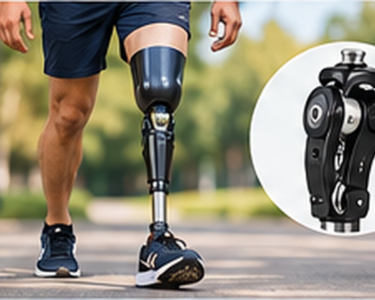
An above-knee, or transfemoral, prosthesis also needs a knee joint. This makes component selection more complex because stance stability, swing control, knee weight, build height and walking speed all influence the result. Buyers should compare prosthetic knee joint options together with the socket and foot rather than shopping for the knee in isolation.
Choose by Activity Level, Not by Marketing Labels
Activity level is a practical way to narrow the options. A person who mainly walks inside the home has different needs from someone who commutes, climbs stairs, works on uneven sites or exercises regularly. International prosthetic practice often describes functional levels from household walking through high-impact activity. In India, your prosthetist may use different clinical terminology, but the principle is the same: choose components that match what you can safely do now and what you are realistically expected to do after rehabilitation.
Low-Activity or Stability-Focused Users
For limited household walking, predictable stability, manageable weight and simple maintenance may matter more than energy return. A basic foot and a stable mechanical knee, where needed, can be appropriate. The objective is not to buy the cheapest device; it is to avoid paying for functions you cannot use while still protecting comfort and safety.
Moderate Community Walkers
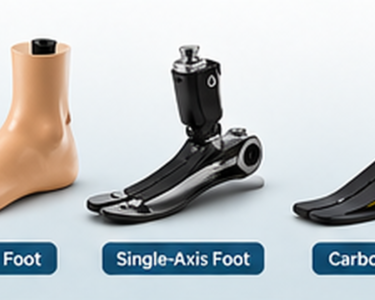
If you regularly walk outside, negotiate curbs and ramps, use public transport or vary your walking speed, you may benefit from better swing control, improved rollover and lighter modular components. Protech Ortho lists SACH and single-axis feet for moderate functional levels and also provides more advanced carbon-foot options on its prosthetic feet range.
High-Activity Users
Active users place higher loads on the prosthesis and may need dynamic-response carbon feet, more adaptive knees, stronger lightweight materials and better suspension. An advanced component only performs well when the socket remains stable during faster walking, direction changes and longer wear time. For this group, gait training and alignment are as important as the hardware.
Socket Fit Should Be Your First Buying Priority
The socket is the part that transfers forces between your body and the prosthesis. If it is too tight, too loose, poorly contoured or unstable, you may develop pain, skin irritation, pistoning or an uneven gait. That is why a “best leg” comparison that ignores socket design is incomplete.
Protech Ortho’s custom lower-limb prosthetic services include cast moulding, diagnostic test sockets, alignment and gait rehabilitation. Ask whether your quote includes test-socket trials, follow-up adjustments and refitting if residual-limb volume changes.
Compare Suspension and Liner Options
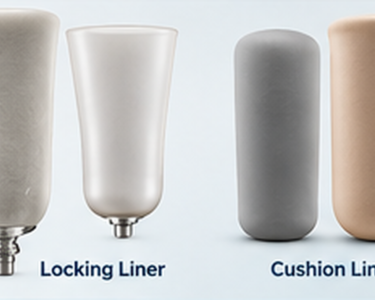
A liner cushions the residual limb and may also form part of the suspension system. Locking liners connect through a distal pin or lock, while cushion liners are commonly paired with suction, vacuum or other suspension methods. The right choice depends on skin condition, limb shape, hand dexterity, heat, activity and how much control you need.
Protech Ortho lists TPE gel and DuraSil silicone locking and cushion liners in different thicknesses and sizes. Do not choose a liner simply because it is softer; the correct material, thickness and suspension strategy must match the socket design.
Choose the Foot for Terrain, Speed and Daily Work
A SACH foot offers a simple, durable and cost-effective solution for entry-level walking. A single-axis foot allows ankle motion that can improve stability in certain situations. Carbon dynamic-response feet store and return energy and can feel more responsive for active community walking. The best option depends on terrain, weight, footwear and walking style.
When comparing prosthetic feet, ask about body-weight limits, foot size, heel-height requirements, waterproofing, expected maintenance and whether the foot suits your activity level. Do not assume “carbon” automatically means better for every user.
Above-Knee Users: Knee Choice Changes the Entire Experience
Mechanical knees can provide simple, predictable control. Pneumatic knees use air resistance to manage swing. Hydraulic knees use fluid resistance and can provide smoother control over changing speed. Microprocessor knees add sensors and electronic control. Protech Ortho currently lists mechanical, pneumatic, hydraulic, hydropneumatic and microprocessor-controlled options in its knee range.
The right knee depends on stability needs, walking cadence, strength, balance, environment, charging access, water exposure and budget. A person who needs maximum stance security may value a load-activated or locking system, while an experienced community walker may prioritize variable-cadence control.
Materials Affect Weight, Strength and Price
Steel is strong and economical but heavier. Stainless steel provides strength and corrosion resistance. Aluminium lowers weight. Titanium offers an excellent strength-to-weight ratio but usually costs more. Protech Ortho’s modular kits use different material combinations, allowing clinicians to balance weight, body-weight rating and budget.
Ask What Is Included in the Price
Two artificial-leg quotes can look very different even when they use similar components. Check whether the price includes the socket, liner, suspension, foot, knee where applicable, adapters, pylon, cosmetic cover, alignment, gait training, follow-up visits and warranty. A lower initial price can become more expensive if essential fitting services are separate.
Five Questions to Ask Before You Buy
Ask: What activity level is this system designed for? Why was this knee or foot selected for me? What happens if my residual limb changes volume? Which parts are consumables and how often are they usually replaced? What follow-up and repair support will I receive? Clear answers are more useful than choosing only by brand name.
The Best Prosthetic Leg Is the One Built Around Your Life
A good artificial leg is not selected by price or technology alone. Start with socket comfort, define your activity level, then choose the suspension, foot, knee and materials that support your real daily routine. A clinical trial and gait assessment are more valuable than a specification sheet by itself. If you want to compare configurations, use Protech Ortho’s clinical prosthetic services and product range as a starting point for a personalized fitting.
Frequently Asked Questions
Is there one best prosthetic leg brand in India?
No. The best system is the one that fits your residual limb and matches your mobility, environment and budget.
Is a carbon foot better than a SACH foot?
For many active users a carbon foot can provide more dynamic rollover and energy return, but a SACH foot can be an excellent simple option for lower or moderate activity.
Does an expensive knee always improve walking?
No. Advanced knees require the strength, balance, training and activity level needed to use their features safely.
What is most important: socket or components?
Both matter, but socket fit is fundamental because every component depends on a stable and comfortable connection to the body.
Can I upgrade only the foot later?
Often yes in a modular system, provided the new foot is compatible with the prosthesis and alignment is reassessed.
How do I know my activity level?
A prosthetist assesses current and expected walking ability, terrain, cadence, balance, work and lifestyle goals.
Which prosthetic leg is best for office work?
A lightweight, comfortable system with stable suspension and a foot suited to community walking is often appropriate; exact selection is individual.
Which leg is best for uneven ground?
Users who frequently encounter uneven surfaces may benefit from more adaptive feet and, for above-knee users, knees with better stance control.
How often should a prosthetic leg be reviewed?
Review it whenever fit, comfort, skin condition or walking changes, and follow the routine service schedule provided by your clinic.
Where can I compare Protech Ortho options?
You can review Protech Ortho products and request a clinical assessment for a personalized recommendation.
Medical & Fitting Note
This article is general educational and buying guidance. Prosthetic components, sockets and suspension systems must be selected and fitted by qualified prosthetic professionals based on individual clinical assessment. Prices and product availability can change; request a current quote before purchase.