

Guide to selecting the optimal prosthetic feet for active lifestyles, comparing different technologies and features that enhance functionality.
For active prosthetic users, foot selection is critical—the right foot dramatically improves function, safety, and enjoyment of activities. However, not all prosthetic feet are appropriate for active use; selection requires careful consideration of your activity level, terrain, speed, and specific activities. This comprehensive guide helps you understand prosthetic foot options and make informed decisions about which feet suit your lifestyle.
Activity Levels and Foot Selection
Prosthetic foot selection should match your activity level. Sedentary users require basic feet providing stability and comfort during slow walking. Low-activity users spending most time indoors benefit from simple, affordable feet. Moderate-activity users walking outdoors regularly and participating in casual activities need more sophisticated feet. High-activity users running, hiking, or engaging in sports require specialized athletic feet. Very high-activity users doing intense athletic training need advanced performance feet. Accurately assessing your current activity level and realistic future activity expectations helps your prosthetist recommend appropriate options. It’s better to underestimate activity initially; you can upgrade later if needed. Conversely, paying for advanced features you won’t use wastes money.
Passive and Mechanical Feet for Active Users
Solid ankle cushioned heel (SACH) feet are adequate for low-activity users but limiting for active individuals. However, they’re affordable ($1,500-$3,500), require minimal maintenance, and tolerate rough environments well. Multi-axial feet allow motion in multiple planes, dramatically improving walking on uneven terrain and stairs. These cost $3,500-$6,000 but provide dramatically better function for variable terrain. Flex feet offer energy return—they flex during loading, storing energy and releasing it during push-off. This reduces energy expenditure and improves walking efficiency. Terrain-adaptive feet automatically adjust to different surfaces, improving safety on varied terrain. These mechanical feet cost $4,000-$8,000 but provide function approaching microprocessor feet without battery requirements. Many active users find mechanical feet adequate and prefer them for durability and low maintenance.
Microprocessor Prosthetic Feet for Advanced Function
Microprocessor feet represent the most advanced non-athletic prosthetic technology. These feet contain computer systems that continuously adjust the foot’s stiffness, compliance, and responsiveness based on real-time loading. Benefits include improved balance, reduced falls, better stability on uneven terrain, more natural gait, and reduced energy expenditure. Users report significantly improved confidence and functional capability. Microprocessor feet excel for active users spending time on variable terrain—hills, grass, stairs, uneven ground. They provide enhanced feedback and responsiveness that mechanical feet cannot match. Costs are substantial—$10,000-$25,000. Battery life is typically 24-40 hours, requiring daily charging. Weight is slightly higher than passive feet. Most active users consider microprocessor feet worth the investment; the improved function justifies the cost and maintenance requirements.
Specialized Athletic Prosthetic Feet
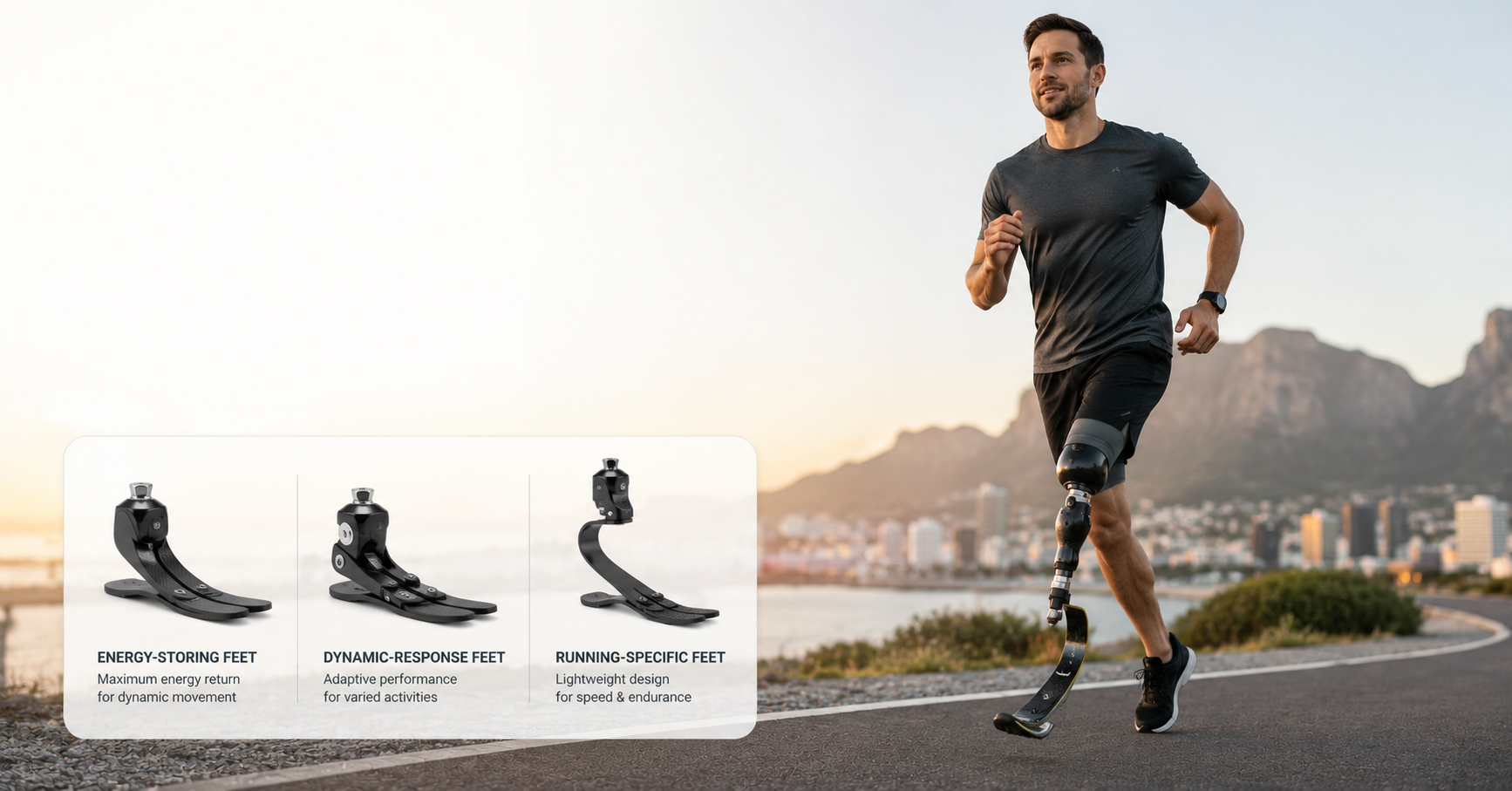
For runners and high-impact athletic activities, specialized athletic prosthetic feet are essential. Running blades feature blade-shaped designs with carbon fiber construction optimized for sprinting and distance running. These feet store energy during loading and release it during push-off, propelling you forward efficiently. Running prosthetics are lightweight and responsive. Trail running feet feature enhanced ground engagement and responsiveness for technical terrain. These feet improve traction and proprioceptive feedback on challenging ground. Hiking feet provide terrain adaptability and stability on variable ground while remaining responsive enough for continuous movement. Court sport feet—basketball, tennis—provide quick direction changes and responsive propulsion. These specialized feet cost $8,000-$20,000. Many active users maintain multiple feet—everyday prosthetics, athletic prosthetics, and specialized feet for specific activities.
Waterproof and Water-Resistant Feet
For users engaging in water activities, waterproof feet are essential. Waterproof feet use sealed components and corrosion-resistant materials allowing use in water environments. These feet excel for swimming, water sports, beach activities, and water-based work. Waterproof feet cost 20-40% more than standard feet but protect your investment and enable water participation. Some waterproof feet are dual-purpose—functioning well in both water and land environments. However, dedicated waterproof feet designed specifically for water often outperform multipurpose options. If water participation is important, invest in waterproof feet; the additional cost is justified by ability to participate in water activities without prosthetic damage or anxiety.
Material Technology and Performance Characteristics
Modern prosthetic feet use advanced materials optimizing performance. Carbon fiber provides exceptional strength-to-weight ratio—strong but lightweight. Titanium offers durability and corrosion resistance. Silicone and foam materials provide shock absorption and cushioning. Advanced polymers balance flexibility with durability. Articulated designs allow multi-directional ankle motion, improving terrain adaptability. Single-axis designs flex in only one plane, limiting adaptability but improving stability. Design geometry—heel height, foot shape, ground contact surface—affects performance characteristics. Heel-spring prosthetics store energy in heel compression; toe-spring designs store energy in forefoot flexion. Different designs perform better for different activities; trail running feet differ from distance running feet, which differ from water activity feet.
Prosthetic Foot Selection for Specific Activities
Selecting feet for specific activities requires considering activity demands. Distance running requires light, responsive feet with good propulsion characteristics and energy return. Trail running requires enhanced terrain adaptability and rugged construction. Walking requires stability and comfort more than responsiveness. Hiking requires terrain adaptability and good ground engagement without excessive weight. Water activities require waterproof, corrosion-resistant construction. Climbing requires enhanced foot control and precision. Cycling requires minimal foot involvement, primarily socket comfort. Different activities benefit from different designs. Some versatile feet handle multiple activities; however, activity-specific feet generally outperform multipurpose options. Maintaining multiple feet for different activities optimizes performance while protecting expensive specialized feet.
Cost Considerations and Activity Level Justification
Prosthetic foot costs correlate with sophistication. Basic feet: $1,500-$3,500. Advanced mechanical feet: $4,000-$8,000. Microprocessor feet: $10,000-$25,000. Athletic specialized feet: $8,000-$20,000. Budget constraints affect decisions, but investing in appropriate feet for your activities yields dividends in improved function and safety. Insurance coverage varies—some policies cover only basic feet, others cover advanced options if documented as medically necessary. Discussing functional goals and activity level with your prosthetist helps justify more expensive options. Don’t feel obligated to choose the most expensive option; the best foot is the one meeting your needs. However, severely limiting yourself with inadequate feet may impair function and result in purchasing a better foot sooner anyway—sometimes investing initially in appropriate feet is more economical than upgrading shortly after.
Optimizing Your Active Lifestyle With the Right Prosthetic Feet
Active lifestyles demand appropriate prosthetic feet. Proactive Technical Orthopaedics, India’s best prosthetics manufacturer, specializes in athletic prosthetics optimized for your activities. Whether running, hiking, or water sports, we have solutions enabling your active lifestyle. Discuss your activity goals with our experts today.
Frequently Asked Questions
1. What Is The Best Prosthetic Foot For Active Users?
The best prosthetic foot depends on your activity level, mobility needs, walking style, and the type of activities you enjoy. Dynamic-response, energy-storing, and multi-axial feet are commonly considered for active users because they can provide better movement, stability, and energy return.
2. What Are The Different Types Of Prosthetic Feet For Active Users?
Active users can choose from several prosthetic foot designs, including dynamic-response feet, carbon-fiber running feet, multi-axial feet, and energy-storing feet. Each option is designed for different mobility requirements and activity levels.
3. Are Carbon Fiber Prosthetic Feet Good For Active Users?
Yes, carbon fiber prosthetic feet are popular among active users because they are lightweight, durable, and capable of storing and returning energy during movement. The appropriate design depends on the user’s mobility level and intended activities.
4. Can You Run With An Active Prosthetic Foot?
Yes, certain prosthetic feet are specifically designed to support running and other high-impact activities. Running-specific prosthetic feet can help provide energy return and smoother movement, but proper fitting and training are important for safe use.
5. How Do I Choose The Right Prosthetic Foot For Sports?
Choosing a prosthetic foot for sports depends on the sport, activity intensity, mobility level, terrain, and required range of motion. A prosthetist can assess these factors and recommend a suitable foot based on your individual requirements.
6. What Is A Dynamic Response Prosthetic Foot?
A dynamic response prosthetic foot is designed to flex when weight is placed on it and return stored energy during movement. This can help create a smoother walking pattern and may be suitable for people who participate in more demanding physical activities.
7. Are Prosthetic Feet Suitable For Hiking And Outdoor Activities?
Some prosthetic feet are well suited for hiking and outdoor activities because they can provide stability, shock absorption, and adaptability across different surfaces. The right choice depends on the terrain and the user’s activity level.
8. How Long Does An Active Prosthetic Foot Last?
The lifespan of a prosthetic foot varies depending on its design, materials, frequency of use, activity level, and maintenance. Highly active users may place greater demands on the foot, so regular inspections by a prosthetic professional are recommended.
9. Are Advanced Prosthetic Feet More Expensive?
Advanced prosthetic feet can cost more because they may use specialized materials and technologies designed for improved energy return, flexibility, stability, or adaptability. The overall cost varies based on the specific prosthetic foot and fitting requirements.
10. Can One Prosthetic Foot Be Used For Walking And Sports?
Some prosthetic feet can accommodate both everyday walking and recreational activities, while other users may benefit from activity-specific feet. The best option depends on your mobility requirements, sports activities, and the recommendations of your prosthetist.