

Comprehensive guide to safe, effective exercises for prosthetic leg users, building strength, endurance, and confidence.
Exercise is essential for prosthetic leg users, building the strength, endurance, and proprioceptive awareness necessary for effective prosthetic use. Regular exercise improves cardiovascular health, bone density, mental health, and functional capability. However, exercising with a prosthetic requires modifications and careful progression to prevent injury. This guide provides safe, evidence-based exercises appropriate for prosthetic leg users at various stages.
Pre-Exercise Assessment and Safety
Before beginning any exercise program, consult your physician and prosthetist. Discuss your exercise goals and limitations. Your prosthetist can ensure your prosthetic is properly fitted for exercise—incorrect fit causes pain and injury. Begin with gentle, low-impact exercises and progress gradually. Pain during exercise is a warning signal—stop and consult your healthcare provider. Address any skin issues before intensive exercise; exercise increases sweating, potentially worsening skin problems. Warm up before exercising and cool down afterward. Stay hydrated and listen to your body. Most importantly, exercise should be enjoyable; choose activities you find satisfying rather than forcing yourself through unpleasant exercise.
Residual Limb Strengthening Exercises
Strengthening your residual limb is foundational for prosthetic success. Residual limb strength directly affects prosthetic control and functional capability. Seated hip abduction—sitting in a chair, move your residual limb outward against resistance. Seated hip adduction—squeeze a pillow between your thighs. Seated hip flexion—lift your residual limb up. Seated hip extension—move it backward. Perform 15-20 repetitions of each exercise, rest, and repeat. Resistance can be manual (pushing against your hand) or using resistance bands. Gradually increase resistance as strength improves. These exercises build the hip musculature that controls your prosthetic knee.
Intact Leg Strengthening Exercises
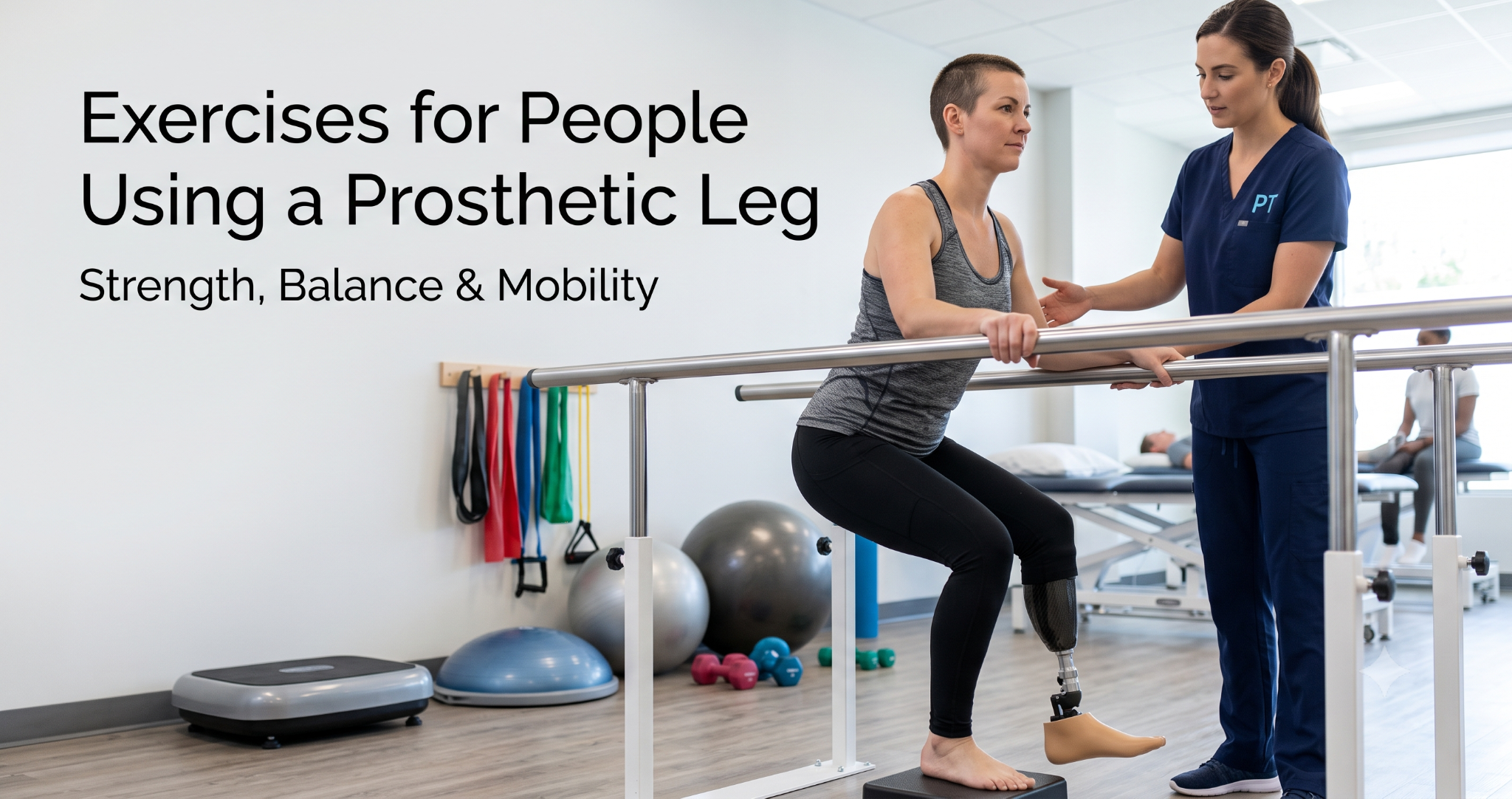
Your intact leg bears extra stress from prosthetic use—strengthen it to prevent injury and improve prosthetic function. Seated knee extensions—straighten your knee against resistance, hold briefly, relax. Seated leg curls—bend your knee bringing your heel toward your buttocks. Standing squats—if balance allows, lower into a squat and return. Standing step-ups—step onto a low bench, hold briefly, step down. Leg presses—if using equipment, push against resistance. Start with bodyweight exercises, progress to resistance bands, then to weights. Perform 12-15 repetitions, rest, repeat. Strong intact legs improve prosthetic walking capability dramatically.
Balance and Proprioception Training
Balance training is essential for prosthetic leg users. Start with static balance—standing still with good posture, feet slightly apart. Progress to single-leg stance on your intact leg, using a wall or parallel bars for safety. Stand on uneven surfaces—foam cushions, pillows—to challenge balance. Dynamic balance exercises include walking in straight lines, walking with varying step lengths, and negotiating obstacles. Practice weight shifting from side to side. Tandem walking—walking heel-to-toe in a straight line—challenges balance significantly. Visual feedback improves proprioception—walk while looking straight ahead rather than at your feet. Proprioceptive training should be part of regular rehabilitation and continued indefinitely.
Cardiovascular Exercise
Cardiovascular exercise improves heart health, mental health, and prosthetic endurance. Walking is the most accessible exercise—start with short distances on flat, even surfaces. Gradually increase distance and terrain difficulty. Treadmill walking provides controlled conditions; you can adjust speed and incline gradually. Stationary cycling avoids prosthetic stress while building cardiovascular fitness and leg strength. Swimming and water aerobics are excellent because water supports your body weight, reducing prosthetic stress. Rowing machines provide upper-body and core cardiovascular work. Elliptical trainers offer low-impact cardiovascular exercise. Aim for 150 minutes of moderate activity weekly, or 75 minutes vigorous activity. Start conservatively and build gradually. Consistency matters more than intensity.
Flexibility and Stretching
Flexibility exercises prevent muscle tightness and reduce injury risk. Gentle stretching after exercise is ideal—muscles are warm and more responsive. Hip flexor stretches—in a lunge position, lean forward gently. Hamstring stretches—with extended leg, bend forward at the waist. Calf stretches—lean against wall, extending one leg back. Quadriceps stretches—stand, pull heel toward buttocks. Hold stretches 30 seconds, never bouncing. Perform stretches on both your intact and residual limbs. Yoga and tai chi are excellent for flexibility, balance, and mental health. Flexibility work should be daily or nearly daily for optimal results. Tight muscles increase injury risk and reduce prosthetic effectiveness.
Core Strengthening and Posture
A strong core improves prosthetic walking, balance, and reduces back pain. Planks—lie face-down, hold yourself up on forearms and toes, maintaining straight line from head to heels. Start with 15-30 seconds, build to longer durations. Bird-dogs—on hands and knees, extend opposite arm and leg, hold briefly. Bridges—lying on your back with knees bent, lift hips. Dead bugs—lying on your back, extend arms and legs, maintain contact with floor. Pelvic tilts—lying on back, gently tilt pelvis to engage core. Perform core exercises 3-4 times weekly. Strong core improves prosthetic alignment, reduces compensation patterns, and improves walking quality.
Sport-Specific Training
If interested in athletic pursuits—running, cycling, sports—sport-specific training builds necessary strength and skills. Running requires gradual progression from walking intervals to sustained running, as discussed in our running guide. Cycling training focuses on endurance and cadence control. Swimming requires water confidence and stroke practice. Contact sports require significant training and protective equipment. Work with coaches experienced in adaptive sports—they understand prosthetic-specific modifications and training principles. Start conservatively, progress gradually, and listen to feedback about what works for your unique circumstances. The goal is enjoyable, sustainable activity rather than elite performance.
Building Strength and Confidence Through Exercise
Exercise is essential for prosthetic success, but it requires proper guidance. Proactive Technical Orthopaedics, the best prosthetics manufacturer in India, provides rehabilitation support and exercise guidance tailored to your prosthetic and goals. Our therapists ensure safe, effective training. Contact us for exercise recommendations.