

Summary: Prosthetic alignment is the three-dimensional relationship between the socket, joints, adapters and foot. Small changes can alter balance, socket pressure, knee stability, step length and the effort needed to walk. This guide explains bench, static and dynamic alignment, common signs of malalignment, and why alignment must be reviewed as the body, footwear and activity level change.
A prosthetic leg may contain excellent components and still feel uncomfortable or difficult to control if those components are not aligned for the individual user. Alignment determines how forces travel from the ground, through the prosthesis and socket, and into the body during every step.
Good alignment does not mean making both sides look perfectly identical. It means placing and tuning the components so the user can stand securely, move smoothly and complete daily activities without avoidable pain or fatigue. The correct setup depends on the amputation level, residual-limb shape, joint range, muscle strength, usual shoes, walking style and mobility goals.
What Is Prosthetic Alignment?
For a lower-limb prosthesis, alignment describes the position and angle of the socket relative to the knee unit, pylon, adapters and foot. The clinician can make angular changes such as flexion, extension, adduction, abduction and foot rotation. Components can also be shifted forward, backward, inward or outward.
These adjustments influence the line of force passing through the prosthesis. During walking, that line changes continuously as the heel contacts the ground, the body moves over the foot and the toes leave the floor. Alignment therefore affects both movement patterns, called kinematics, and the forces and moments acting on the body, called kinetics.
Alignment is not the same as socket fit:
- Socket fit concerns how the residual limb is supported and contained inside the socket.
- Alignment concerns how the socket and other components are positioned in relation to one another and the ground.
- Gait training helps the user coordinate the body and prosthesis after fit and alignment have been optimised.
A problem in one area can resemble a problem in another. That is why changing the alignment without checking fit, strength and technique may fail to solve the real cause.
The Three Main Stages of Alignment
Bench Alignment
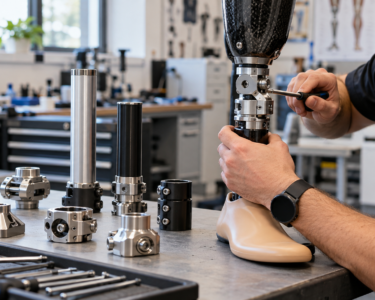
Bench alignment is the initial setup completed before the user walks in the prosthesis. The prosthetist follows component-manufacturer guidance and uses anatomical measurements, socket shape, amputation level and expected footwear to establish a safe starting position.
This is only a starting point. Two users with similar amputations may need different final settings because their posture, joint range, strength and movement goals are different.
Static Alignment
Static alignment is assessed while the user stands and shifts weight. The prosthetist checks:
- Whether the prosthesis has the appropriate length
- Whether the pelvis and shoulders appear reasonably level
- Whether the foot sits flat and has suitable toe-out
- Whether the user can load the prosthetic side comfortably
- Whether the knee feels stable
- Whether pressure inside the socket is tolerable
Static alignment can identify obvious concerns, but standing does not recreate the rapidly changing forces of walking.
Dynamic Alignment
Dynamic alignment is performed while the user walks and completes relevant tasks. The prosthetist observes the gait from the front, back and side, listens to the user’s feedback, and adjusts the system in small steps.
Testing may include level walking, changes of speed, ramps, turns, stairs, sitting and standing. More advanced clinics may use video, force measurement, pressure sensors or digital gait analysis. The final setting should work in realistic conditions, not only during a few steps between parallel bars.
How Alignment Changes Walking Efficiency?
It Controls the Path of Ground-Reaction Forces
When the foot contacts the ground, the ground applies an equal force back through the prosthesis. The position of this force relative to the ankle, knee, hip and socket affects whether a joint is encouraged to flex, extend or remain stable.
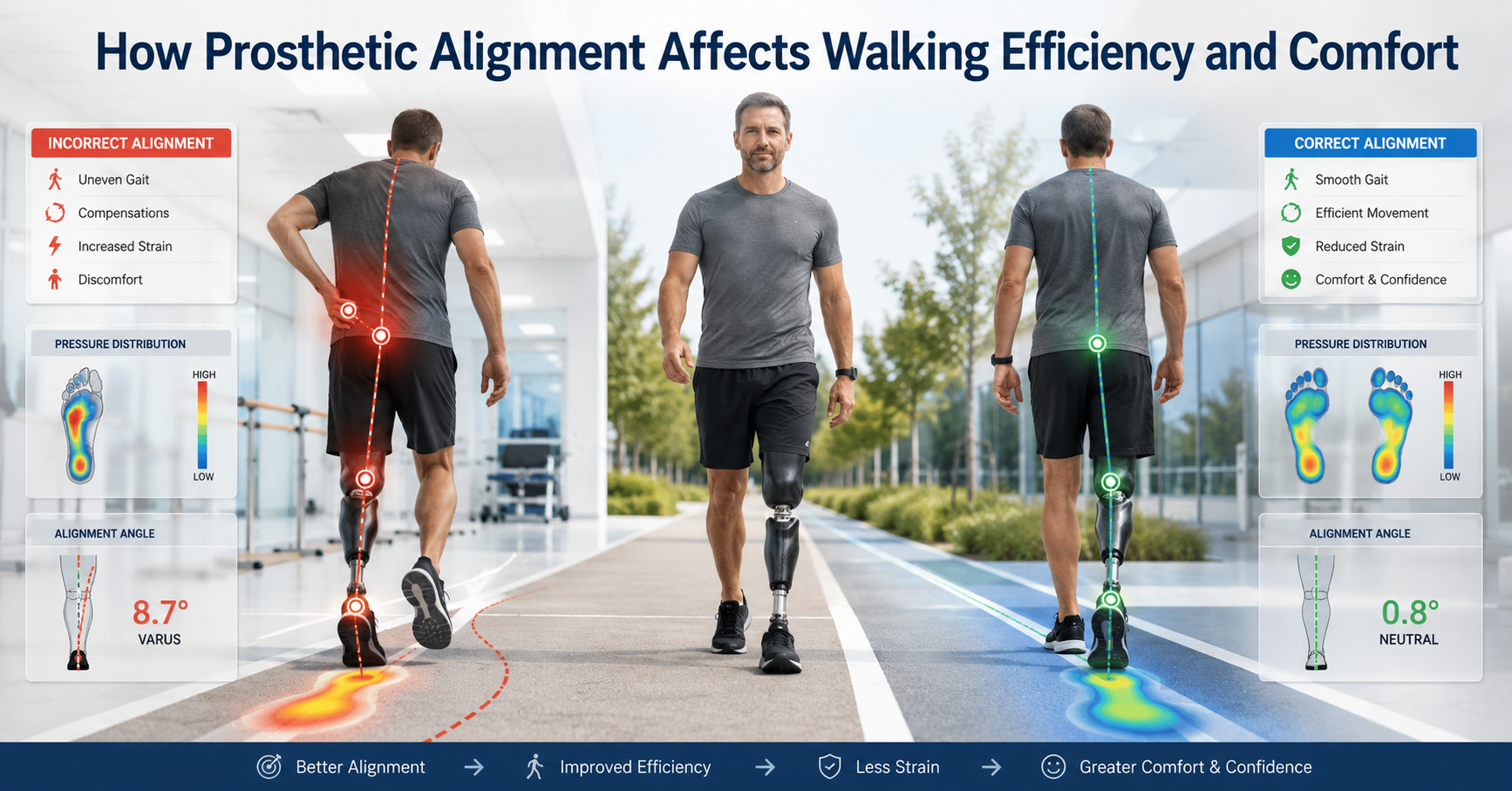
If the prosthetic foot is too far forward, too far back or rotated incorrectly, the user may need extra muscular effort to control the limb. Repeating this compensation over hundreds or thousands of steps can increase fatigue.
It Affects Rollover and Forward Progression
A well-tuned foot allows the body to progress from heel contact toward toe-off smoothly. If the heel is too soft, too firm, or effectively altered by the wrong shoe height, the knee may move too quickly or remain too stiff. If the toe lever feels excessively long, the user may struggle to move over the foot and shorten the opposite step.
The design of feet and knees also influences this progression. Review Lower-Limb Prosthetics: Feet and Knee Mechanisms to understand how component function and alignment work together.
It Influences Step Symmetry
Many prosthetic users naturally develop differences in step length and time spent on each side. Alignment cannot remove every asymmetry, but it can reduce mechanical causes such as an incorrect limb length, unstable knee, poor foot position or uneven socket loading.
A smoother pattern may reduce unnecessary trunk movement and make it easier to vary walking speed. Efficiency should be judged by the user’s function and effort, not by appearance alone.
How Alignment Affects Comfort
Socket Pressure Distribution
Alignment changes where pressure appears inside the socket. A small shift at the foot can alter the direction of force at the residual limb. One area may receive excessive pressure while another loses contact and allows movement.
Persistent high pressure, friction and shear can contribute to redness, blisters, pain or wounds. These problems are especially important for users with diabetes, circulation problems, grafted skin or reduced sensation. Learn the warning signs in Skin Complications in Prosthetic Users.
Joint and Back Strain
When the prosthetic side does not provide stable support, the user may lean the trunk, hike the hip, vault on the opposite foot or take unequal steps. These strategies may help in the short term but can overload the sound-side ankle, knee and hip or increase lower-back discomfort.
Pain is not always caused by alignment, so new or persistent symptoms should be assessed rather than self-diagnosed.
Security and Confidence
Walking efficiency also depends on confidence. A user who does not trust the knee or foot may walk slowly, keep the body stiff or avoid loading the prosthesis. Correct alignment, suitable component settings and repeated gait practice can help build a more secure movement pattern.
Common Alignment Problems and Their Effects
Incorrect Prosthetic Length
A prosthesis that is functionally too long may cause hip hiking, circumduction, toe catching or vaulting on the opposite side. A limb that is too short may contribute to pelvic drop, unequal steps and back strain. Apparent length can also change because of socket fit, footwear or knee flexion, so measurement should be completed clinically.
Foot Too Far Forward or Backward
Changing the foot position affects the toe lever and the moment acting around the knee. A foot placed too far forward may feel difficult to roll over. A foot placed too far backward may make the knee feel less secure in some situations. The exact effect depends on amputation level, knee type and socket position.
Excessive Toe-In or Toe-Out
Foot rotation affects the direction of progression and forces within the socket. Too much rotation may create an unusual foot path, knee or socket stress, and a feeling that the limb is twisting. Some toe-out is normal, and the correct amount is individual.
Socket Flexion or Extension Errors
Socket angle influences posture, hip position, knee stability and foot response. A person with a hip-flexion contracture may need an alignment that accommodates their available range rather than forcing an idealised upright position.
Heel Height Changes
Many prosthetic feet are aligned for a specific effective heel height. Moving from flat shoes to high heels, or even to footwear with a very different sole, can tilt the entire prosthesis. This may change knee stability, socket pressure and leg length.
Only use footwear within the range recommended for the prosthetic foot. Adjustable-heel feet must still be set correctly for the selected shoe.
Signs Your Prosthetic Alignment May Need Review
Contact your prosthetist if you notice a new or increasing pattern such as:
- Pain or pressure that appears mainly while standing or walking
- Red marks that repeatedly occur in the same area
- A knee that feels unstable, difficult to bend or slow to swing through
- The foot catching the ground more often
- A sudden change in step length, speed or balance
- Increased trunk lean, hip hiking or circumduction
- Unusual fatigue after familiar walking distances
- New pain in the lower back or sound-side joints
- The foot appearing excessively turned in or out
- Clicking, looseness or a visible change in component position
Stop using the prosthesis and seek prompt clinical advice if there is an open wound, rapidly increasing pain, loss of structural stability or a component that appears damaged.
Why Alignment Can Change Over Time
The original setting does not remain perfect forever. Reassessment may be needed because of:
- Residual-limb volume or shape changes
- Weight gain or loss
- A new socket or liner
- Worn feet, knees, bushings, fasteners or suspension parts
- Changes in muscle strength, joint range or posture
- A move from low activity to work, sport or longer walking
- Different footwear
- Growth in children and adolescents
- Falls or impacts that may have shifted a component
Regular follow-up helps identify gradual changes before they become major problems.
How Clinicians Evaluate Alignment
User History and Skin Check
The process begins with specific questions. Where does discomfort occur? At what point in the day? Does it happen while standing, during early stance or near toe-off? Which shoes and surfaces are involved? The clinician also checks skin and residual-limb volume.
Component and Socket Inspection
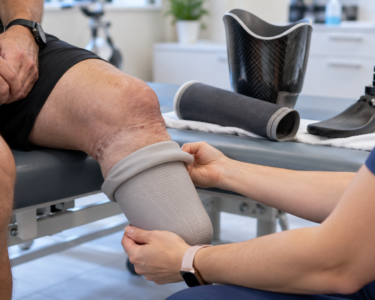
The prosthetist looks for loose fasteners, worn parts, cracks, damaged liners, suspension problems and changes in socket contact. A mechanical fault must be addressed before gait observations can be interpreted safely.
Functional Observation
Walking is viewed from several directions and at different speeds. The clinician may also examine balance, step length, knee motion, foot clearance and trunk movement. A physical therapist can identify strength or technique issues that require training rather than mechanical adjustment.
Instrumented Assessment
Video analysis, force plates, load cells and pressure mapping can add objective information. These tools are particularly useful for complex cases, but they complement rather than replace clinical skill and user feedback.
What Users Should Not Adjust at Home
Do not loosen, rotate or reposition structural prosthetic components unless your prosthetist has specifically designed and trained you to operate an approved adjustment. Small changes can affect knee stability, socket pressure and fall risk. Paint marks or alignment lines are useful for inspection, but they are not instructions for self-repair.
Users can safely monitor shoes, socks, skin, charging and cleaning according to their care plan. Mechanical alignment should remain a professional task.
Better Alignment Means Safer, Easier Movement
Correct prosthetic alignment helps distribute pressure, control joint forces and create a smoother path from heel contact to toe-off. It can reduce avoidable compensation and make walking feel more secure and efficient. Because the body and components change, alignment should be viewed as an ongoing part of prosthetic care rather than a one-time setting.
Comfort depends on the combined effect of socket fit, alignment, component choice, strength and gait technique. A detailed review is therefore more useful than changing one part based on symptoms alone.
Request a Professional Prosthetic Assessment
If walking has become uncomfortable, tiring or unstable, speak with PROACTIVE Technical Orthopaedics for a professional assessment, component recommendations and prosthetic support. As the best prosthetics manufacturer in India, we help identify fit, alignment and maintenance concerns early, preventing them from limiting your daily mobility and independence.
Frequently Asked Questions
1. What does alignment mean in a prosthetic leg?
Alignment is the position and angle of the socket, knee, pylon, adapters and foot relative to one another and the ground. It determines how forces move through the prosthesis while standing and walking.
2. Can a small alignment change affect walking?
Yes. Small angular or positional changes can alter socket pressure, knee moments, foot rollover and balance. The effect depends on the user and prosthetic design, which is why adjustments should be made gradually by a prosthetist.
3. How do I know if my prosthetic leg is misaligned?
Possible signs include repeated pressure in one area, instability, toe catching, increased fatigue, unusual trunk movement, a change in foot rotation or new joint pain. These signs can also have other causes, so a clinical assessment is needed.
4. Can poor alignment cause back pain?
It can contribute. Incorrect length, unequal loading and compensatory movements may increase stress on the pelvis and lower back. Back pain may also have unrelated causes, so persistent symptoms should be reviewed by the appropriate healthcare professional.
5. Does changing shoes affect prosthetic alignment?
Yes. A different heel or sole height can tilt the prosthesis and change knee stability, socket pressure and effective limb length. Ask your prosthetist which footwear range is safe for your foot.
6. How often should prosthetic alignment be checked?
There is no universal schedule. Alignment should be reviewed during regular prosthetic follow-ups and whenever comfort, body weight, residual-limb shape, components, shoes or activity level change. Many users benefit from at least an annual review, with earlier visits when symptoms appear.
7. Can I adjust prosthetic alignment myself?
Do not adjust structural components unless your prosthetist has provided a user-operated system and specific training. Loosening adapters or rotating a foot can create instability, damage or unsafe knee behaviour.
8. Is alignment different for above-knee and below-knee prostheses?
Yes. An above-knee system must account for the prosthetic knee’s stability and swing behaviour as well as foot position. A below-knee system relies on the user’s natural knee but still requires precise socket and foot alignment.
9. Can gait training fix a prosthetic alignment problem?
Gait training can improve strength, balance and movement technique, but it cannot correct a mechanically misplaced component. The best results often come from collaboration between the prosthetist and physical therapist.
10. Will perfect alignment make my gait completely symmetrical?
Not always. Amputation level, strength, joint range, sensation and component function can all affect gait. The practical goal is safe, comfortable and efficient movement, not forced visual symmetry at the expense of the user’s needs.