

Summary: Selecting a prosthetic supplier in India involves more than just price – it’s about ensuring quality, reliability, and patient safety. Key factors include the supplier’s manufacturing experience and track record, international certifications (ISO, CE, etc.), comprehensive product range (feet, knees, sockets, liners, machines, raw materials), rigorous quality control and testing protocols, customization/OEM capabilities, and competitive pricing with bulk discounts. Equally important are lead times and logistics (especially for international orders), warranties and after-sales support, technical training and documentation, and case studies or testimonials that demonstrate real-world success. Compliance with Indian medical-device regulations and procurement/tender requirements (e.g. CDSCO registration, ADIP/defense schemes) is essential. This guide provides an actionable checklist and workflow to evaluate suppliers, plus a comparison of different supplier types (manufacturer, distributor, local dealer, importer) to help clinics, hospitals, NGOs, and procurement officers funnel qualified leads to trusted manufacturers like ProtechOrtho (PROACTIVE Technical Orthopaedics).
India has emerged as a leading global source of prosthetic and orthotic components, with many manufacturers offering modular artificial limbs and rehab equipment to domestic and international clients. However, not all suppliers are equal. A poor-quality prosthetic part can compromise patient mobility, comfort, and safety. Conversely, a reputable manufacturer ensures devices meet international standards and undergo proper testing. Clinics, hospitals, NGOs, and distributors must therefore carefully vet suppliers. This guide outlines the key attributes to consider when choosing a prosthetic supplier in India, and provides checklists and workflows to streamline the procurement process. We also suggest ways to link readers from informative content to your main site (ProtechOrtho) for quotes and ordering.
Why Choosing the Right Supplier Matters?
- Patient Safety and Outcomes: A prosthetic limb is literally part of a patient’s body. Inferior materials or workmanship can cause discomfort, breakdown, or even injury. Ensuring your supplier follows strict quality management protects patients and your clinic’s reputation.
- Regulatory Compliance: Since 2020, Indian law classifies prosthetic limbs as medical devices (Class B/C) under the Drugs and Cosmetics Act. This means suppliers should register products with CDSCO and adhere to quality standards. Choosing a certified supplier (ISO, CE, etc.) reduces legal and liability risk.
- Cost-Effectiveness: A reliable supplier provides consistent quality and fewer returns or warranty claims, reducing long-term costs. In contrast, repeatedly fixing low-quality components or scrambling for replacements can disrupt clinic operations and inflate total expense.
- Supply Continuity: Hospitals and NGOs often need prosthetic parts in bulk or on an ongoing basis. The right partner offers steady stock levels, predictable lead times, and dedicated support. This is critical for meeting tender or project requirements without delays.
In short, a dependable supplier is not just a vendor but a long-term partner. The rest of this guide breaks down exactly what to look for.
Key Supplier Attributes
Experience and Track Record
- Years in Business: Look for companies with substantial experience in prosthetics. For example, Proactive Technical Orthopaedics (ProtechOrtho) has 14+ years in operation and a CEO with decades of experience (including work at BMVSS/Jaipur Limb, Germany training, etc.). Such history suggests the know-how to handle complex projects.
- Export and Project History: A supplier serving global markets or major projects indicates credibility. ProtechOrtho exports to 30+ countries (USA, EU, Australia, Africa) and has undertaken projects like revamping an artificial limb center in Nigeria. Government or large-NGO projects often have high standards; evidence of these achievements is a good sign.
- Customer References: Ask for case studies or testimonials, especially from similar organizations. ProtechOrtho’s site shares client praise for efficiency, service, and technical expertise. These third-party endorsements can validate claims.
Certifications and Quality Standards
- ISO 9001/13485 Certification: ISO 9001 (Quality Management) is a baseline for any manufacturing business. For medical devices, ISO 13485 (Medical Device QMS) is vital. Check if the supplier is ISO 13485-certified. (ALIMCO, India’s govt prosthetic maker, holds ISO 13485:2016.)
- Product-Specific Standards: Relevant standards include ISO 10328 (strength/safety testing for lower-limb prostheses), ISO 10993 (biocompatibility), ISO 8549 (terminology), etc. Ideally the supplier runs these tests or works with accredited labs.
- CE Marking: For exporting to Europe, CE marking under the EU Medical Device Regulation demonstrates compliance. ProtechOrtho products carry the CE mark (Medical Device Directive 2007/47/EEC). FDA 510(k) clearance would be needed for the US market (less common in India, but worth asking if you plan to resell internationally).
- GMP and BIS: Good Manufacturing Practices (GMP) or BIS certification (for certain medical products) further indicate disciplined processes. Images on ProtechOrtho’s site show “GMP Certified” and other badges (ISO 9001, ISO 13485, CE) in their accreditations.
- Regulatory Registration: Verify if the supplier is registered with CDSCO for prosthetic devices. While enforcement is improving, a credible manufacturer should have the paperwork. (The 2025 Medium article notes India has only recently started requiring such regulation.)
Comprehensive Product Range
- One-Stop Shop: Ideally, your supplier offers the full suite of components your clinic needs: prosthetic feet, knees (mechanical, hydraulic), pylons, adapters, suspension systems, sockets, liners, cosmetic covers, tools, machines, etc. This simplifies ordering and ensures compatibility.
- Machinery and Raw Materials: Some manufacturers (like ProtechOrtho) even supply prosthetic workshop machinery (ovens, laminators, routers) and raw materials (carbon fiber, resins, PU). This can be advantageous if you’re setting up or expanding a workshop.
- Specialty Solutions: For advanced needs, check if the supplier makes modern components (microprocessor knees, energy-return feet, 3D-printed parts). At minimum, they should cover common types: SACH foot, pneumatic/hydraulic knees, modular kits, upper-extremity prostheses, etc.
- Customization/OEM Capabilities: If your clinic or agency needs bespoke devices or branded products, verify the supplier’s ability to do OEM manufacturing or custom fabrication. ProtechOrtho explicitly offers customization per patient needs. This can include custom socket shapes, color finishes, or re-branding for large contracts.
Quality Control and Testing
- In-Process QC: Reliable manufacturers have quality checkpoints during production. Ask about their QC protocols. Do they inspect incoming raw materials? Do they have calibrated test rigs for strength/fatigue testing?
- Batch Testing: For critical parts (especially metallic knees/feet), ensure each batch is load-tested. ISO 10328 specifies three test levels (P-levels for performance) to simulate real-life use. A supplier should supply a certificate of compliance if required.
- Traceability: Good suppliers label batches or serial numbers for traceability. This helps if a recall or issue arises.
- Third-Party Audits: Has the company ever been audited by international partners or NGOs? External audits reinforce credibility.
Pricing and Bulk Discounts
- Competitive Pricing: While cost should not be the sole factor, suppliers with in-house manufacturing (like ProtechOrtho) often offer lower prices than foreign imports. Manufacturers typically can undercut importers on price and also avoid currency risks.
- Volume Discounts: For hospitals or NGOs buying in bulk, ask about tiered pricing. Many companies provide significant discounts for large orders (e.g. government tenders, hospital systems, rehabilitation centers).
- Quotation Process: A professional supplier will provide detailed quotes outlining unit prices, shipping, taxes, etc. Beware of vague price lists. Some reputable suppliers (including ProtechOrtho) have downloadable catalogs or price lists with multiple languages, which implies transparency.
Lead Times and Logistics
- Manufacturing Lead Time: Confirm typical lead times for stock items vs custom orders. Standard components might ship in 2–4 weeks; large custom prosthetic legs (transtibial or transfemoral prostheses) could take 6–8 weeks including fitting and finishing.
- Export Logistics: If you’re an international buyer, ask about shipping options. Indian suppliers often ship by sea (economical but slower) or air (fast but costly). ProtechOrtho, for example, serves global markets, so they likely have export experience. For sea shipments, expect 30–60 days transit plus customs clearance. Air shipments can arrive in 7–14 days.
- Local Delivery: For domestic orders, some suppliers coordinate with courier services or even dispatch via local dealers. Clarify who handles customs, duties, and insurance (usually “EXW” vs “FOB” terms).
- Inventory Backup: For critical orders, ask if the supplier keeps buffer stock or has multiple factories. ProtechOrtho’s site mentions a machine tool room producing parts for “300+ ALCs worldwide”, suggesting significant capacity.
Warranty and After-Sales Support
- Warranty Terms: A confident manufacturer will offer warranties on parts (typically 6 months to 2 years). Ask for details: does the warranty cover material defects, workmanship, or damage? Are there any labor/return costs?
- Repair Services: Does the supplier repair or recondition components? Some high-end providers will accept faulty parts and return fixed units. Others might replace only with new ones.
- Technical Support: After-sales service is critical. Check if the company provides:
- A local point of contact or representative.
- Online or phone support for troubleshooting.
- Replacement parts for consumables (e.g. liners, screws, etc.).
- Spare Parts Availability: Especially for mechanical knees and pylons, confirm that spare parts are stocked. One testimonial noted ProtechOrtho’s team is “knowledgeable and ready to help” patients, implying good customer support.
- Training and Manuals: Good suppliers often include fitting manuals, usage guides, or even hands-on training. (ProtechOrtho, for example, has a fitting center and may offer workshops.) Ask if they provide fitting/training for your clinicians as part of the deal.
Technical Training & Documentation
- Training Programs: Some manufacturers provide training for prosthetists on their products. This can range from on-site visits to workshops or webinars. It’s a valuable service – your team learns best practices for aligning and maintaining the devices.
- Product Documentation: Ensure all components come with technical datasheets, assembly instructions, and safety guidelines. Proper documentation is essential for consistent fitting and regulatory compliance.
- Updates & Upgrades: In fast-evolving fields (microprocessor knees, smart limbs), ask if the supplier offers upgrade paths. Some suppliers sell retrofit kits or new technology periodically to keep clinics up-to-date.
- Language Support: If ordering for international distribution, check if manuals and labeling are available in the needed language(s).
Case Studies and Testimonials
- Real-World Examples: A supplier’s website or brochure might highlight case studies (e.g. clinic installations, large projects, NGO partnerships). For instance, ProtechOrtho lists projects in Nigeria, Kenya, and elsewhere. These stories show the supplier’s ability to handle diverse settings.
- Customer Feedback: Testimonials (like those on ProtechOrtho’s site) give insight into service quality. Look for comments on after-sales service, communication, and patient outcomes, not just product praise.
- Peer References: If possible, talk directly to a current customer. Hospitals or NGOs often network – a recommendation from a peer is gold.
Compliance with Procurement and Tender Requirements
- Government Schemes (ADIP, RVY, etc.): India’s ADIP scheme subsidizes prosthetic devices. Approved suppliers (like ALIMCO and empaneled private firms) can get orders from these programs. Check if your supplier is listed for ADIP or Rashtriya Vayoshri (RVY).
- Make-in-India and Local Content: Many government tenders now require “Make in India” products or minimum local content. Domestic manufacturers have an advantage here. ProtechOrtho, being Indian-owned, fits the bill easily.
- Defence and Institutional Tenders: Hospitals run by defense or railways often have procurement rules. They may demand MSME status, specific certifications, or ISO/GMP. Ensure the supplier can meet those. (ProtechOrtho, for example, handles “Institutional & Defence enquiries”.)
- Taxation and Customs: If you are an importer, check HS codes and import duties on prosthetic parts. Partnering with a supplier experienced in exports (like ProtechOrtho, which has an export contact +91-8380035441) can ease the process.
- Quality Clauses: Many RFPs include clauses on testing, penalties, and acceptance criteria. Work with suppliers to understand these technical clauses before bidding.
Risk Mitigation Checklist
To minimize risk when awarding a contract, use a checklist such as:
- Verify certifications: Request copies of ISO/CE certificates. Confirm they are current (watch out for soon-expiring certificates).
- Audit or factory visit: If feasible, inspect the factory or conduct a virtual audit. Look at production lines, QC lab, and assembly area.
- Sample order: Before a full purchase, get a small sample (even if nominal fee) to test fit and finish. Ensure it meets specs.
- References: Contact two or three existing clients (especially in your region or sector) to ask about reliability and post-sale service.
- Payment terms: Negotiate terms that protect you (e.g. partial payment on delivery, letter of credit with shipping documents).
- Backup plan: Keep a backup supplier if possible, or at least ensure multiple production lines in case of delays.
- Contractual warranties: Ensure the contract specifies warranty duration, what defects are covered, and remedies (repair, replace, refund).
Supplier Types: Comparison Table
| Supplier Type | Price | Lead Time | Customization | Support | Certifications |
| Manufacturer (Indian) | Generally Lowest (factory-direct) | Short to Medium – Direct orders, local shipping; can offer faster turnaround for in-house stock | High – Can do OEM/custom builds easily | High – Direct factory support, training, spares | Usually High – ISO, CE (if export), GMP |
| Distributor (Authorized) | Medium – markup included | Medium – Depends on stock levels; may carry multiple brands | Low to Medium – Usually sells stock items only | Medium – Acts as interface, but depends on manufacturer | Dependent on manufacturer / country of origin |
| Local Dealer/Retailer | High – Retail margin | Short (stock items) | Low – Typically no in-house customization | Low to Medium – Local service (may rely on supplier) | Often none (relies on their sources) |
| Importer (Direct) | High – plus import duty/shipping | Long – Customs clearance and shipping delays | Low – Usually standard imported products | Low – Far away, limited on-site support | Depends on foreign maker (often CE/FDA) |
Notes: Manufacturer vs. importer: An Indian manufacturer can match or beat imported products on price (no import duty) while offering faster local support. Distributors simplify buying multiple brands but add cost. Dealers are convenient for small clinics but offer little customization. Always check that any foreign supplier’s device certifications are valid in India (even if imported, it’s safer if they also have ISO 13485/GMP).
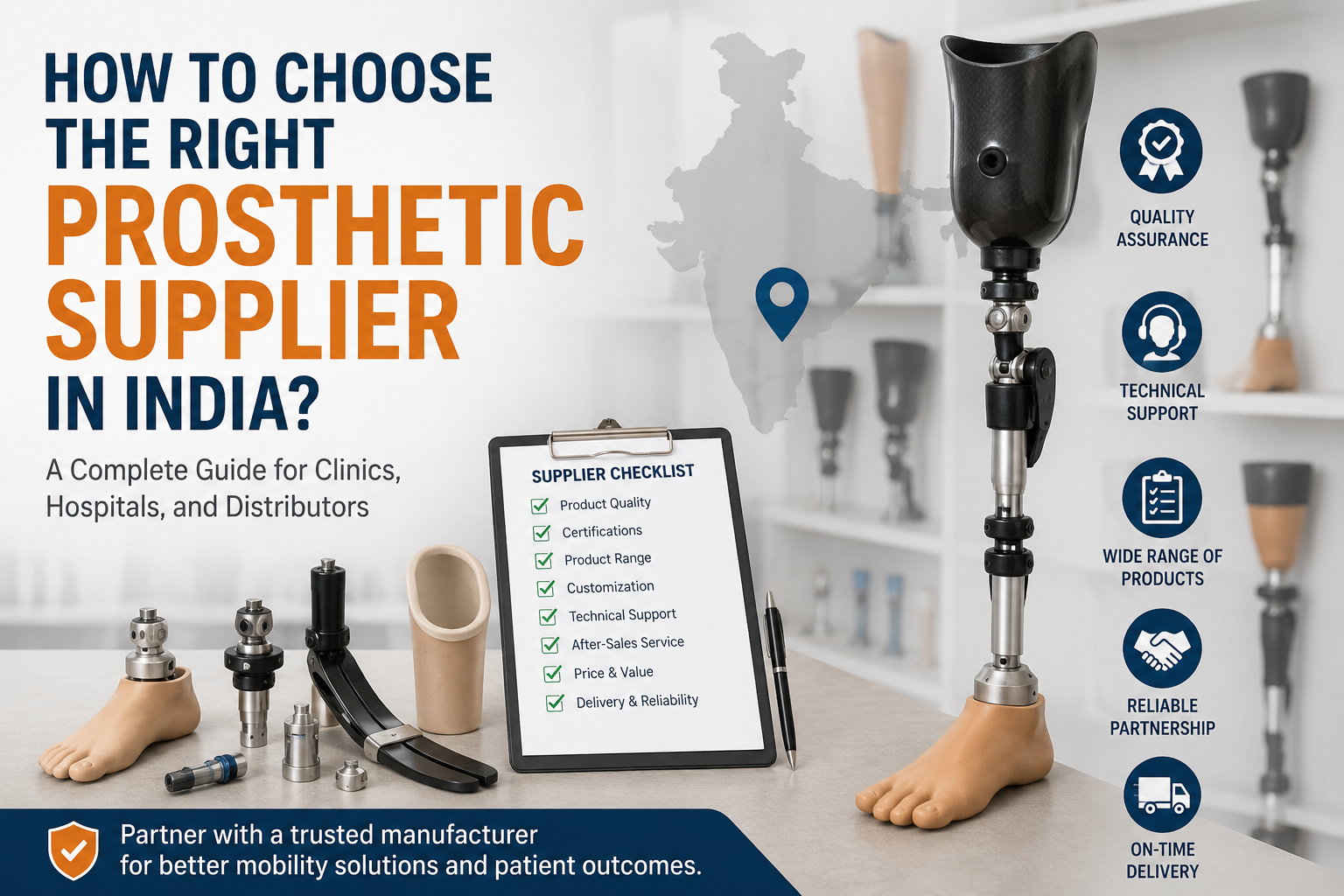
5-Point Supplier Evaluation Checklist
When evaluating a specific supplier, ensure they meet at least:
- Certification & Compliance: ISO 13485 or 9001 certification, plus CE/ISO 10328 if exporting. CDSCO registration for prosthetics (MD-15 license).
- Product Range Fit: They carry all categories you need (list your clinic’s key components). If not, are they willing to source or customize?
- Quality Assurance: Robust QC and testing – ask for a product catalogue or test reports. Do they promise 100% inspection before shipment?
- Lead Time & Capacity: Can they meet your expected delivery schedule, especially for bulk orders? Do they have enough production capacity?
- Support & Terms: Clear warranty terms, availability of spares, technical support (on-site or remote), and acceptable payment/shipment terms.
Use this checklist during vendor discussions or as part of an RFP evaluation form.
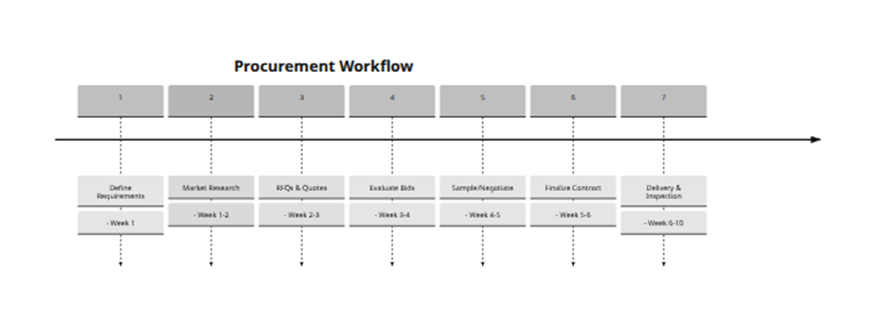
7-Step Procurement Workflow
- Define Requirements: Specify the prosthetic components needed (type, specifications, quantity) and project scope (clinic patients, NGO program, etc.).
- Market Research: Identify potential suppliers (local manufacturers, authorized distributors). Check their websites, catalogs, and certifications. Use resources like ProstheticInsights blog posts for background knowledge.
- Request for Proposals (RFP)/Quotes: Send detailed RFQs to shortlisted suppliers. Include all technical specs, desired certifications, quantities, delivery schedules.
- Evaluate Bids: Assess quotations not just on price but also on compliance with specs, certifications, warranty, and support terms. Use the 5-point checklist above.
- Sample and Negotiate: Where possible, get samples or demo units for clinical evaluation. Negotiate payment terms (L/C vs. prepayment), bulk discounts, and penalties for delays.
- Place Order & Contract: Finalize the contract/PO. Ensure it includes quality clauses, warranty details, and delivery milestones.
- Receive & Inspect: Upon delivery, inspect shipments against specs. Test each component (e.g. fit tests in socket, load tests on feet). Release payment as per contract after acceptance.
1Define Requirements- Week 12Market Research- Week 1-23RFQs & Quotes- Week 2-34Evaluate Bids- Week 3-45Sample/Negotiate- Week 4-56Finalize Contract- Week 5-67Delivery &Inspection- Week 6-10Procurement Workflow
Comparison of Supplier Types
| Attribute | Manufacturer | Distributor | Local Dealer | Importer |
| Price | Low (factory-direct, bulk pricing) | Medium (wholesale + markup) | High (retail, limited competition) | High (import duty & logistics) |
| Lead Time | Medium (depends on factory schedule) | Medium (depends on distributor stock) | Short (retailer stock) | Long (manufacturing + shipping) |
| Customization | High (R&D & engineering support) | Low (mostly stock items) | Low (no factory) | Low (imports fixed models) |
| Technical Support | High (engineering and clinical support) | Medium (reseller support) | Low (often none beyond sale) | Low (distant support) |
| Certifications | High (ISO/CE/GMP directly held) | Medium (claims manufacturer’s certs) | Low (none) | Variable (depends on source) |
Note: Manufacturers like Proactive Technical Orthopaedics score high on all fronts – they offer competitive pricing, customization, and direct support. Distributors can be convenient but add cost. Local dealers are easiest to work with but limit choices. Importers can supply niche products (e.g. advanced prostheses) but will involve longer waits and higher prices.
Key Takeaways
Selecting a prosthetic supplier is a critical decision that impacts patient care, project success, and your own operations. Key steps:
- Prioritize quality over price: Verify ISO/CE certifications and test reports.
- Choose comprehensive offerings: A full product range and OEM capacity means you’ll get all needed parts from one source.
- Check capacity and track record: Suppliers like ProtechOrtho have proven scale (10k+ components/year) and global experience.
- Evaluate support and logistics: Ensure the supplier can meet your timeline and provide after-sales service.
- Use checklists and ask questions: A 5-point checklist (certs, range, QC, lead time, support) helps standardize evaluation.
- Link to reliable sources: For in-depth info on specific components, refer to ProstheticInsights blogs (e.g. “Best Prosthetic Leg for Active Adults”) and ProtechOrtho’s catalog pages (e.g. [Prosthetic Components], [Prosthetic Feet]).
Ultimately, a well-chosen supplier like Proactive Technical Orthopaedics will not only supply products but partner with you to improve patient mobility and meet project goals. Rigorous due diligence now will pay dividends in device performance, patient satisfaction, and program success.
Get in touch for a quote or consultation: PROACTIVE Technical Orthopaedics
Frequently Asked Questions
- How do I verify a supplier’s ISO 13485 certification?
Ask for a copy of their ISO 13485 certificate and check its validity period. You can also search the certification agency’s database. ISO 13485 ensures the company has a quality management system specific to medical devices. - Why is CE marking important for prosthetic devices?
CE marking (per EU MDR 2017/745) shows compliance with safety and performance standards, meaning the products underwent design review and testing. It’s required for selling in the EU. A CE mark (e.g. 2007/47/EEC) indicates rigorous conformity assessment. - What’s the advantage of buying from a domestic manufacturer vs. an importer?
Domestic manufacturers (like ProtechOrtho) usually offer lower prices (no import duty), faster delivery, and better customization. They also more readily meet “Make in India” or local content rules. Importers can supply niche or advanced products, but at higher cost and longer lead times. - How long does it typically take to receive prosthetic components from India?
For local orders (within India), standard parts may arrive in 2–4 weeks. For exports, sea freight can take 4–8 weeks after shipping (plus manufacturing time), while air freight is faster (1–2 weeks). Always confirm lead times when ordering, as custom devices can add extra time. - What kind of warranty should I expect on prosthetic parts?
Warranty periods vary. Many suppliers offer 6-12 months on mechanical parts (knees, joints) and maybe shorter on wear items (liners, upholstery). Clarify what damages are covered (e.g. defects vs. user damage). A reputable manufacturer will clearly state warranty terms in writing. - How can I be sure the supplier follows the Medical Devices Rules in India?
Check if the supplier has a CDSCO-issued license (MD-14 for manufacturing, MD-15 for import). Also verify if their devices are registered on India’s MD-23 form for active implantables. If in doubt, ask the supplier to confirm their regulatory status under the 2020 amendments. - What documents should accompany a prosthetic delivery?
Every shipment should include a packing list, commercial invoice, certificate of origin (for imports), safety test reports, and the manufacturer’s certificates. Technical datasheets and an instructions manual (or link) should also be provided to the clinic. - Do suppliers provide training for fitting and maintenance?
Some do, especially larger manufacturers. This may be on-site or via online training. Ask for user manuals, fitting guides, or tutorial videos. ProtechOrtho, for instance, runs an Artificial Limb Fitting Centre in Pune and may offer workshops. - What is the WHO GATE initiative mentioned by suppliers?
WHO’s GATE (Global Cooperation on Assistive Technology) aims to improve access to affordable assistive devices worldwide. A supplier’s commitment (like ProtechOrtho’s) to GATE signals a focus on making quality prosthetics more accessible to those in need. - How do I handle an urgent bulk order (e.g. for a rehab center or government tender)?
Communicate the urgency early and ask the supplier about their capacity and lead-time compressions. Some manufacturers maintain buffer stock for such cases. You may also negotiate staggered deliveries. Use the supplier evaluation checklist to confirm they can meet large-volume demands before finalizing.
PROACTIVE Technical Orthopaedics – your partner in quality prosthetic manufacturing, ready to support clinics and organizations with top-grade components, expert guidance, and global standards compliance.