
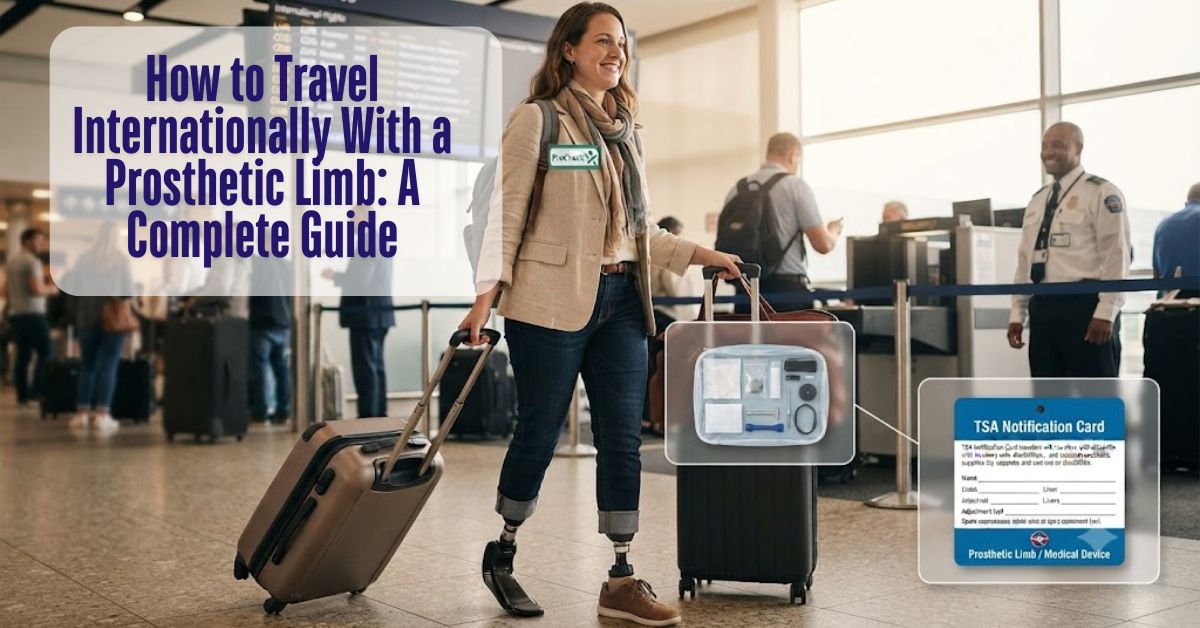

Summary : Traveling across countries should feel exciting, not stressful. With the right planning, people who use a prosthetic limb can fly comfortably, pass through airport security with less hassle, and manage long journeys with confidence. This guide covers everything you need to know before your trip, from documentation and packing to flight comfort, security screening, and prosthetic care along the way. It also shows why reliable prosthetic components matter when you travel far from home. Indian aviation rules also provide facilitation for passengers with disability or reduced mobility, and airlines commonly offer special assistance when requested in advance.
International travel involves longer airports, more walking, multiple security checks, baggage handling, and sometimes different climates. For prosthetic users, these details matter because comfort, skin care, and device protection can affect the whole trip. A little preparation before departure can prevent avoidable discomfort later, especially during long waits, connecting flights, or destination changes. Airlines and airport assistance services can help, but they usually work best when you request support early.
Can You Travel Internationally With A Prosthetic Limb?
Yes, you can. In general, prosthetic limbs are allowed through airport security, and travelers are typically screened with awareness and discretion. TSA guidance says passengers with disabilities and medical conditions can ask for assistance during screening, and the passenger support program exists to help travelers in special circumstances. In India, DGCA guidance also provides facilitation for passengers with disability or reduced mobility, while airlines such as IndiGo and American Airlines offer special assistance options for mobility and medical devices.
How Should You Prepare Your Prosthetic Limb Before International Travel?
Schedule A Prosthetic Check-Up
Book a check-up before your trip so your prosthesis is in good working order. A small issue at home can become a big problem in another country, especially if you are flying long distance. Check the socket fit, straps, alignment, liners, suspension, and any moving parts. If you use a powered prosthesis, make sure the battery is charged and the accessories are packed correctly.
Carry The Right Device Details
It helps to note down the make, model, serial number, and any safe-handling or disassembly instructions for your prosthesis. That kind of information is useful during travel and also helpful if you need support at the airport or at your destination. American Airlines specifically recommends labeling equipment and keeping those details handy before travel. Choosing the right prosthetic device that matches your activity level and travel goals can improve comfort, confidence, and independence wherever you go. A properly selected prosthetic system can also help reduce travel-related challenges and support a more enjoyable international travel experience.
Pack Spare Essentials
Bring the items you use every day, plus a few extras. That may include liners, socks, cleaning supplies, adhesives, batteries, chargers, and any tools you normally need for small adjustments. Keep essential items in your cabin bag, not in checked luggage, so they stay with you if your baggage is delayed. Airlines and airport guidance also recommend checking equipment condition at the destination before leaving the airport.
What Should You Carry In Your Prosthetic Travel Kit?
A good travel kit saves time, reduces stress, and keeps your prosthesis easier to manage on the road. Keep it simple and practical. One small pouch can hold everything you need for the journey.
| Item | Why It Matters |
| Extra Prosthetic Socks | Helps with volume changes and comfort |
| Liners | Useful if one gets damp or worn |
| Cleaning Wipes | Keeps the prosthesis clean during travel |
| Small Repair Tools | Helps with minor adjustments |
| Charger And Batteries | Essential for powered prosthetic systems |
| Medical Documents | Helpful during checks or emergencies |
| Spare Covers Or Sleeves | Adds protection during long travel days |
| Emergency Contacts | Useful if you need support quickly |
What Documents Should You Carry When Traveling With A Prosthetic Limb?
Medical Documentation
- Doctor’s note explaining your prosthetic limb and any related medical requirements
- Recent medical records if you have ongoing treatment or follow-up care
Prosthetic Prescription Or Device Information
- Prosthetic prescription or fitting documentation
- Details of the prosthetic manufacturer, model, and components
- Device specifications for microprocessor-controlled or powered prosthetic systems
- Contact information for your prosthetist or prosthetic clinic
Travel Insurance Documents
- Travel insurance policy covering medical emergencies and mobility devices
- Emergency claim contact numbers
- Coverage details for loss, theft, or damage to prosthetic equipment
Emergency Contact Information
- Family member or caregiver contact details
- Prosthetist’s contact information
- Local embassy or consulate details for your destination country
Keep Both Digital And Printed Copies
- Store scanned copies on your phone, email, or cloud storage
- Carry printed copies in your hand luggage for easy access during airport checks or emergencies
Reviewing your travel insurance for medical devices before departure can help ensure coverage for prosthetic equipment, medical emergencies, and unexpected travel disruptions.
How To Handle Airport Security Smoothly With A Prosthetic Limb?
Tell Security Staff Early
Let airport staff know that you are traveling with a prosthetic limb before screening begins. Clear communication usually makes the process easier and faster. TSA guidance says travelers with medical devices and disabilities can request help from a Passenger Support Specialist or Supervisory TSA Officer, and TSA Cares exist to support these passengers.
Be Ready For Additional Screening
Some travelers may go through standard screening, while others may receive extra screening or a manual inspection. Airport systems vary, and screening methods can depend on the device, the airport, and the security officer’s judgment. That is why it helps to arrive early and remain calm if a second check is needed. TSA also notes that security officers have discretion at checkpoints.
Request Assistance In Advance
Where possible, request assistance before departure. The UK Civil Aviation Authority recommends asking for help when booking or at least 48 hours before travel, and airlines are expected to provide a free way to request assistance. In practice, this advance notice can make boarding, gate transfers, and airport navigation much easier. IndiGo also recommends requesting wheelchair assistance at least 48 hours before departure when needed.
How Can You Stay Comfortable During A Long International Flight?
Long flights can be tiring for any traveler, but prosthetic users may also deal with swelling, pressure, sweating, or skin irritation. Sitting still for a long time can make swelling worse, so it helps to move gently when possible, stay hydrated, and follow the comfort advice given by your prosthetist or clinician. NHS guidance on post-operative recovery also notes that swelling often worsens with long sitting periods and that gentle activity helps.
Choose The Right Clothing
Wear soft, breathable clothes that do not rub against the socket or liner. Comfortable clothing can make a big difference on a long-haul flight, especially if you need to remove or adjust part of the prosthesis during the journey. Avoid anything too tight around the residual limb unless your clinician has advised otherwise. This is a comfort recommendation based on practical travel care, not a medical rule.
Move Often, But Gently
If you can, stand up, stretch, or walk a little during the flight. Even small movements can reduce stiffness and make the journey feel easier. If you are unable to move around freely, simple seated exercises can still help. Always follow the advice you have been given by your prosthetist or healthcare provider. Clean and maintain your prosthetic limb regularly during travel to help reduce the likelihood of skin problems, infections, and discomfort.
Why Are Quality Prosthetic Components Important For International Travel?
Travel is where dependable prosthetic components really prove their value. A well-fitted socket, durable liner, reliable suspension, and properly maintained parts can make your journey smoother and less tiring. For someone crossing borders, the last thing you want is constant discomfort or equipment that feels unpredictable. Good components help support confidence, mobility, and independence, which is exactly what travelers need when they are far from home.
This is where a trusted prosthetic components supplier can make a real difference. Quality parts are not just about performance in daily life; they also help users handle busy airports, long walks, climate changes, and the stress of being away from their regular prosthetic service team. The more dependable the components, the easier it becomes to focus on the trip itself.
How Can You Protect Your Prosthetic Limb During International Travel?
Always keep important prosthetic items in your cabin bag if possible. Checked luggage can be delayed, damaged, or separated from you, and that creates unnecessary trouble if your device needs attention. Before leaving any airport, inspect your equipment for damage. If you spot a problem, report it right away. American Airlines specifically advises checking your device condition at arrival and notifying staff immediately if there is damage.
If you are traveling with a powered prosthesis or related battery-operated mobility device, check the airline’s rules before departure. Battery requirements can vary, and airlines may have specific limits or handling instructions. American Airlines advises contacting special assistance for battery-operated devices, while IndiGo publishes battery-related rules for powered mobility devices. Many airports worldwide provide airport assistance for passengers with disabilities, helping make check-in, security screening, boarding, and transfers more convenient and stress-free.
How Does Different Weather Affect A Prosthetic Limb While Traveling?
Hot, cold, humid, or coastal destinations may affect how your prosthesis feels on your skin. Warm weather can increase sweating, while cold weather can change comfort levels and make your skin more sensitive. Beach and coastal trips may also require extra care to protect the prosthesis from sand, moisture, and salt exposure. Your best approach is to clean the device regularly, monitor your skin, and adjust your routine to suit the climate.
What Should You Do If Your Prosthetic Limb Needs Repair Abroad?
A small travel problem should not ruin your trip. If your prosthesis becomes uncomfortable, loose, or damaged, contact your prosthetist as soon as possible. If you are abroad, ask the airline, hotel, or local medical provider for help locating support. Carrying the device details, photos, and spare essentials can make temporary troubleshooting much easier. Recognizing early warning signs that a prosthetic needs repair or replacement can help prevent unexpected breakdowns during international travel. Addressing wear and tear before your trip can improve safety. If you checked the device with the airline and it arrives damaged or delayed, file a report before leaving the airport whenever possible.
What Is The Ultimate International Travel Checklist For Prosthetic Users?
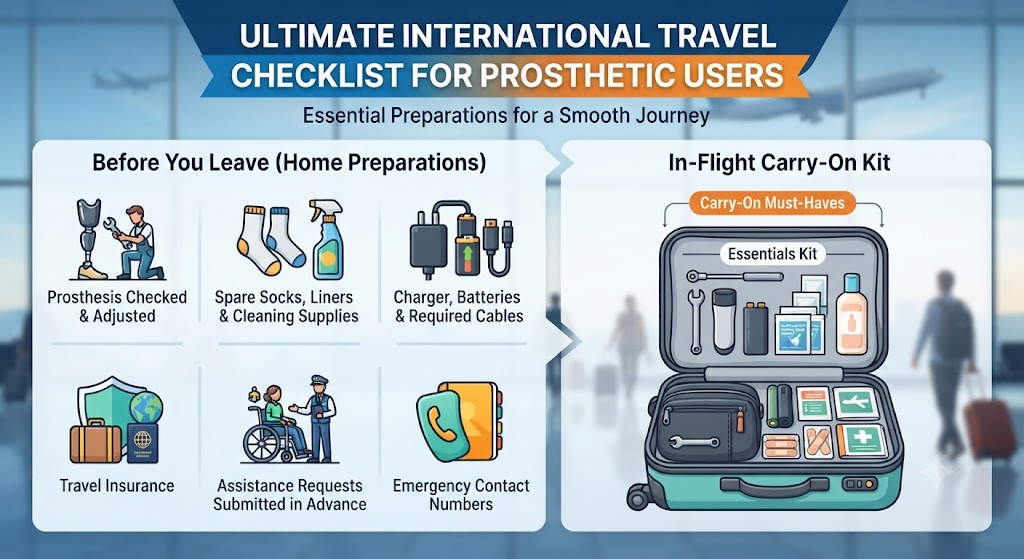
Before you leave, make sure you have:
- Prosthesis checked and adjusted
- Spare socks, liners, and cleaning supplies
- Charger, batteries, and any required cables
- Printed and digital copies of documents
- Travel insurance
- Assistance requests submitted in advance
- Emergency contact numbers
- A small carry-on kit for the flight
Why Choose Proactive Technical Orthopaedics Pvt. Ltd.?
Whether for daily activities or international travel, Proactive Technical Orthopaedics Pvt. Ltd. delivers dependable prosthetic solutions designed to help users move with greater confidence and freedom.
- Trusted provider of high-quality prosthetic components designed for durability and performance
- Focus on comfort, mobility, and reliability for everyday use and travel
- Wide range of prosthetic solutions suitable for different activity levels and user requirements
- Commitment to quality standards and continuous product innovation
- Components engineered to support long-term functionality and user confidence
- Dedicated customer support to assist professionals, clinics, and prosthetic users
- Reliable partner for sourcing advanced prosthetic technologies and accessories
- Helping users achieve greater independence, comfort, and freedom of movement through dependable prosthetic solutions
Travel With Confidence Using Reliable Prosthetic Solutions!
At Proactive Technical Orthopaedics, we understand that reliable prosthetic solutions play a vital role in helping users stay active, independent, and confident wherever life takes them. As a leading prosthetic components supplier in India, we are committed to delivering high-quality components designed for comfort, durability, and long-term performance.
Whether you are preparing for international travel or looking to improve your everyday mobility, our expert team is here to help you find the right prosthetic solutions for your needs. Contact us today to learn more about our innovative products and discover how we can support your journey toward greater freedom and confidence.
Frequently Asked Questions
Can I Travel Internationally With A Prosthetic Limb?
Yes. Travelers with prosthetic limbs can generally fly internationally, and airlines and airports provide assistance options for passengers with disabilities or medical devices.
Do I Need To Remove My Prosthetic Limb At Airport Security?
Usually, no. Screening may vary by airport, but prosthetic users are commonly allowed to pass through with additional screening if needed rather than removing the device. TSA and airline guidance both support assistance during screening.
When Should I Request Airport Assistance?
Request it as early as possible. CAA guidance recommends asking when you book or at least 48 hours before departure, and IndiGo also recommends advance requests for wheelchair assistance when needed.
What Should I Pack For A Long International Trip?
Carry your everyday prosthetic essentials, plus extra socks, liners, cleaning supplies, chargers, batteries, documents, and any small tools or spare parts you normally rely on.
How Can I Make Long Flights More Comfortable?
Move gently when possible, stay hydrated, wear comfortable clothing, and watch for swelling or skin irritation. Sitting too long can make swelling worse, so small movements and regular care matter.
Can I Carry Prosthetic Batteries On A Plane?
Yes, but battery rules can vary depending on the airline and the type of battery. It is best to check the airline’s policy before travel and keep batteries packed according to safety guidelines.
What Should I Do If My Prosthesis Gets Damaged During Travel?
Report the damage to the airline or airport staff as soon as possible and document the issue before leaving the airport if you can. Contact your prosthetist for advice and use any spare parts or backup supplies you brought with you.
Is It Safe To Travel To Hot Or Humid Countries With A Prosthetic Limb?
Yes, but you may need extra care because heat and humidity can increase sweating and skin irritation. Clean your prosthesis regularly, monitor your skin, and use the comfort routine recommended by your prosthetist.
Should I Carry My Prosthesis In Hand Luggage Or Checked Baggage?
Important prosthetic items should be kept in hand luggage whenever possible. This helps protect them from loss, delay, or damage and ensures you have what you need during the flight.
Can I Get Help At The Airport If I Use A Prosthetic Limb?
Yes. Most airports and airlines offer disability assistance services for travelers with mobility needs. You can request help with check-in, security, boarding, and transfers in advance.