

Amputation is a life-changing medical condition that affects not only a person’s physical mobility but also emotional well-being, independence, social participation, and overall quality of life. Whether caused by trauma, diabetes, vascular disease, infection, or congenital conditions, limb loss creates significant physical and psychological challenges that require comprehensive rehabilitation management.
Physical rehabilitation after amputation is one of the most important stages in recovery. It helps individuals regain strength, mobility, confidence, and independence while preparing them for prosthetic use and reintegration into daily life. Successful rehabilitation is not limited to walking with a prosthesis; it involves restoring the patient’s functional ability, emotional stability, social participation, and long-term health.
For prosthetists, physiotherapists, rehabilitation physicians, and caregivers, understanding the importance of structured rehabilitation is essential for improving patient outcomes and reducing complications after limb loss.
Understanding Amputation and Its Impact
Amputation involves the surgical removal of a limb or part of a limb due to medical or traumatic reasons. Common causes include:
- Traumatic injuries
- Diabetes-related complications
- Peripheral vascular disease
- Severe infections
- Tumors and cancer
- Congenital limb deficiencies
The loss of a limb affects multiple body systems simultaneously.
Physical Challenges After Amputation
Patients may experience:
- Muscle weakness
- Joint stiffness
- Balance problems
- Reduced mobility
- Pain and swelling
- Residual limb sensitivity
- Difficulty performing daily activities
Psychological Challenges
Many amputees also face:
- Anxiety
- Depression
- Fear of dependency
- Body image concerns
- Social isolation
- Reduced self-confidence
Because of these combined effects, rehabilitation becomes a critical component of recovery and long-term independence.
What is Physical Rehabilitation After Amputation?
Physical rehabilitation is a structured clinical process designed to help amputees recover functional mobility, strength, endurance, and independence after limb loss.
Rehabilitation typically involves:
- Physiotherapy
- Prosthetic training
- Strengthening exercises
- Balance and gait training
- Residual limb care
- Pain management
- Psychological support
- Functional independence training
The rehabilitation process begins immediately after surgery and continues throughout prosthetic fitting and community reintegration.
Phases of Rehabilitation After Amputation
1. Pre-Prosthetic Rehabilitation Phase
This phase begins soon after surgery and focuses on preparing the patient physically and psychologically for prosthetic use.
Main Goals
- Control pain and swelling
- Promote wound healing
- Prevent contractures
- Maintain joint range of motion
- Improve muscle strength
- Prepare the residual limb for prosthetic fitting
Residual Limb Care
Proper residual limb management is essential to avoid complications such as:
- Skin breakdown
- Infection
- Edema
- Delayed healing
Patients are educated about:
- Hygiene maintenance
- Compression therapy
- Bandaging techniques
- Desensitization exercises
Early education improves long-term prosthetic outcomes significantly.
2. Strengthening and Conditioning Phase
Muscle weakness commonly develops after amputation due to reduced activity and altered biomechanics.
Physical rehabilitation helps strengthen:
- Core muscles
- Upper limbs
- Remaining lower limb
- Hip and pelvic stabilizers
These muscle groups are important for:
- Balance
- Transfers
- Prosthetic control
- Walking efficiency
Common Rehabilitation Exercises
Some commonly prescribed exercises include:
- Quadriceps strengthening
- Hip extension exercises
- Core stabilization
- Bridging exercises
- Stretching programs
- Resistance training
A customized rehabilitation plan is developed according to the patient’s amputation level, age, strength, and medical condition.
Importance of Contracture Prevention
One of the major complications after amputation is joint contracture.
A contracture occurs when muscles and soft tissues become tight, limiting joint movement. This can interfere with prosthetic fitting and walking.
For example:
- Hip flexion contracture is common in above-knee amputees
- Knee flexion contracture is common in below-knee amputees
Physical therapy plays a crucial role in preventing contractures through:
- Positioning techniques
- Stretching exercises
- Range-of-motion exercises
- Proper posture training
Preventing contractures improves prosthetic alignment and functional mobility.
Role of Balance and Coordination Training
After limb loss, the body’s center of gravity changes significantly. Patients often experience poor balance and instability during standing and walking.
Balance rehabilitation helps patients:
- Improve weight shifting
- Develop postural control
- Reduce fall risk
- Increase walking confidence
Clinical Balance Training Includes
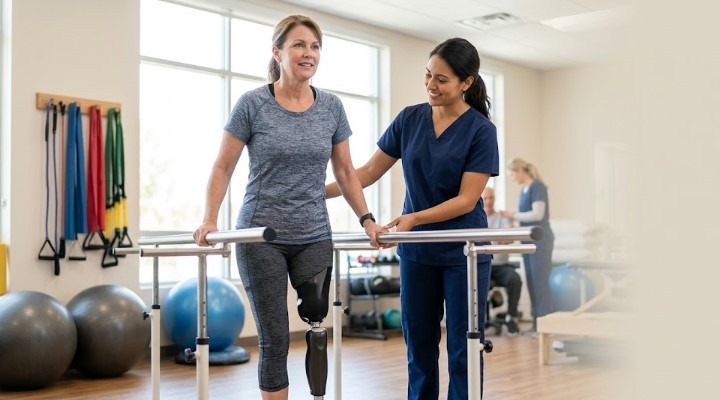
- Parallel bar activities
- Single-leg standing exercises
- Dynamic reaching exercises
- Core strengthening
- Stair training
- Uneven surface walking
Good balance is essential for safe prosthetic ambulation and independent daily living.
Gait Training and Prosthetic Rehabilitation
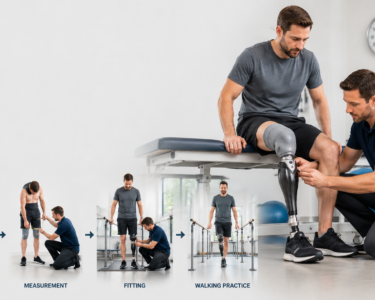
One of the most important goals of rehabilitation is helping the patient walk safely and efficiently with a prosthesis.
Importance of Prosthetic Gait Training
Without proper rehabilitation, prosthetic users may develop:
- Abnormal walking patterns
- Back pain
- Hip pain
- Energy inefficiency
- Increased fall risk
Gait Training Focuses On
- Proper weight distribution
- Step symmetry
- Balance during walking
- Stair climbing
- Sit-to-stand transfers
- Functional mobility
Physiotherapists and prosthetists work together closely during this stage to optimize prosthetic alignment and walking mechanics.
Importance of Psychological Rehabilitation
Amputation affects emotional health as much as physical health. Many patients experience grief, fear, frustration, and reduced confidence after limb loss.
Psychological rehabilitation is essential for:
- Emotional adjustment
- Motivation
- Social reintegration
- Acceptance of prosthetic use
- Improved quality of life
Supportive counseling and family involvement help patients adapt more effectively during rehabilitation.
Positive psychological support often improves:
- Prosthetic compliance
- Rehabilitation participation
- Functional outcomes
- Independence levels
Importance of Patient Education
Education is a major part of rehabilitation success.
Patients must understand:
- Prosthetic care
- Residual limb hygiene
- Skin inspection
- Socket fitting
- Safe mobility techniques
- Exercise routines
Educated patients are more likely to:
- Prevent complications
- Maintain prosthetic function
- Stay physically active
- Achieve long-term independence
Continuous follow-up and patient counseling improve rehabilitation outcomes significantly.
Prevention of Secondary Complications
Proper physical rehabilitation helps reduce several long-term complications associated with amputation.
Common Complications Prevented by Rehabilitation
1. Muscle Weakness
Strengthening exercises maintain functional mobility.
2. Joint Contractures
Stretching and positioning preserve joint movement.
3. Back Pain
Proper gait training reduces abnormal body mechanics.
4. Falls and Injuries
Balance training improves stability and confidence.
5. Cardiovascular Deconditioning
Exercise programs improve endurance and fitness.
6. Skin Problems
Residual limb care prevents ulcers and infections.
Early rehabilitation significantly improves overall health and mobility.
Advanced Rehabilitation Approaches
Modern rehabilitation has evolved beyond traditional therapy approaches.
Advanced Techniques Include
- Computerized gait analysis
- Functional electrical stimulation
- Robotic gait training
- Virtual reality rehabilitation
- Advanced prosthetic alignment systems
- Sports rehabilitation programs
These advanced methods help improve:
- Functional mobility
- Walking efficiency
- Balance
- Patient motivation
However, even basic rehabilitation principles remain the foundation of successful amputee recovery.
Community Reintegration and Independence
The ultimate goal of rehabilitation is helping amputees return to independent and meaningful lives.
Successful rehabilitation allows patients to:
- Return to work
- Participate in social activities
- Perform daily tasks independently
- Resume recreational activities
- Improve overall confidence
Independence in mobility and self-care has a direct impact on mental health and quality of life.
Role of Multidisciplinary Rehabilitation Team
Amputee rehabilitation requires teamwork among healthcare professionals.
Team Members Include
- Prosthetists and Orthotists
- Physiotherapists
- Rehabilitation physicians
- Occupational therapists
- Psychologists
- Nurses
- Social workers
Each professional contributes to the patient’s physical, emotional, and social recovery.
At Proactive Technical Orthopedics, multidisciplinary rehabilitation plays a vital role in helping amputees achieve better mobility, confidence, and long-term prosthetic success.
Importance of Early Rehabilitation
Research and clinical experience consistently show that early rehabilitation leads to better outcomes.
Benefits of Early Rehabilitation
- Faster recovery
- Reduced hospital stay
- Improved muscle strength
- Better prosthetic adaptation
- Reduced psychological stress
- Lower complication rates
Delays in rehabilitation may lead to:
- Weakness
- Contractures
- Poor prosthetic tolerance
- Reduced mobility
Therefore, rehabilitation should begin as early as medically possible after surgery.
Conclusion
Physical rehabilitation after amputation is far more than exercise or prosthetic walking training. It is a comprehensive process that restores mobility, independence, emotional well-being, and quality of life for amputees.
From residual limb care and strengthening exercises to gait training and psychological support, every stage of rehabilitation contributes to successful recovery. Proper rehabilitation not only improves prosthetic outcomes but also prevents complications, enhances confidence, and promotes long-term independence.
With advancements in prosthetic technology and rehabilitation science, amputees today have greater opportunities to lead active, productive, and independent lives. However, the success of any prosthetic intervention depends heavily on structured and patient-centered rehabilitation programs provided by the best prosthetics manufacturer in India.
A well-planned rehabilitation journey empowers amputees to overcome physical limitations, regain dignity, and return confidently to daily life.