

Summary : Sports and active lifestyles place repeated demands on the feet and lower limbs. This blog explains how sports orthoses are designed by considering foot structure, movement, activity type, footwear, materials, comfort, stability, and individual functional needs. It also covers assessment, testing, adjustments, and the role of orthotic manufacturers in producing activity-specific solutions.
For someone who runs, hikes, plays a sport, exercises regularly, or simply spends long hours on their feet, footwear needs to do more than feel comfortable. Repetitive movement, impact, changes in direction, and uneven surfaces can place different demands on the feet and lower limbs. The way the foot moves can also influence how forces are transferred through the ankles, knees, hips, and other parts of the body.
Orthoses are therefore not designed as one-size-fits-all inserts. Their design can be tailored around the person’s foot structure, movement pattern, activity, and functional requirements. The aim is to create a practical balance between support, flexibility, cushioning, comfort, and freedom of movement.
What Makes Sports Orthoses Different From Regular Orthoses?
Sports orthoses need to cope with the demands of an active user. Someone who walks occasionally has different requirements from a runner covering several kilometres each week or a football player making repeated sudden movements. During sports, the feet may experience repeated loading, impact, twisting, or sideways forces.
A suitable design may therefore focus on stability, pressure distribution, shock management, durability, or controlled movement depending on the activity. Footwear also matters because a device must fit comfortably without making the shoe excessively tight. The design should support the person’s needs without adding unnecessary bulk or restricting normal movement.
How Are Orthoses Designed To Support Different Sports Activities?
The first step is understanding how the orthosis will actually be used. A useful design for one activity may not be appropriate for another because different sports place different demands on the body.
Running And Jogging
Running involves repetitive impact and repeated foot contact with the ground. Orthotic design may consider alignment, pressure distribution, cushioning, and stability while keeping the device lightweight enough for athletic footwear.
Court And Field Sports
Tennis, basketball, football, and similar activities involve quick stops, acceleration, jumping, and changes in direction. Designs for these users may place greater emphasis on stability, secure positioning, and controlled movement.
Hiking And Outdoor Activities
Hiking introduces uneven terrain and long periods of weight-bearing. In this case, stability, cushioning, durability, and compatibility with hiking footwear can become important parts of the design.
What Key Design Principles Shape Sports Orthoses?
Sports orthoses are designed to do more than provide basic cushioning. Their construction needs to account for the forces generated during movement, the user’s biomechanics, the demands of the sport, and the limitations of athletic footwear. Several design principles help determine how an orthosis should be shaped and manufactured.
Impact And Force Management
Running, jumping, and other high-impact activities can expose the feet to substantially greater loading than normal walking. During running, impact forces at foot strike can reach several times body weight, although the exact amount varies with factors such as speed, technique, surface, and foot-strike pattern. Research has also shown that cushioned insoles can influence measures such as impact force and tibial acceleration in some running conditions.
Sports orthoses may therefore incorporate cushioning or shock-management materials where appropriate. The design is selected to manage loading while maintaining the support and stability needed for the activity rather than simply adding maximum cushioning.
Material Selection
Material selection directly influences the flexibility, weight, durability, and level of control provided by an orthosis. Semi-rigid and firm materials can offer structural support, while softer materials may be incorporated for cushioning and pressure management.
Materials such as graphite, carbon-composite materials, polypropylene, and other specialized plastics may be used in sports-focused designs depending on the required characteristics. Low-profile constructions can also help the orthosis fit into athletic shoes where space is limited.
The appropriate material is therefore chosen according to the individual’s functional requirements rather than using the same construction for every sport or user.
Foot And Leg Alignment
The feet work as part of a connected lower-limb movement system. Changes in foot motion can be associated with movement at the ankle, knee, and hip, which is why sports orthotic design may consider the relationship between the foot and the rest of the lower limb.
A design may provide heel and arch support or help control excessive pronation when this is identified as relevant during assessment. Research has found that foot orthoses can produce measurable changes in some hip and knee movement patterns during specific tasks, although the effects vary between individuals and conditions.
Arch shape and foot alignment can also influence orthotic design. For individuals with flat feet, the amount and position of support may need to be considered carefully based on age, foot structure, symptoms, and activity level. This is why orthoses for flat feet may be designed differently for children and adults.
Lightweight And Low-Profile Construction
Athletic shoes often have limited internal space, particularly lightweight running and court shoes. A bulky orthosis can change the fit of the shoe or become uncomfortable during extended activity.
For this reason, sports-oriented designs may use thin, lightweight shells and carefully positioned support features. The objective is to maintain the required function while allowing the device to sit securely inside the footwear without unnecessary weight or bulk.
How Is The Customization Process For Sports Orthoses Carried Out?
Sports orthoses can be custom-made according to an individual’s foot structure and activity requirements, while prefabricated options are produced in standard shapes and sizes. Understanding custom vs prefabricated orthoses can help users and professionals choose an option that matches the level of support, fit, and activity-specific needs involved.
Creating a custom sports orthosis generally involves several stages, with each stage providing information for the final design.
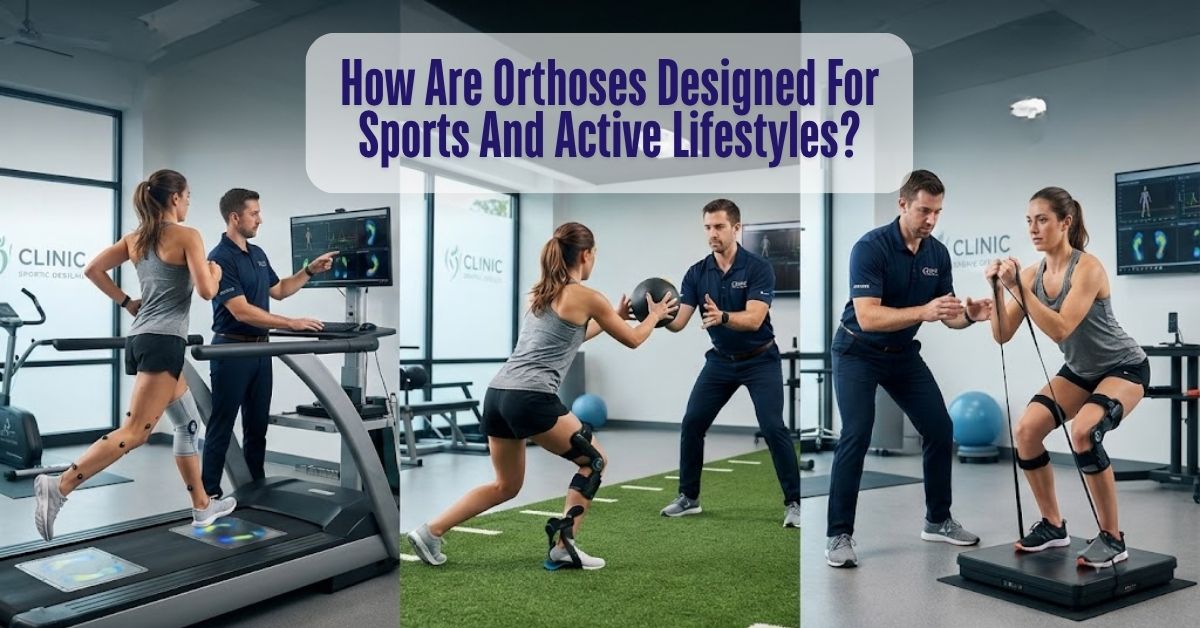
Step 1: Biomechanical Assessment
The process begins by reviewing the individual’s medical and activity history, foot structure, gait, alignment, range of motion, footwear, and the specific demands of their sport. The assessment helps establish what the orthosis needs to accomplish. Assessment becomes especially important when an individual has an existing foot condition. For example, diabetic foot orthotics may be considered when specific pressure distribution and support needs have been identified.
Step 2: Foot Shape And Movement Capture
The foot can be captured using physical casting methods or digital scanning. Modern workflows may use 3D scanning to create a digital representation of the foot, which can then be used during the design stage.
Step 3: Computer-Aided Design
With a digital model available, computer-aided design (CAD) can be used to modify contours, thickness, support areas, and other design characteristics according to the prescribed requirements. CAD and computer-aided manufacturing technologies can help translate the digital model into a precisely manufactured orthotic device.
Step 4: Manufacturing And Finishing
The final design is manufactured using the selected material and production method. Edges, covers, thickness, and finishing details are then considered so that the orthosis is suitable for the intended footwear and activity.
Step 5: Fitting And Fine-Tuning
The finished orthosis should be checked in the footwear and, where appropriate, during movement. Feedback about comfort, pressure, stability, and fit can indicate whether an adjustment is required before the device becomes part of the user’s regular activity routine.
What Should Users Consider Before Choosing Sports Orthoses?
Before choosing sports orthoses, consider the activity, frequency of use, footwear, comfort requirements, stability needs, and any recurring discomfort. It is also useful to explain exactly what activities you perform instead of simply saying that you are “active.”
Someone who runs, cycles, hikes, lifts weights, or plays a court sport may have very different requirements. Proper assessment and fitting can help determine whether an orthosis is appropriate and what design characteristics are needed.
How Can Orthotic Manufacturers Help With Sports-Focused Designs?
Orthotic manufacturers play an important role in turning clinical or functional requirements into a finished device. For sports-focused applications, manufacturing support can include material selection, fabrication, finishing, design modifications, and production according to prescribed specifications.
Experienced manufacturers can also work around requirements such as lightweight construction, durability, specific component choices, or footwear limitations. For people using orthotic and prosthetic devices for active lifestyles, the designer may need to consider how the equipment will perform during particular movements and activities.
Clear communication between the prescribing professional and manufacturer helps ensure that the final device reflects the intended design and the user’s practical needs.
Turn Functional Requirements Into Better Orthotic Designs
Proactive Technical Orthopaedics Pvt. Ltd. focuses on producing quality orthotic solutions with attention to fit, function, materials, and practical activity requirements. Whether the application involves everyday mobility, sports, or an active lifestyle, the right manufacturing approach can help translate specific requirements into a thoughtfully constructed orthosis.
Looking for the best orthotics components manufacturer in India for dependable manufacturing support? Speak with us to discuss your requirements and understand the available options. Contact us today, send us your requirements, or connect with our team to get started.
Frequently Asked Questions
Are Sports Orthoses Different From Regular Orthoses?
They can be. Sports orthoses are often designed around higher activity levels, specific movement patterns, athletic footwear, and the functional requirements of a particular sport.
Can Orthoses Be Designed For Running?
Yes. Running-specific designs may consider foot mechanics, repeated loading, pressure distribution, cushioning, stability, and the type of running footwear being used.
Which Materials Are Used To Make Sports Orthoses?
Rigid, semi-rigid, soft, cushioning, and lightweight materials may be used. The selection depends on the required balance of control, comfort, flexibility, and durability.
How Long Does It Take To Get Used To Sports Orthoses?
Adaptation differs from person to person. Gradually increasing wear and activity can help the body become accustomed to the device. Persistent discomfort should be discussed with the appropriate professional.
Can Sports Orthoses Be Used In Different Sports Shoes?
Sometimes, it depends on the orthosis design, shoe shape, available space, and intended activity. Footwear should be considered during the design and fitting process.
Does Proactive Technical Orthopaedics Provide Custom Orthotic Solutions?
Proactive Technical Orthopaedics Pvt. Ltd. provides orthotic manufacturing solutions that can be developed according to specific functional, fit, material, and design requirements.
Can Proactive Technical Orthopaedics Support Sports Orthotic Requirements?
Yes. The company can support sports-focused orthotic requirements where factors such as lightweight construction, durability, flexibility, stability, and footwear compatibility need to be considered.
What Types Of Orthotic Materials Are Used By Proactive Technical Orthopaedics?
Material selection depends on the intended application and required characteristics. Options may include rigid, semi-rigid, flexible, cushioning, and lightweight materials suited to different orthotic designs.
Does Proactive Technical Orthopaedics Manufacture Orthotic Devices For Different User Needs?
Yes. Orthotic devices can be manufactured according to prescribed specifications and individual functional requirements, including needs related to everyday mobility and active lifestyles.
How Can I Contact Proactive Technical Orthopaedics Pvt. Ltd. For Orthotic Requirements?
You can contact Proactive Technical Orthopaedics Pvt. Ltd. to discuss your orthotic manufacturing requirements, product specifications, materials, and other related needs with the team.