
Summary
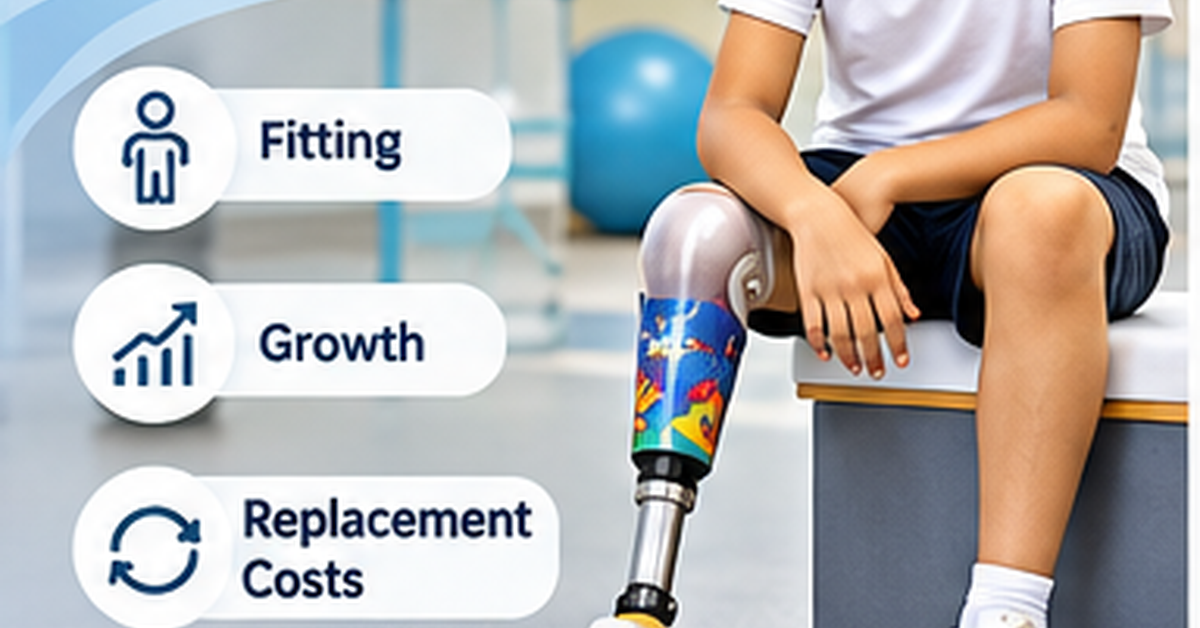
Children need prosthetic legs that are light, durable, adjustable and appropriate for their developmental stage. Because children grow, socket fit, limb length, foot size and component alignment require more frequent review than in adults. Costs in India vary by amputation level, socket, suspension, components, rehabilitation and how often replacement is required.
A child’s prosthesis is not simply a smaller adult leg. Growth, school activity, play, changing body proportions and developmental milestones all influence prescription. A device that fits well today can become short or tight after a growth spurt. Families therefore need to plan not only the first fitting, but also adjustments, component changes and future replacement.
When Should a Child Be Fitted With a Prosthesis?
Timing depends on the level and cause of limb difference, healing and the child’s development. For lower-limb differences, fitting is often considered around the stage when a child is beginning to stand and walk, but the rehabilitation team decides this individually.
The goal is to support natural developmental milestones without making the system unnecessarily heavy or complicated.
Why Pediatric Socket Fit Needs Frequent Review
Children grow continuously, so the residual limb can change in length, circumference and shape. A socket that becomes tight may cause pressure and skin problems, while a socket that becomes loose can reduce control.
Pediatric rehabilitation references commonly note that sockets may require replacement much more frequently than adult sockets, sometimes around yearly depending on growth and activity.
Lightweight Components Matter
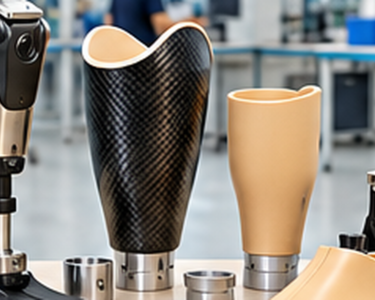
A child has less body mass and may find heavy adult-style components difficult to control. Lightweight pylons, adapters, feet and knee joints help reduce effort and make running or play easier.
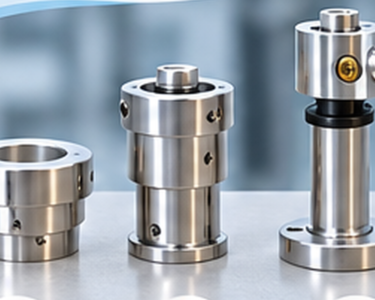
Protech Ortho’s current product catalogue includes pediatric modular components and lightweight child knee-joint and kit options within its broader prosthetic product range.
Below-Knee vs Above-Knee Pediatric Prostheses
Below-knee users retain their natural knee, so the prosthesis normally includes the socket, suspension, structural components and foot. Above-knee users also require a knee joint, which makes prescription more complex.
The knee should match the child’s cognitive ability, balance, activity and body weight. Simplicity and safety usually come before advanced features.
Growth Adjustments Between Full Replacements
Not every growth change requires an entirely new prosthesis. Modular systems allow some length adjustment and individual components may be changed separately. Socket fit, however, cannot be extended indefinitely when the child’s limb changes significantly.
Regular reviews can identify when pylon length, foot size, alignment or socket volume needs modification.
What Determines Cost in India?
Cost depends on amputation level, socket material, liner or suspension, foot, knee for above-knee users, fabrication complexity and the level of follow-up care. A simple pediatric below-knee system may cost far less than a specialised above-knee or high-activity setup.
Families should ask for a component-by-component quotation and clarify which adjustments and replacements are included. Because children grow, a lower first price does not always mean lower long-term cost.
Plan for Replacement, Not Only First Purchase
Budget planning should include future sockets, foot-size changes and possible component replacement. Some children may need more frequent changes during growth spurts and less frequent replacement later.
Ask the prosthetic clinic to explain what can be adjusted and what must be replaced as the child grows.
School, Sports and Daily Life Should Influence the Prescription
The prosthetist should ask about classroom seating, stairs, playground activity, sports, travel and footwear. A child who is highly active may need a different foot or suspension system from a child who mainly uses the prosthesis for stable walking.
Watch for Signs the Prosthesis Is Becoming Too Small
Common warning signs include new redness, pressure, difficulty putting the limb on, the prosthesis appearing short, a change in walking pattern, frequent tripping, complaints of pain or a suddenly tighter socket.
Children may not always describe discomfort clearly, so parents should monitor skin and gait.
Choose a Clinic That Can Follow the Child Over Time
Pediatric prosthetic care is a relationship rather than a one-time fitting. The clinic should be able to review growth, make adjustments, replace sockets and update components as the child develops.
Protech Ortho lists pediatric prosthetic and orthotic care among its clinical services and can be contacted for individual assessment and current quotations.
A Practical Replacement Plan by Growth Stage
Families should expect more frequent review during early childhood and growth spurts. The socket may need replacement before other components, while a modular pylon may allow some length adjustment. Foot size can change separately. Rather than assuming a fixed replacement schedule, use regular clinical measurements to decide what actually needs changing.
Keeping a simple record of height, weight, shoe size, socket changes and component replacements helps families and clinicians see how quickly the child is growing and budget for the next stage.
School and Playground Durability
Children place different demands on a prosthesis than adults. Sitting on the floor, running, climbing, playground impact and school stairs can expose components to repeated knocks. Durable finishes and secure suspension are important, but the system must still remain light enough for the child to control.
How Families Can Control Long-Term Cost
Ask which parts are modular and reusable, which are likely to change with growth and whether the clinic offers follow-up packages. A durable knee or pylon may sometimes continue while the socket and foot are replaced. This can reduce cost without compromising fit.
Families should also ask about available government or charitable support separately from the clinical prescription. The component should be selected for the child first; funding options can then be matched to the recommended plan.
Common Pediatric Prosthetic Mistakes
Do not keep a child in a tight socket simply because the component is expensive. Avoid oversized components chosen in the hope that the child will 'grow into them'. Excess weight and poor alignment can make walking harder. Children also need to be included in discussions at an age-appropriate level so they feel ownership of the prosthesis.
Replacement Costs Are Usually Uneven Over Time
Families should not assume the full prosthesis will need replacement at every visit. Some years may require only socket modification or length adjustment, while another year may require a new socket and foot. Above-knee systems may retain the knee for longer if it remains appropriate and within the child's weight range.
A clinic that documents each component separately can help families understand which costs are likely to recur and which are longer-term investments.
Questions Parents Should Ask at Every Review
Ask whether the socket still has growth room, whether the prosthesis is the correct length, whether the foot size matches current footwear, whether alignment has changed and whether the child is compensating during walking. Also ask whether school or sports activity has increased enough to justify a component change.
A review should end with a clear plan: continue, adjust, replace one component, or schedule a future reassessment.
A Growing Child Needs a Prosthesis That Can Grow With the Plan
The best pediatric prosthetic plan balances comfort, safety, function and realistic replacement. Modular construction, regular review and age-appropriate components can reduce disruption as the child grows.
Families should treat replacement as an expected part of pediatric care rather than as a sign that the first prosthesis failed.
Frequently Asked Questions
How often does a child need a new prosthetic socket?
It varies with growth, but pediatric sockets often need more frequent replacement than adult sockets, sometimes around yearly during active growth.
Can a child use an adult prosthetic knee?
Usually pediatric or appropriately sized components are preferred because weight, dimensions and control requirements differ.
Are children's prosthetic legs expensive in India?
Costs vary widely based on amputation level, components, socket and follow-up. Ask for a personalised quotation.
Can the prosthesis be lengthened as a child grows?
Many modular systems allow some length adjustment, but sockets and feet may still need replacement.
When should a child first receive a lower-limb prosthesis?
The rehabilitation team considers fitting around developmental standing and walking stages, depending on the individual condition.
Can children play sports with prosthetic legs?
Many can, with suitable components, training and activity-specific planning.
What signs mean the socket is too small?
New pressure, redness, pain, difficult donning and changes in gait can indicate a fit problem.
Does foot size need to change as the child grows?
Yes. The prosthetic foot may need replacement as shoe size and limb length change.
Is physiotherapy important for children?
Yes. Rehabilitation supports balance, gait, confidence and developmental skills.
Where can families get pediatric prosthetic assessment in Pune?
Protech Ortho provides pediatric prosthetic and orthotic care through its clinical services in Pune.